Introduction
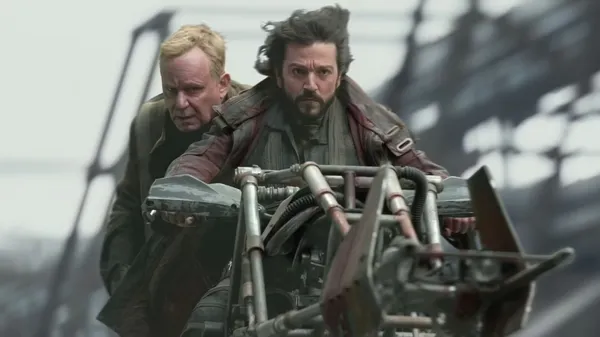
In the Autumn of 2022, I simultaneously encountered two works which were revelatory for me. The first was August Nimtz’s The Ballot, the Streets—or Both: From Marx and Engels to Lenin and the October Revolution, a work which looks at the continuity and development in approach to parliamentary politics from Marx and Engels to Lenin. The second was the first season of Tony Gilroy’s Andor—a Star Wars show portraying the interaction between the development of an imperial security state and the resistance to it. In the show’s wake, there have been various projects, such as the podcast A More Civilised Age and Red Future’s Andor Analysed collection, which have used it as a means to discuss left-wing history and strategy. These inspired me to explore the shared focus between Nimtz’s and Gilroy works on how movements can make use of revolutionary representatives in imperial parliaments to fight the very empire they are within. In particular, I will look at how neither legality or illegality should be fetishized in revolutionary strategy. Instead, a revolutionary party should aim to synthesize many tactical and sectional interests, allowing a legal front like parliamentary struggle to be carefully used and instrumentalized for the benefit of the wider struggle.
To aid readers who may not be familiar with either of these works, I’d like to begin with a brief summary of both.
The show begins with its petty criminal protagonist, Cassian Andor, who is reluctantly recruited to the rebellion by rebel spymaster Luthen Rael. Andor is key in a daring heist on Aldhani, leads a prison break on Narkina V, and is present for a riot turned massacre on his home planet of Ferrix. Parallel to these events, Mon Mothma, representative in the Imperial Senate, defies her appearance as an ineffective liberal politician by secretly funding networks of violent rebellion with her own family wealth. As imperial financial constraints become greater, she is eventually forced to make a deal with a socially ambitious local gangster to make a marital introduction between their respective children.
While Andor delivers well as a mix of various genres, such as the heist, prison-break and bureaucratic thriller, this series also explores how a developing revolutionary movement learns to balance and prioritize the many fronts of resistance struggle. While both Andor and Mon are important figures in the movement, the audience is also given a wider perspective on their efforts, understanding that neither of their work is independently sufficient. Rather, they must support, fund, and react to each other.
In The Ballots, The Streets or Both, August Nimtz defies many histories of Marx, Engles, and Lenin, which see their revolutionary politics necessarily leading to a disinterest in engaging in the parliamentary institutions of their time. For Lenin, these elections and positions in parliament were primarily useful as some of the few legal spaces available in Tsarist Russia for putting forward a communist politics. Although he was uncompromising in a commitment to the illegal aspects of party organizing, he also believed the legal space should be systematically instrumentalized insofar as they provided an advantage. Electoral campaigns presented unique chances for party members to be allowed into workplaces to speak directly about their programme to workers and election results provided invaluable data for evaluating the mass appeal of the Party’s vision. When the Bolsheviks did gain parliamentary representatives, their speeches and alliances were used for key strategic tasks such as building and strengthening the essential worker-peasant alliance. Even while emphasis is on the use-value of bourgeois representation, Nimtz’s argument also hinges on the importance that the Bolsheviks placed on genuine democracy and dialogue within the party and wider movement, showing the ways that representatives’ parliamentary immunity enabled some space for these efforts as well.
As Nimtz shows, Lenin did not have a simple, unified theory of when and how to use parliaments—rather, he applies a variety of key principles to guide judgments depending on a particular context. Therefore, his engagement with each Duma (the four Russian parliaments from 1905-1917) changed over time. When he addressed Western European comrades, he stressed the significant difference between an autocracy and liberal democracy and the resulting opportunities and challenges of engaging with parliaments. This article aims to use the details of Andor to highlight key aspects of Nimtz’ arguments in The Ballots, The Streets or Both. By drawing out parallels and contrasts between Lenin’s world and that of Andor, I hope to give a readable taste of a book I think should be part of our strategic discussion as communists in the twenty-first century.
Legal Space
When we join Mon Mothma in Andor’s fourth episode, she is visiting our spymaster, Luthen Rael, to tell him that, while she’s still trying to continue her secret funding of the rebellion, she is increasingly surveilled in the senate, banks and her personal life. Whereas previously she was able to “set up a series of accounts (...) like water flowing downhill,”[1] she now feels “under siege.”[2] The dynamic by which previous legal avenues are increasingly constrained and repressed was familiar to the Russian Social Democratic-Labor Party (RSDLP) in late 1905, where, as the year’s insurgency cooled, reforms granted by Tsar Nicholas II to abate the revolutionary atmosphere were steadily being rolled back.
As explored by Nimtz, Lenin rarely passed an opportunity to strategically use what legal space remained under the Tsarist government, but this was by no means a fetish for the legal. Taking the parliamentary front, Lenin saw this as among the lowest forms of struggle, to be instrumentalized to enable the many other party aims and work which were essential to the communist struggle. Here, he focused not only on the parliamentary debates themselves, but also how to make use of elections and the legal immunity of the Duma representatives. How much attention should be placed on these attempts at revolutionary parliamentarism was proportional for him to the possibility for wider insurrectionary action. At the height of the fervour in 1905, the establishment of worker’s soviet councils across key urban centres such as Moscow and St. Petersburg were seen by Russian communists as far greater democratic institutions than any found in liberal democracies. During this time, the RSDLP membership voted for an “active boycott”[3] of the Duma elections, where the openings in legal election meetings and demonstrations could be used for advocating a revolutionary overthrow of the Tsar. However following the winter’s repression leading to the arrest of all the St. Petersburg Soviet’s representatives, Lenin saw the movement’s force ebbing and argued that the time had come for the party to end its boycott and begin engaging in Duma elections.
Among the factors used by Lenin to determine when to shift emphasis from more direct actions, such as strikes and rallies, to the existing legal spaces, was how the movement reacted to repression. At the height of popular anger in 1905, the government attacks grew the movement; but from Winter of 1905 ,Tsarist assaults began to depress the movement’s strength. To tentatively apply this metric to Andor, we can look at the outcome of the repressive legislation passed following the successful Aldhani heist of eighty million Galactic credits. In the imperial prison Narkina 5, in the first moments during protagonist Cassian Andor interacts with his fellow prisoners away from the prison’s work regime, they push for any information he has about the “Public Order Resentencing Directive,” which “doubled everyone’s numbers [prison sentences] last month.”[4] While some have immediately understood that “you’re here till they want you,”[5] after the prison executes “a hundred men to keep them quiet,”[6] prisoner and unit manager Kino Loy is convinced that with “5000 men (...) about to find out they’re never leaving here alive” there is only “one way out.”[7] With this he leads his inmates to “help each other” to “run, climb, kill”[8] in escaping their collective incarceration. Following their liberation, we see ambitious Imperial Security Bureau agent Dedra Meero recognizing that the empire has “played straight into their [the rebellion’s] hands,”[9] as the government’s blunt tools of repression breeds wider rebellion.
Showing how legal space was an essential tool, Nimtz details how the part of the duty of being one of the Party’s Duma deputies was to make full use of their parliamentary immunity for the movements ends. This included redirecting funds sent to them by workers to strikes and prison relief; traveling widely to meet constituents, facilitate party work, and, after 1914, anti-war activism (for which any other citizen could be executed); and, most relevant here, serving as the publishers of party papers. By serving as publishers, these deputies’ immunity opened up further legal space for an essential party function. This even extended to the daily Pravda’s offices being the only space where the party could legally have a campaign headquarters during the election for the Fourth Duma. Much as our introduction to Mothma gives us a sense of her privileged ability to move and express herself being increasingly curtailed, these Duma deputies’ immunity became increasingly tenuous and eventually revoked when they threatened the war effort in 1915.
Cross-Class Alliances
Alongside analyzing the ebb and flow of revolutionary strength, Nimtz also explores how Lenin’s perspective on the use of the parliamentary struggle was dependent on other factors, such as an assessment of the class composition of society. From this analysis, Lenin saw the publicity provided in parliament as important to the task of building a worker-peasant alliance, ensuring Russia’s peasant minority would act as a revolutionary rearguard to the proletarian vanguard.
Throughout the duration of each Duma, Bolshevik deputies (elected Duma members) embraced many opportunities to show the peasant Trudovik party that the Bolsheviks were the only other party consistently fighting for peasant interests. In 1910, the Tsar’s prime minister Pyotr Stolypin sought parliamentary consent for his land-reform programme aiming to divide the peasant class by growing and reinforcing a richer fraction of their population. Lenin wrote a speech for party deputies, drawing on his decade-long research on the land question, using accessible language to attack the center and right’s defence of serf-farming, posing the need to nationalize and redistribute land, weakening landlords as a precursor to confronting capital. This collaboration between worker and peasant parties defeated Stoypin’s initiative and strengthened the bond between both groups. While the peasantry was considered by Lenin to be the key target for class coalition, he also saw the Dumas as the space for similar efforts with some elements of the petit bourgeoisie.
On the galactic metropole of Coruscant, Mon Mothma hosts her old friend Tay Kolma, a banker from her home world of Chandrila, who cautiously warns her that he’s “done more than grow weary of the Empire” and that she’s not aware “how far afield some of us have taken our political allegiances these days.”[10] Tay and his implied group of other disaffected liberal Chandrilans are the kind of constituents of liberal parties which Lenin debated with his fellow Social Democrats on how to engage. Lenin viewed election campaigns as primarily an opportunity for political education and propaganda—using unique legal spaces such as electoral meetings and debates inside factories to openly take communist arguments to workers and the masses. This meant he was a consistent opponent of electoral agreements in the first rounds of elections, which required moderating key Bolshevik demands such as their three-point minimum programme: a democratic republic, seizure of all landed estates, and an eight-hour day; and additionally, after 1914, their unique anti-war positions. Following this first round of an election, Lenin saw in-depth analysis of voting data as hugely valuable for evaluating the appeal of the communist movement across regions and classes. Only following both these uses of first round elections, did he agree that electoral blocs could be formed in the later rounds.
Looking at the clues presented about class formation in the galactic empire, there may be opportunities for the construction of such alliances. Throughout the show, pictures are presented of proletarianization at a variety of stages. In Ferrix, we see a community brought together by their labor in the spaceship junkyards, with their lives and resistance being intimately connected into the collectivity of their labor, from the wall of work gloves where we first meet laborer Brasso to the brick of Marva’s ashes he later uses to smash a stormtrooper’s head. On Narkina 5 and many other prisons like it, an increasing flow of incarcerated people from across the galaxy are forced into a rigid system of labor discipline—competing with fellow inmates over twelve-hour shifts to compile pieces of the Death Star at maximum efficiency. In a process reminiscent of the Scottish highland clearances covered by Marx Das Kapital, the native Dhani people have been displaced and alienated from their traditions. Downstream from the prisons themselves, Cassian meets Freedi and Dewi Pamular, who explain that in building their prisons, the empire has poisoned the waters they fish, leading them to act in solidarity with the escaped prisoners, recognizing their shared imperial enemy. As their ceremonial viewing of Aldhani’s cosmic phenomenon of the Eye from the location of the imperial garrison dwindles, the commandant clarifies that although this will be the last time this ceremonial pilgrimage will be allowed, they will return when “plenty of arms and legs”[11] are needed to build an airbase in the Dhani’s sacred valley. Through these contexts, the empire’s drive to create and discipline workers around their military mega-projects demonstrates the shared interests between proletarians and those who have traditionally lived from the land.
Party Formation
For Lenin, building a robust communist party was essential for a truly revolutionary change in political economy to take place. While there are many debates on the organizational form and function we as communists believe a party should take, the revolutionary party should be distinguished from the liberal democratic concept of a political party as primarily for contesting parliamentary elections. Building a mass communist party requires bringing together a huge range of struggles. However, this is not simply to strengthen the fight for each individual struggle’s goals (which when looking at trade union fights, is often labelled as ‘economism’), but instead to unite these perspectives into a collective political consciousness which is more than the sum of its parts.
The closest we come to this synthesized movement consciousness in Andor is the duo of Kleya and Luthen, who are central to the conspiratorial network of resistance we see throughout the episodes. Their area of operation encompasses many aspects of struggle: directing covert funding from a senator, coordination of on-the-ground operations, selecting targeted assassinations, wide cultivation of potential new contacts, running a deep cover agent within the ISB, distribution of stolen imperial technology, liaising between militias and other groups to bring them into closer alignment. As Kleya bluntly puts it to aristocratic field operative Vel Sartha, her duty is to keep a “constant blur of plates spinning and knives on the floor,”[12] giving proportional weight to each of the many “needy and panicked faces at my window.”[13] A tense conversation between Luthen and erratic militia commander Saw Gerrera provides the best glimpse into the current composition of their incipient movement. As Luthen tries to tempt Saw to collaborate with another rebel group, the spymaster labels himself as “a coward” who’s terrified that “we’ll die with nothing if we don’t set aside our petty differences.”[14] In response, Saw lays out the various other factions and systems of belief which are contained in this movement, stating that all of them are “lost”[15] and that he is the “only one with clarity of purpose.”[16] Returning our focus to Lenin’s time may point us towards a synthesis of these positions to allow the development of a durable movement.
As Nimtz points out, there were points where the struggle against an autocracy required a similar degree of conspiratorial centralization; however this was always viewed as a grim necessity, rather than an organizing principle. When feasible, members risked arrest, life, and limb to organize their party conferences, bringing together delegates across huge distances at personal risk, to allow for a democratic life within the Party. This was exemplified by the January 1912 Prague conference, where the Bolsheviks went to significant effort to convene an event which brought together representatives from all across Russia and invited delegates from across the Polish, Lithuanian, and Jewish Bund national parties. In a setting of widespread police repression, the risk of this mass organizing was seen as worthwhile to “re-establish a competent practical Party centre, closely linked with the local organizations.”[17] Between these points, significant resources were invested to understand and engage with the depth of their electorate of workers, with a depth of surveying and polling of members being unparalleled by any of the liberal parties with far greater resources. This huge risk and resourcing to ensure the political participation of the mass of party members was dedication to the principle of democratic centralism. Building a movement in which unity could be sought through disagreement and debate was essential.
The other key approach to this debate was in the dedication to publishing both legal and illegal newspapers, which were intended to provide their readers with analysis of current events, and polemics where those within the movement and Party could openly disagree. Arguing to publicize the debates between himself and the ‘liquidator’ faction of the party, Lenin claimed that to not carry fresh polemics would make the papers dull and late—anathema to what makes a paper successful, politically forcing readers to guess at disagreements rather than read them directly and judge between views. The conversation between Saw and Luthen suggests there may be a need for galactic equivalents of these presses, to let others within the movement decide who they believe possesses clarity of purpose. On an even broader level, these forms of open, accessible publishing would give space for rebellion theorists like Nemik to share and dialogically develop their arguments. There is clearly a pressing need for revolutionary coverage of current events, as Narkina 5 escapee Ruescott Melshi pressed Cassian that “somebody’s got to tell people what’s happening back there.”[18]
Conclusion
It is not hard to find interpretations of Andor or the Bolsheviks which focus primarily on political violence as what makes them interesting or revolutionary. While I certainly don’t want to take any excitement away from the storming of the Winter Palace or the heist on Aldhani, for a depth of communist strategy we must look beyond these most explosive moments. As Nimtz’s arguments demonstrate, we can neither fetishize nor neglect any tactical front. Instead, a movement must synthesize what can be gained from the legal spaces and institutions available, and what can be gained by acting outside of them. Our strategy is necessarily complex—if there was a straight-forward, static group called ‘the working class,’ we may be able to have a simpler revolutionary strategy. However, just as Andor portrays various groups in processes of proletarianisation and Lenin emphasised the importance of a worker-peasant alliance, we must be careful in our analysis of the actually existing relations across society. In the same manner for institutions, we can look to the way that Lenin thought about the various Dumas formed under Tsar Nicholas II, each presenting different opportunities and challenges, to think carefully about how we might relate to our specific contingent representative institution. To cultivate the lively collective thinking which is needed to confront capitalism and the climate crisis, we may be able to learn from the Bolshevik’s prioritisation of democracy and debate even under conditions of extreme repression.
Looking briefly at these lessons in the context of contemporary British politics, the December 2019 general election was a strategic turning point for the British Left. From 2015-19, Jeremy Corbyn’s leadership of the Labour Party created space in which many socialists and communists engaged with both its popular and electoral elements. Having a socialist politics championed in mainstream politics allowed many to approach forms of activism they had not previously considered. In this period, a variety of organizations which were not directly connected to the Labour Party benefited from this widening pool of activists across the British Left. For the tenants union ACORN UK or the pro-immigrant Anti-Raids Network, a significant proportion of their membership were engaged in both extra-parliamentary action against landlords or the Home Office, and with the structures of the Labour Party. While this overlap may have been beneficial in a loose “movement ecology” sense,[19] there was not a political organization capable of ensuring electoral representatives were using their positions to proactively enable these wider struggles.
Within Corbyn’s leadership, the left of the Party fought unsuccessfully for “mandatory reselection” of MPs, i.e. needing to re-run for the position between each term, giving other candidates an automatic opportunity to challenge the role.[20] The inability to even impose this level of discipline within the Party demonstrates that while much enthusiasm for left-wing policies was present in this period, the movement was far from a point where electoral efforts could be effectively used for the development of political struggles across society and beyond legality.
Following the devastating parliamentary defeat of 2019, constituent sections of the Left turned their focus towards a variety of spheres: from continuing to fight within the Labour Party (for some time at least), trade union struggles, starting a new left-wing party, anti-imperialist organizing, mutual aid, etc. All of these have value or potential, however, they were often done with limited open discussion and or justification for why organizers had made these shifts in focus. While the timing of the election being closely followed by the pandemic in early 2020 exacerbated the isolation of these shifts, it is also true that the culture and institutions had not been properly developed to allow this. My own organizing during this period, as part of an organization explicitly focused on the Labour Party’s membership (Labour for a Green New Deal), which was later transformed into an organization facing British trade union membership (Worker-Climate Project), is representative of these trends. Although some organizations born in the Corbyn movement have outlasted it and facilitated some strategic dialogue, such as the political festival The World Transformed (TWT), it has not been sufficient to allow a depth of reflection across the movement. Other organizations have begun or grown since Corynism’s decline which give promising opportunities for strategic development, such as Prometheus journal’s hosting of polemics on organizational form, or Notes from Below’s workers’ inquiry and examinations of class composition.
As the Left returns to electoral politics in various contexts, from the Democratic Socialists of America’s (DSA) debates on relating to Zohran Mamdani’s recent mayoral victory in New York City, to comrades in Britain attempting to democratically contest Your Party structures, this is a key time to carefully assess how to strategically gain from these efforts beyond the ballot box. Looking at Nimtz and Andor we can pose a few challenges for the contemporary communist movements: Can we form party organizations capable of exercising the necessary democratic control over elected representatives to ensure their use to the wider movement? The renegade behaviour of MP’s within Your Party has crystalized the need for this discipline. Can our movements grow strong enough to benefit and grow from the propaganda efforts of electoral campaigns, rather than be left spent by them? This may apply to whether Mamdani’s huge focus on rent and affordability can enable the strengthening and growing militancy of tenant unions through the city and beyond. Can our movements seize opportunities for alliance which can make use of the electoral front which can bring together the interests of precarious migrant labor and disaffected deindustrialized communities?
In the words of galactic theorist Nemik “remember this - try.”[21]
Liked it? Take a second to support Cosmonaut on Patreon! At Cosmonaut Magazine we strive to create a culture of open debate and discussion. Please write to us at submissions@cosmonautmag.com if you have any criticism or commentary you would like to have published in our letters section.
-
Tony Gilroy, showrunner, Andor, Season 1, Episode 11, "Daughters of Ferrix," dir. by Benjamin Caron, 00:19:05.
↩ -
Tony Gilroy, showrunner, Andor, Season 1, Episode 4, "Alhani," dir. by Suzanna White, 00:30:08.
↩ -
August Nimtz, The Ballot, the Streets—or Both: From Marx and Engels to Lenin and the October Revolution (Haymarket Books, 2019), 91.
↩ -
Tony Gilroy, showrunner, Andor, Season 1, Episode 8, "Narkina 5," dir. by Toby Haynes, 00:26:55.
↩ -
Ibid.
↩ -
Tony Gilroy, showrunner, Andor, Season 1, Episode 10, "One Way Out," dir. by Toby Haynes, 00:03:55.
↩ -
Ibid.
↩ -
Ibid.
↩ -
Tony Gilroy, showrunner, Andor, Season 1, Episode 7, "Announcement," dir. by Benjamin Caron, 00:06:33.
↩ -
Ibid, 00:22:50.
↩ -
"Daughter of Ferrix," 00:12:33.
↩ -
Ibid.
↩ -
Tony Gilroy, showrunner, Andor, Season 1, Episode 9, ‘Nobody’s Listening!,' dir. by Toby Haynes, 00:45:15.
↩ -
Ibid.
↩ -
Ibid.
↩ -
Ibid.
↩ -
Vladimir Lenin, "The Sixth (Prague) All-Russia Conference of the R.S.D.L.P.," Marxist Internet Archive, https://www.marxists.org/archive/lenin/works/1912/6thconf/index.htm.
↩ -
"Daughter of Ferrix," 00:37:42.
↩ -
Ella Baker School, "What is Movement Ecology and how can it provide radical hope?," Ella Baker School of Organizing, July 3, 2024, https://www.ellabakerorganising.org.uk/post/what-is-movement-ecology-and-how-can-it-provide-radical-hope.
↩ -
Matt Wrack, "To serve as a Labour MP is an honour, not a right," Fire Brigades Union, September 11, 2018, https://www.fbu.org.uk/blog/serve-labour-mp-honour-not-right.
↩ -
"Rix Road," 00:14:33.
↩