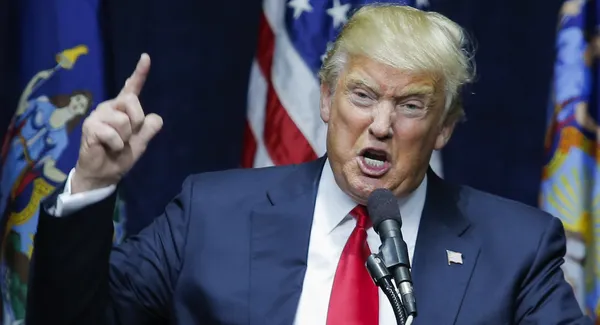
With the election of Donald Trump in 2016, acclaimed American social critic Cornel West announced that “the neoliberal era in the United States ended with a neofascist bang.”[1] Indeed, Donald Trump was a legitimate outsider who snatched the Republican primary away from more traditional candidates. His brash, sometimes feral, approach to campaigning made him a distinct and appealing political figure in an era dominated by overly curated politicians. Critically, his ability to mobilize white rural workers meant that a significant portion of the working class had unrepentantly abandoned the Democratic Party and now identified as Republicans, thus gifting conservatives with a potentially majoritarian foundation that they had assumed they lost during the Obama years.
Still, outside of his electoral realignment—whether it is truly lasting, only time will tell—the majority of Trump’s iconoclastic measures have been cosmetic. Especially in his second term, there is tremendous continuity between the neofascism of Trump and the neoliberalism that preceded him. This seems like it should not be the case. Neoliberalism, superficially, is known for a decreasing of state power with an emphasis on deregulation and deference to the market. Fascism, on the other hand, is about the concentration of state power and economic planning. And yet, the relationship between neoliberalism and fascism—both in terms of politics and culture—is much more intimate than what initially appears.
As much as Trumpism is seen as a repudiation of neoliberalism—with its fetish for tariffs, its dominance of the executive branch, and its disdain for elections—it is in many ways its inevitable conclusion, if not its bastard child. For years, Americans have been propagandized on the dangers of “big government,” with the implication being that the “big market” would provide them with a renewed arena of freedom. In practice, what was referred to as “big government” has actually meant “big democracy.” Government has surely been weakened by neoliberalism, but only its democratic elements. What remains is a state whose authoritarian elements are greatly empowered; in fact, so empowered that the state is now on the verge of becoming fascist. The dream of the neoliberal state, where all aspects of political power that do not support market competition are eliminated, has not led to unlimited freedoms, but instead an illiberal grotesquery hungry to devour the same country that birthed it.
Neoliberalism as Economic Statism
Neoliberalism’s relationship to the state is often misunderstood. As a supposed return to classical, that is, bourgeois, political economy, neoliberalism superficially appears as a milder form of libertarianism; in that respect, it is reasonable to assume that it is founded on a deep distrust of the state. However, neoliberalism has never maintained such an anti-statist position because, unlike libertarianism, neoliberalism is not based on an exaltation of liberty.
For sincere libertarians, liberty is the ultimate virtue, and they assume that such virtue is best realized in the venue of market competition. For libertarians, society is fundamentally defined by the relationship between the individual and authority. Firmly working within the liberal tradition, libertarians accept the Hobbesian assumption that there exists an essential equality between individuals. For that reason, any authority that does exist in society must derive from collectivist institutions. Individuals only derive the power to dominate by uniting to form a group that can overpower an individual. Because of this, the market, as a platform of individual exchanges, is the preferred means for retaining liberty. The inherent discreteness of market competition and its definitional aversion to collective action ensure that the solidaristic prerequisite necessary for authority never emerges.
However, for libertarians, the market is recognized only as a means for liberty, not its end. If private inclination drives people toward fraternity, libertarians do not object. Indeed, freedom of association, even if it leads in some cases to the formation of cooperative enterprises, is a sincere value of libertarianism. As the historically close relationship between anarcho-capitalists and certain forms of libertarian socialism suggests, if liberty can be achieved through a venue other than the market, as in Proudhonian mutualism or some form of independent-producer market socialism, then the foundational principles of libertarianism are not violated, at least not prima facie. For libertarianism, the market does not need to consume all aspects of life. It is simply taken as an article of faith that if the authority of the state is sufficiently weakened, then market relations spontaneously and predominantly emerge. [2]
For neoliberalism, this relationship between means and ends is inverted, where the market is the end, and liberty is the means. If liberty fails to create market competition, then the state must intervene, even at the cost of liberty. Since its birth, neoliberalism has always been intimately enmeshed with the strengthening of state power. If the overthrow of the left-leaning government of Salvador Allende by General Augusto Pinochet on September 11, 1973, marked the world-historic moment when neoliberalism was earnestly born, then the ideology cannot escape the reality that its midwife was a military dictatorship. These birth pains were not an aberration, but neoliberalism’s destiny. The political economy of Pinochetism would eventually come back to the United States under Reaganism, who, like his predecessor, used the coercive power of the state to compel American society into greater market competition. In the early 2000s, the neoliberal economic agenda of the George W. Bush administration was never in tension with Bush’s aggressive foreign policy. If anything, the two complemented each other. For Iraq, especially, foreign military intervention was seen as a necessary part of the reconstruction of Iraqi society, relentlessly and rapidly moving the country toward greater privatization and market competition.
Fundamentally, while libertarianism and neoliberalism share a common skepticism of collectivist authority, libertarianism is characterized by a far more consistent suspicion of nearly all forms of authority. On the other hand, neoliberalism is marked by suspicion only of those forms of authority that oppose specific market relations. The contradiction of neoliberalism is that state power is only criticized when it is exercised on behalf of economic arrangements other than market competition. When it is done in the service of market competition, regardless of the degree of coercion and its effect on individuals, it is simply freedom being realized. In this manner, neoliberalism takes libertarianism’s theoretical division between the individual and authority but only accepts its legitimacy in a limited set of cases. Specifically, in market competition, the individual is realized through the collectivist authority of the state. Neoliberalism does not conceptualize an antagonistic relationship between the state and the market, where a weak state is a precondition for a strong market. Instead, the relationship between the two is considered reciprocal. A strong state is a precondition for a strong market; the stronger the state, the more capable it is of intervening in society to construct markets. In turn, the stronger the market, the more wealth available to secure the state. In this respect, even if there is considerable overlap between neoliberalism and libertarianism in immediate policy preferences, neoliberalism is far closer to fascism than libertarianism, since both fascism and neoliberalism hold that freedom can only be realized through the authority of the state.
The idea that the market is something realized through the power of the state, rather than in opposition to it, means that the ontology of neoliberalism is far closer to Hegelianism than Lockean liberalism. Several neoliberal thinkers might bristle at this observation, believing that Hegelianism, in any form, is a precursor to totalitarianism. Nonetheless, the accusation is difficult to dismiss once Hegel’s notion of the state is compared with that of neoliberalism. For Hegel, freedom was not a matter of liberty but of self-determination, where the “self” is realized within the context of the state. The reason for this is that an authentic “self” does not occur only through the satisfaction of individual desires, which is a foundational tenet of liberalism, but through moral impositions that prevent individuals from becoming destructive. For Hegel, the role of the state is not to allow individuals to be free by assuming a limited and passive position in society, but to make individuals free by ensuring that conditions are available for their self-development. In this manner, Hegel seeks to reconcile the dialectic between obedience and freedom by making obedience to the ideal state the means by which humans become free. “Only the will that obeys the law is free, for it obeys itself and, being in itself, is free.”[3]
Similar notions are apparent in neoliberalism; however, instead of law and freedom, the dialectic has moved to politics and the economy. In Capitalism and Freedom, Milton Friedman writes,
It is widely believed that politics and economics are separate and largely unconnected; that individual freedom is a political problem and material welfare an economic problem; and that any kind of political arrangements can be combined with any kind of economic arrangements… such a view is a delusion… Economic arrangements play a dual role in the promotion of a free society. On the one hand, freedom in economic arrangements is itself a component of freedom broadly understood, so economic freedom is an end in itself. In the second place, economic freedom is also an indispensable means toward the achievement of political freedom.[4]
Critically, when Friedman writes about “economic freedom,” he means market competition. Still, just as Hegel attempted to reconcile the inherent tension between freedom and law by insisting that freedom was obedience to just laws, neoliberalism is an attempt to reconcile the tension between politics and economy by insisting that a free state can only exist within the context of a competitive market society. However, since markets cannot exist without contracts, which need to be enforced by a state, the state—in a Hegelian sublation—liberates itself by creating markets, which in turn liberate the state, supposedly leading to freer individuals.
While this dialectic is at the heart of neoliberalism, it is not honest about it. Neoliberalism’s greatest thinkers have hidden its foundation in ideological obfuscation, appearing to have it both ways. Neoliberalism simultaneously claims that there is an intimate relationship between politics and economy, and that political freedom is only possible with economic freedom, while also insisting that the moral supremacy of free market capitalism lies in its ability to separate politics from economics. As Friedman explains, “the kind of economic organization that provides economic freedom directly, namely, competitive capitalism, also promotes political freedom because it separates economic power from political power and in this way enables the one to offset the other.”[5] These two positions are clearly contradictory, and the movement from neoliberalism to neofascism is the means by which the contradiction is resolved.
Nowhere is the state’s power to create markets more evident than in the relationship between the Trump administration and cryptocurrencies. The crypto movement, which began in the 1990s with the rise of the internet, was a libertarian utopian project that sought to degrade the power of states by making fiat money obsolete. The speed of digital technology and the innovations of cryptography offered the promise of a cyberspace of sovereigns. Within the internet’s bowels, it was assumed that a Burning Man festival of binary code, a genuine community of autonomous hackers, could emerge and liberate society from the confines of nation-states, central banks, and normie culture. On the internet, you could be both anyone and no one, and paradoxically, this provided users with complete individuality and total freedom.
In the aftermath of the 2008 Great Recession, these promulgations had the opportunity to become policy, as cryptocurrencies appeared as a non-statist, if not anti-statist, solution to the problem of concentrated economic power. Using a blockchain, cryptocurrencies were a decentralized and, arguably, completely marketized method for facilitating the exchange of goods and services. And, in true libertarian fashion, its advocates and early adopters were always expected to be outcasts, outlaws, and rejects. To this day, the developer—or developers, no one knows for sure—of Bitcoin is not known. Instead, the creator goes by the pseudonym Satoshi Nakamoto and is hypothetically one of the richest people in the world, with a bitcoin wallet worth more than $134 billion, though the wealth has not been accessed since 2010.[6]
As a phenomenon on the outskirts of the internet, Bitcoin was a cybernetic middle finger to all conventional sources of power. Nonetheless, in rejecting all conventions, it also rejected society at large, and thus any mainstream appeal. While cryptocurrencies demonstrated that completely marketized exchanges were possible in cyberspace, they failed to prove that these exchanges could become ubiquitous on their own. Utopia might have been its goal, but it was a utopia of fantastical computer geeks, and if the price of freedom was idiosyncratic nerdom, it turns out that few people would be willing to buy.
It is only with the assistance of major financial institutions, designed to bridge the gap between mainstream markets and those on the fringes of cyberspace, that cryptocurrencies have developed any mass market appeal. However, such concentrated economic power needs, if not pines for, the stability of a powerful state. A totally marketized exchange is inherently unpredictable, and while that volatility might preserve an abstract autonomy, it is detrimental to wealth creation.
Fifteen years ago, cryptocurrencies were exclusively the domain of rogue internet hackers. Today, they are the preferred method of wealth accumulation for the president and his family. Rather than trying to remove the state from the workings of cryptocurrencies, Trump has sought to make the United States the “crypto capital of the world,”[7] by directing the entire financial regulatory structure to support cryptocurrency markets. Ungirding much of this wealth creation is the fact that Trump has used the full faith and credit of the United States government to establish a strategic bitcoin reserve. The purpose of this reserve is not to protect taxpayers, but to raise the asset value of the digital currency industry. Far from rugged individualism, this is nanny-state welfarism for a digital oligarchy.
For true libertarians, the United States strategic bitcoin reserve is not a triumph of the hacker’s will, but a disgraceful profanity. Instead of cryptocurrencies succeeding on their own merit, proving themselves more reliable and efficient than fiat money, the entire utopian project has been polluted by state intervention. Cryptocurrencies have become the currencies of states, which means their subversive power to act counter to authority has become null and void. For neoliberals, though, Trump’s embrace of cryptocurrency has been celebrated. If there were legitimate checks-and-balances within the United States federal government, Trump’s blatant crypto governmental gift-giving would not be possible, but neither would be his market creation of the industry. Congress, still mired in its neoliberal consensus, has sanctioned the cryptocurrency market with the passing of the bipartisan GENIUS Act, which, despite making it illegal for elected officials and high-level members of the executive branch to profit from stablecoins, conspicuously excludes the president from such obligations.[8] Again, all democratic aspects of the state dissolve, and what remains is the most despotic form, concentrated in the executive branch.
The reality that neoliberalism is actually a statist and Hegelian ideology does suggest that, in many ways, it is closer to fascism than liberalism, despite taking its namesake from the latter. This is not to imply that all neoliberals are secretly or subconsciously fascists. Rather, it is only to point out that the logic within neoliberalism does not necessarily have any inherent refutation of fascist ideology, with the critical caveat being that the neoliberal fascist state accepts that its primary directive is the creation of market competition.
Here, there needs to be some clarification on what is meant by “competition.” In Capitalism and Freedom, Friedman distinguishes between two forms of competition. The first is personal and based on animosity toward a rival. This form of competition is destructive. The second, which he believes is necessary for a free society, is impersonal, and merely the outcome of two or more competitors attempting to maximize their efforts. He admits that as markets move toward monopolization, the latter form of competition moves closer to the former, and this is a problem—both for individual consumers and society at large—but sees attempts at remedying the problem often worse than the disease. According to Friedman, “The monopolist is visible and has power. It is easy to argue that he should discharge his power not solely to further his own interests but to further socially desirable ends. Yet the widespread application of such a doctrine would destroy a free society.”[9]
According to Friedman, part of what makes it so difficult to remedy the power of monopolies is the imprecision in determining at what point a market moves from free competition to monopolization, and thus one form of rivalry to another. Since perfect competition and perfect monopolization are ideal types that are never fully actualized in reality, there is always room for skepticism when determining if a firm is acting in a monopolistic manner. Since some skepticism is possible, Friedman raises the bar for identifying monopolies to a near infinitely high-level. Similarly, Judge Robert Bork, in his The Antitrust Paradox: A Policy At War With Itself, argues that American antitrust law only prohibits monopolies if firms fail to maximize consumer welfare.[10] Considering that most monopolies develop because firms dramatically lower prices, thus driving out competition, only to raise them again when the field is clear, the consumer welfare criterion is effectively meaningless. For Bork, you cannot prohibit a monopoly from forming until after the fact, and, once it is formed, you cannot break it up because doing so would mean losing certain price efficiencies inherent to the monopoly scale. Thus, in actually existing neoliberalism, “market competition” refers not to a market that is freely competitive, but a scenario where firms can compete to establish themselves as monopolies.
With this clarification, the relationship between fascism and neoliberalism becomes much more evident. Fascism is based on a glorification of Friedman’s first type of competition. According to Mussolini, “war alone brings up to its highest tension all human energy.”[11] Since Friedman has conceded it is nearly impossible to determine when his second form of competition becomes the first, his glorification of the second easily slips into a fascistic celebration of the first. If it is justified to be skeptical of government intervention in the market because of the inherent imprecision in determining the point between free competition and monopolization, then it is equally justified to be skeptical of any distinction between the neoliberal and the fascist venerations of competition, since the two also exist on a continuum where the exact point of distinction leaves room for doubt.
Neoliberals might object to this comparison by pointing out that fascism, like socialism, is an inherently collectivist ideology, and, while it does venerate competition, it inevitably seeks monopolization through state ownership, which destroys individual liberty. As Friedrich Hayek has asserted, “fascism… was not a reaction against the socialist trends of the preceding period but a necessary outcome of those tendencies.”[12] However, this demonstrates a profound misunderstanding of fascism’s relationship to both socialism and individualism.
The “socialism” of fascism is a preference that the state should play an active role in shaping the economy, but its relationship to socialism ends there. The method of fascist economic planning does not imply public ownership; if anything, it is often the opposite. As Germà Bel has pointed out, “as a social Darwinist, Hitler was reluctant to dispense totally with private property competition."[13] To address budget deficits during the Great Depression, while also attempting to significantly expand the military, the Nazis instituted a series of privatization plans. These plans were unparalleled for their time, not only because most Western countries were seeking to nationalize their industries to save them from collapse, but because they were done not as a means of weakening the Nazi state but of strengthening it. According to Bel, “Nazi Germany privatization was applied within a framework of increasing state control of the whole economy through regulation and political interference.”[14]
Similarly, while fascism opposes the individualism of liberalism, it does not oppose individualism as such. If anything, fascism thrives on a heroic and domineering sense of individualism—“in holiness and in heroism”[15]—that emerges through the crucible of austerity and competition. Its opposition to the individualism of liberalism is that liberalism was “put forward as a religion for humanity for all time”[16] and had the audacity to assert that the primary criterion of a successful state was the happiness of its citizens. Instead, according to fascists, the state should pursue a grand ideal of metaphysical importance and then use its coercive powers to mold citizens to that ideal. In this scenario, fascists believed that individualism was not negated but fully realized. As Mussolini asserted, “the individual in the Fascist State is not annulled but rather multiplied, just in the same way that a soldier in a regiment is not diminished but rather increased by the number of his comrades. The Fascist State organizes the nation, but leaves a sufficient margin of liberty to the individual; the latter is deprived of all useless and possibly harmful freedoms, but retains what is essential.”[17] Again, as long as that ideal is market competition, there is nothing intrinsic to neoliberalism that is opposed to this sense of individualism.
The Corporation as a Tyrannical Mixed Constitution
Still, the greatest similarity between neoliberalism and fascism is in their preferred means for organizing society. The brief sensationalist meme that men think about the Roman empire constantly, even daily, was met by many with cheeky stupefaction.[18] Yet, it gains such prominence not only because of the absurdity—no, the majority of men do not think about the Roman empire daily—but because of its implications. Rome, as a republic, is the source of our modern political institutions. Republican Rome—even with the passage of a millennium—still represents some of our highest civic ideals. However, republican Rome is interwoven with imperial Rome, which represents our debasement, with its hedonistic leaders, reckless military adventurism, and acting as the killer and eventually hypocritical adopter of Christ. The reality that republican Rome and imperial Rome can be difficult to distinguish, both historically and theoretically, speaks to the equally frustrating separation between fascism and republicanism. The idea that millions of men are secretly obsessed with ancient Rome reveals an unspoken anxiety regarding contemporary sexual politics. Do the hearts of millions of men contain an unspoken desire to engage in civic virtue, to be recognized for helping their communities, or do they have a subconscious desire to dominate and immerse themselves in the patriarchal pretensions of fascism, or could it possibly be both?
The reality that Rome is simultaneously the symbol of republicanism and fascism, despite those two political systems essentially being opposites, is the product of its unique form of government and how the Roman constitution was interpreted in antiquity. As early as Plato, ancient political theorists were preoccupied with the conviction that all political regimes existed in a pessimistic anacyclosis. The rise and fall of regimes occurred according to a perpetual cycle determined by each regime’s inherent defects. It was believed that political life began as monarchies, but, due to the temptation of power, all monarchies would degenerate into tyrannies, resulting in their overthrow by an aristocracy. However, members of the aristocracy would eventually become corrupted, leading the regime to degenerate into an oligarchy, and thus necessitating another revolution, this time leading to the creation of a democracy. Still, the democracy would become corrupted, often by the rich, who would bribe their way to influence and power, causing the democracy to degenerate into an ochlocracy, or mob rule. To escape the brutal chaos of the ochlocracy, the people would pine for a strong ruler who could reestablish order through force, thus leading to a return to monarchy and the cycle repeating itself.
It was assumed that political regimes could only exist in three perfect forms—monarchy, aristocracy, and democracy, and three degenerate forms—tyranny, oligarchy, and ochlocracy. Nonetheless, Polybius recognized that several regimes did not fit into this simplistic typology and that it was possible to combine various political regimes to make unique forms. In doing so, the best elements of each could be strengthened and the anacyclosis could be broken. For Polybius, the Roman constitution represented the best prospect of escaping the anacyclosis because of its separation of powers, with the institutions of the consul, the senate, and the plebeian councils preserved the ideals of monarchy, aristocracy, and democracy. Simultaneously, by checking each other within a single regime, the natural rivalry between the best form of each regime would prevent each form from sliding into degeneracy while also allowing them to cooperate as one unit in the case of emergency.
Polybius did not believe that this meant that the Roman constitution would be timeless. He warned that, absent a common enemy and the sobering sacrifices of war, Roman prosperity could lead to an indulgent opulence that would eventually invigorate a lust for political power. For Polybius, the greatest source of this threat was not the elites in the senate, nor the rule of the consuls, but the Roman people.
(T)he time will come when the people will feel abused by some politicians’ self-seeking ambition and will have been flattered into vain hopes by others’ lust for power. Under these circumstances, all their decisions will be motivated by anger and passion, and they will no longer be content to be subject or even equal to those in power. No, they will want everything, or almost everything, for themselves. When this happens, the new constitution will be described in the most attractive terms, as ‘freedom’ and ‘democracy’, but in fact it will be the worst of all constitutions, mob-rule.[19]
In time, Polybius would be proven wrong on two accounts. It was not the Roman people who corrupted the Roman constitutions, but the consuls, or specifically Octavian, who, as consul, was able to utilize his vast private fortune and influence over the military to create a parallel system of rule that eventually established him as emperor, all while maintaining a republican veneer. Also, the corruption of the Roman constitution did not lead to the end of mixed constitutions and a return to the anacyclosis. Rather, each branch of the constitution maintained their cohesion and degenerated collectively. As a republic, Rome was a monarchy, aristocracy, and democracy, and as an empire, it was a tyranny, oligarchy, and ochlocracy.
If a republic is a mixed constitution with a democratic foundation, then fascism is its inverse. Fascism, too, requires a mixed constitution but with a tyrannical foundation. However, critically, the tyrant does not rule alone. Fascism is not monarchy, nor has it ever claimed to be. Instead, “fascism supersedes the antithesis monarchy or republicanism”[20] by maintaining republicanism’s mixed constitution but with a unity among the degenerated rather than ideal forms of regimes. Fascism does not abolish parliaments and congresses but transforms them into oligarchical institutions controlled by party and commercial elites. Fascism does not seek apathic masses, but excites them to act as a mob, using their majoritarian power to attack minorities and strengthen the power of the ruler. As Mussolini wrote, “The Fascist State is an embodied will to power and government: the Roman tradition is here an ideal of force in action… It must be thought of as an Empire,”[21] or more specifically, the Roman Empire after it had eviscerated its democratic institutions. Like Rome during its imperial stage, it preserves all the cosmetic aspects of republicanism but annihilates any sense of the common good within them. In fascism, the members of each of the three forms of rule are consumed by their egotistical interest, where the emperor seeks power, the senate seeks wealth and privilege, the people seek bread and circus, and together they all seek dominance over others considered outside of the nation-state.
Where the fascist desire for a tyrannical mixed constitution intersects with neoliberalism is in both ideologies’ lionization of the organizational form of the for-profit corporation. Mussolini was explicit that fascism was “a return to the conception of the corporation.”[22] With its division between chief executive officer, board, and shareholders, the modern corporation is essentially a tyrannical mixed constitution. The chief executive officer acts as a tyrant with nearly absolute power, the board acts as an oligarchy whose primary responsibility is to oversee the process of wealth extraction, and the shareholders act as an unconscious mob whose sole means of satisfaction are quarterly returns. Together, they are united in their dominance over workers and consumers.
Where fascists and neoliberals diverge on their view of the corporation is while fascists are aware that the corporation only exists by the will of the state, the neoliberals have conceptualized the corporation as a partnership that naturally emerges in a society of free association. Fascists believe that the only organic force in society is “the people” or volk, and its will is manifested through the creation of the tyrannical mixed constitution, which corporations are a state-franchised version. In contrast, neoliberals believe that the market is the only true organic force in society. However, because the ideal market involves exchanges between individuals, neoliberals consider the corporation ofas a joint venture, even though the ability to incorporate—and thus remove responsibility and ownership of assets from individuals to a collective entity—is a legal act that cannot occur without the will of the state. As David Ceisply has explained,
“neoliberals had to retheorize the corporation as a creation of private contract (or at least something that could in principle be created by private contract). Accordingly, stockholders—rechristened “shareholders”—were theorized as owners who hire a board to act on their behalf… In other words, neoliberals cast the corporation as a glorified partnership, to be operated in the interest of its imagined owners and principals, the stockholders.”[23]
By conceptualizing the tyrannical mixed constitution as a phenomenon that occurs outside of the state, rather than because of the state, neoliberals can associate the freedom of the corporation with an overall project of expanding liberty. However, this leads to a significant contradiction within their ideology, and specifically their supposed distinction from fascism. If Friedman is correct that the separation between politics and economics is a delusion, then the tyrannical mixed constitution of corporations in the market will eventually lead to the creation of a tyrannical mixed constitution in the state. Fascism not only acknowledges this transformation but is eager to bring it about. In contrast, neoliberalism appears in denial of its occurrence, even though it flows logically from its assumptions on the relationship between politics and economics.
Indeed, the entire project of neoliberalism has been that “government should operate like a business,"[24] and by this it was meant that the government’s subjects should be seen primarily as satisfaction-seeking customers, not citizens dedicated to a public good. The promise of neoliberalism was that governing “like a business” would make government more efficient and parsimonious, and by implication, less a threat to liberty. However, the flipside of this intentionality is a complete evisceration of any democratic prerogative. Governing “like a business” has meant governing as if political institutions were organized as a corporation, which means organizing the state as a tyrannical mixed constitution.
The Loss of Collective Reasoning
The evisceration of any democratic prerogative has not only meant the collapse of collective action, but also the end of collective reasoning. The ancient Greeks, who invented democracy, admired their system of government because it allowed them to “love things of the mind” without making them soft.[25] Democracy, according to Pericles, is a system of government that ensures citizens have opportunities to ponder life’s meaning, especially through the debate and discussions within the polis. For the Athenians, in the final analysis, the ideal philosopher-king is the people.
It is the loss of public reasoning that has so thoroughly set the stage for the rise of Trump’s neofascism. To state that the Trump era of American politics is saturated in misinformation—which has become a cliché among liberal pundits—is to fundamentally misunderstand the nature of America’s contemporary propaganda system and its hold on the nation’s psyche. It is true that the rightwing media ecosystem has become thoroughly mainstreamed in the United States. So much so that it can hide its own dominance. Despite the Right being in control of the largest news network in the country, the majority of local news stations, the majority of top podcasts and talk radio shows, and a generous peppering of popular online outlets, the American Right has been able to paint itself as an oppositional perspective. It is a framing accepted by both liberals and conservatives alike. As the Trump phenomenon was gaining momentum, conservatives’ trust in the “mainstream” media collapsed while for liberals it soared.[26] For both groups, they had accepted the idea that the Right was a marginal force—locked out of major institutions—even though it is clear that the rightwing media is the dominant force across America’s political news landscape. In embracing this narrative, America’s Right has abandoned any conservative appeal to stability and tradition. Instead, America’s contemporary Right is in a perpetual state of insurrection against a liberal hegemony that does not exist. Its cultural hold on American politics is so thoroughly obfuscated that it can simultaneously be the movement of rebellion and the status-quo without any sense of contradiction between the two.
It is important to note that consistently throughout Trump’s third presidential campaign, Americans viewed Kamala Harris as being “too liberal” more than they viewed Donald Trump as being “too conservative.”[27] In terms of policy, the opposite was true. Desperate to scoop up moderate suburbanites, the Harris campaign pivoted hard to the center—releasing a trickle of extremely milquetoast economic policies—and nuancing her language on immigration and transgender rights to the point of incomprehension. To validate her newfound centrism, Harris eagerly campaigned with anti-Trump conservatives like Liz Cheney; a legacy of utterly disastrous and inhumane foreign policy decisions be damned. Trump on the other hand made no such concessions. He was politically astute enough to avoid discussing divisive social issues—like a federal abortion ban—but could offer no reassurances that he would prevent his Republican colleagues from going further. And when it came to immigration, executive power, and tax cuts for the wealthy, he was happy to paint himself as a vengeful authoritarian working in the service of America’s plutocrats. However, he suffered no political consequences for this rhetoric. The reason being is that the hegemony of America’s rightwing media landscape has been so successful that it has been able to disaggregate political identity from policy preferences in the minds of most Americans. Instead of “conservative” being associated with the politics of the Right, it has become associated with living a conventional American lifestyle, meanwhile “liberal” or “progressive” has become associated with the lifestyle of a—particularly obnoxious—self-righteous college educated bohemian who endlessly experiments in sexual and cultural deviations. Many people—especially the growing number of Americans who see themselves as “independents”—have a sense that they are “conservative” because they have little-to-no lifestyle quirks, but, in terms of policy preferences, they are completely out of sync with the agenda of America’s contemporary Right. Nonetheless, the dominant rightwing media landscape has brought them into the Right’s coalition by successfully getting them to repress their policy preferences in favor of superficial signifiers.
The reality is that many Americans have accepted the essential framework of the Right, and believe that an entrenched and out-of-touch liberal elite controls the country, but simultaneously remain skeptical of the specifics of rightwing policies. While Trump and Republicans can triumphantly win elections, the Right’s agenda struggles when voters are faced to make decisions on an issue-by-issue basis. Across the United States, during the 2024 election voters chose Trump but then voted against his party’s agenda when it came to supporting measures to raise the minimum wage, expand sick leave, legalize marijuana, and guarantee the right to an abortion. The reason for this is that while many Americans are ideologically confused, they are not stupid. Outside of his sect of hardcore devotees, most Americans know that Trump constantly lies, but they see these lies as an asset—not a detriment—to his overall capacity to govern.
Because it is assumed that America’s structure is fundamentally that of liberal elitism, most Americans naively doubt Trump’s rightwing extremism will come to fruition. Instead, they remain optimistic that they can use his mendaciousness for their interests. Trump the fibster is not a politician, but a political id of distilled opportunism. In that opportunism he can be directed to serve as a bludgeon against a sclerotic congress, forcing the institution to meet whatever objective his supporters desire, whether it is bringing manufacturing jobs home, curbing inflation, enforcing theocracy, making woke liberals cry, or passing corporate tax cuts. Internal consistency of Trump’s agenda is inconsequential because everyone believes they can mold him to their objectives while dismissing the objectives of their rivals. Even though Trump himself is constantly demanding loyalty from his inner circle, the relationship that the majority of Americans who voted for Trump have with him is cynically transactional, if not market orientated. They pretend to believe in his bullshit, while he pretends to support their interests, and through their mutual fantasies both parties are expected to profit.
This transactional view of collective action is a symptom of Americans utter pessimism toward politics. The bombardment of propaganda in the information age, epitomized by the 24-hour cable news networks, has more than misinformed the public: it has resocialized the masses in a manner that has destroyed collective reasoning. Because sincere debate on the pressing issues of the day would eventually implicate the same corporations that own America’s agenda-setting news outlets, robust discussion on current events has been replaced with shallow partisan punditry. The result is that Americans have completely given up any concept of the common good and instead have accommodated themselves to the idea that politics is merely a perpetual battle over special interests. Politically “winning” in this sense is not a matter of constructing a just society, but of having sufficient will-to-power to claim that your interests are more special than anyone else’s. Trump’s determination in the face of reality, including his insistence that his personal interests are more special than anyone else’s, is not interpreted as a character default, but an inspiration.
As Nietzsche and later Foucault concluded, if the workings of society are assumed to be nothing but a power struggle against competing forces, then truth loses all value. The relevance of truth is not only in the degree that humans can accurately understand the natural world, but also in the degree they can share that understanding with each other, for it is only in communicating with others—and with it an implied commonality among us—that individuals have any protection against self-deception. Thus, it is not misinformation, which suggests that the public desires correct information but cannot obtain it, that is the problem. Instead, the problem is a suspicion against solidarity that leads to an intense appetite for disinformation. The concept of determining what is true is premised on the possibility that there can be a shared understanding of the world because there is a shared experience of reality. If a person fundamentally believes that such commonality with others is impossible, that there are other people who are just not people enough to experience a shared reality with, then trying to convince them—or being open to their interpretation of reality—is an irrelevant endeavor. In such a scenario, veracity has no utility. Instead, falsehood is always justified if it can serve the fulfillment of special interests. Information can be known to be false but if it gives the progenitor of the falsehood a sense of power over others then it becomes “true” by virtue of domination rather than reason.
The supreme tragedy of neoliberalism is that the ethos of capitalism has transcended the narrow realm of economics and become the nation’s de facto moral paradigm. In the United States the market has been aggrandized not because it is seen as an efficient means of allocating resources but as a means of achieving self-actualization by creating an illusion of choice. As soon as the Democratic Leadership Council and the New Democrats announced that the Democratic Party would now seek to realize the promise of the New Deal through the efficiencies of the free market, rather than through social democracy, a true conversation regarding the efficiencies of different economic policies was dead. Instead, what began as arguments regarding efficiency quickly morphed into arguments over morality. An increasingly bureaucratic and cumbersome health care system, mired in waste, became increasingly justified not in terms of its efficiency—where it clearly failed—but in terms of “options” and “preferences.” It should be no surprise that the “health freedom movement”—a libertarian-inspired conspiratorial wellness movement that scaremongers against vaccinations and promotes quackery—has found its strongest political ally in a former New Democrat turned Trump supporter Robert F. Kennedy Jr. Kennedy’s dedication to the movement, including relentlessly following its logic regardless of the absurdities it leads him to, has meant that he has easily transitioned to the Right and now firmly stands as the head of an agency within a regulatory state that he is attempting to destroy. After all, since there is no true way to determine the common good, even in the context of public health, the purpose of politics is not to enforce justice, but to provide individualized “options.” Indeed, nearly everything that defines most of contemporary American politics—from progressive identitarianism to Christian nationalism—emphasizes distinction and difference, separateness and autonomy, all in an attempt to emphasize options and alternatives over a cohesive whole.
While constant exposure to propaganda is the cause of this extreme solipsism, it is important to recognize it is the result of propaganda as a system, the power of propaganda to socialize, rather than propaganda as an occurrence. For the past decade, mainstream Democrats have engulfed themselves in a moral panic regarding various forms of media in an utter inability to grasp the difference between communicating and socializing. An edgy social media meme, a right-wing news segment, or Trump rally might misinform a person, but they do not cause that person to reflectively assume that regardless of veracity a statement, it can be “true” because it can be used to weaken their enemies. That deeper conviction only comes about because the person has developed an entrenched cynicism toward society, and much of that cynicism, though tragically misdirected, is warranted, considering the huge gap that working Americans experience between their expectations and reality.
Unfortunately, America’s contemporary politics can be described as the politics of cynical mendacity. People believe they were lied to about what they could expect from life, so they feel justified in lying to get whatever they want from the government. Instead of seeking what is true, they are content to settle with what is true for them. However, and most problematically, no one can rule by falsehood alone. A politics of cynical mendacity shows a reckless disregard for the truth, but as a form of politics, it still contains the implication of force. The biggest problem with the prevalence of falsehood in politics is that it will eventually become a means to justify the use of force. As Hannah Arendt recognized, peace needs no rational basis since it does no harm. It is only violence that needs to be rationally justified, since being an evil, it is necessary to demonstrate that its deployment prevents a greater evil from occurring.[28] Thus, such reactive defensiveness against information that challenges one’s own worldview can only come about through years of socialization into a credo that not only might makes right, but that my might makes right because it comes from me, since all that is right can only originate within myself. Therefore, violence exercised on behalf of my interest is inherently justified because my interests are always paramount by the very fact that they come from me; truth is not a value I strive to attain through my interactions with others, but a mental state I seek to defend in opposition to others.
Forms of Anti-Politics and Minority Rule
Ironically, the problem with neoliberalism’s collective narcissism is that it undoes the very principle it claims to uphold, namely individuality. During the postwar era, Americans were enamored by Kennedy’s proclamation during his inaugural address, “ask not what your country can do for you – ask what you can do for your country,”[29] because it captured the ethos of New Deal liberalism. It might have been inauthentic or unfulfilled in practice, but it resonated because it elegantly captured the sense that a person’s individuality was determined by the unique manner they contribute to their nation. With the shattering of the New Deal paradigm and the rise of neoliberalism, Kennedy’s maxim has been flipped on its head. In contemporary America, Americans are supposed to “ask not what you can do for your country—ask what your country can do for you.” While the former maxim is active, and suggests initiative and creativity, the latter is passive and implies that the government should serve every citizen’s personal proclivity. That is impossible. The inevitable conflict that emerges when millions of Americans pulling at their government to serve their own ends leads to a fractured society where the only means for solving ineluctable problems is not through justice—since that would require some sense of shared understanding—but through brute force.
In a fanatical iconolatry of individualism, Americans have reduced themselves to a senseless mob of brutes, and as described above, such ochlocracy is necessary for fascism. The philosophers of antiquity were correct in recognizing democracy and ochlocracy as both governments of the masses, but in democracy rule is determined through the art of persuasion, because the masses are supposed to understand themselves as a majority with a shared mind and objective. The recognition of a collective consensus means that violence is only reserved for narrow and limited circumstances. In contrast, in the mob people act as one group, but there is no shared understanding. In politics, the “mindless mob” is a redundant phrase, for the mob is defined by its lack of mind, and its lack of a mind makes it an anti-political phenomenon. Indeed, while extreme individualism is a form of anti-politics for its rejection of sociality, the mob is also a form of anti-politics for its rejection of any persuasive potentiality. While extreme individualism and mob rule might superficially appear on opposite ends, the throughline of anti-politics between them makes their relationship more like the tips of a horseshoe that share the same metal body. Both deny the possibility of commonality of thought, but whereas extreme individualism denies the possibility for commonality, the mob denies the capacity for thoughtful self-reflection.
Since the anti-politics of the mob means that there is no acknowledgment of collective agreement with others, violence as a means of compelling social action becomes its first and preferred option. In the mob, the fascistic fetishization for violence breathes its first breath. Once you remove the possibility of solidarity you also remove the potential for persuasion, and without persuasion the only means to influence others is through force. For the mob, the biggest brute wins out and in doing so all members of the mob are forced to become brutes, sacrificing their unique individualities to a singular objective. In the end, the most brutish person becomes the ruler, but over a ruined country as so much time, energy, and resources are expended fighting off rivals that nothing is left to pursue; the higher faculties that were supposed to be the reason for the initial conflict become the conflict’s most tragic victim. The American people, so frustrated by the failure of their democracy, have begun to experiment in mob rule, and, while the country is still a long way from all-out war, the ethic of brutishness has become part of the nation’s new political zeitgeist. The harsh truth is that many of the Americans who voted for Trump, despite their potentially redeeming qualities, did so because of his brutish demeanor, not despite it.
To further this irony, the one noteworthy group in contemporary American politics that exists outside of the confines of this collective narcissism is Trump’s true believers. They approach the Make America Great Again (MAGA) movement not as a means, but as an end. To that end, they are willing to sacrifice everything—their incomes, their labor, even their sense of dignity as they dress in trash bags and ridiculous clothing—to ensure the movement’s success. The true believers of MAGA are an extreme minority, but they are able to command majoritarian power because their internal sense of solidarity and commitment has meant that America’s political gravity bends toward them. A majority is only a majority if it is organized as such, otherwise its fractured character simply means that it is a collection of minorities, “much as a bag of potatoes constitutes a potato-bag” in Marx’s language.[30] Since American society has been so thoroughly fractured by neoliberalism, where isolation and autonomy have become the norm, political battles are not between majorities and minorities, but between various minorities, where whatever minority is willing and able to be the least compromising can command majoritarian power by sheer exhaustion of its rivals.
Problematically, minority rule is an essential component of the United States’ constitutional system. Despite the musing of Cold War liberals, American society has never been universally liberal. It contains far too much illiberal racial animosity and religious fanaticism for that to be the case. Instead, American society is essentially Madisonian. Americans have always believed that proper governance is achieved not through liberal democracy—a system of majority rule that guarantees minority rights—but through a system of constant power sharing between various minoritarian groups. Madison believed that this system would prevent any single faction within society, including the majority, from becoming dominant. However, Madisonianism only functions if there is a shared conviction among the competing factions that differences between them are reconciled within the political system. Madisonianism needs republicanism, otherwise, the result is civil war. Marx’s insights are again valuable: “Between equal rights force decides.”[31]
Under neoliberalism—where differences and factionalism have been elevated to moral heights—the United States has entered an era of extreme Madisonianism, where Madisonianism has turned against republicanism. Congress is endlessly divided, if not perpetually constipated. The Senate filibuster, the debt ceiling, the deferment of decisions to congressional leaders, and the need to perpetually fundraise has all meant that lawmakers barely represent their constituents in terms of policy. Instead, the focus is solely on representation in terms of cultural identity. Governing rarely comes about through forming a coherent majority on a particular issue. Instead, it has come about through a painful process of consociation where a “majority” is only formed through compromise between various minorities. With majority rule so thoroughly weakened, both institutionally and culturally, minority rule reigns, and when minority rule is dominant, the only possible outcomes are factionalism, despotism, or simultaneously both. The threat of fascism’s tyrannical mixed constitution raises its ugly head from the political wreckage.
Conclusion: Revolutionary Empathy
Trumpism is a transitional period between neoliberalism and neofascism. It is a dangerous space to exist within. Not only because the slide toward fascism must be thoroughly resisted, but because it will not be completely vanquished unless the United States undoes its forty-year experiment with neoliberalism. The American people must come to terms with the reality that they can have a market society or a democratic society, but not both. The fire of fascism is too dangerous to flirt with its embers.
Far from expanding the sense of American liberty, neoliberalism has hollowed out America’s democratic institutions and replaced any solidaristic ethos with a culture of narcissism. This has led to both a rejection of truth and meaning. It is dangerous when facts do not matter, but it is even more terrifying when nothing matters. Fascism is on the rise in the United States not because of the persistence of an economic depression, or because the people are faced with an existential war, but because the lethargic doldrum of American politics has convinced the population that it is not worth it to be civically engaged. Instead, it is better to retreat to personal validations, comfortable delusions, and memeified ironies, essentially various forms of bread and circus for the internet age. If Americans in the twentieth century were intrinsically pragmatic, in the twenty-first century they have become strategically nihilistic.
Still, reality is a stubborn thing, including the social reality of others’ thoughts, feelings, and needs. To survive through Trumpism, and ensure that the worst does not manifest, it is necessary that Americans develop a culture of empathy, and come to love society as society, rather than an alienated form of society known as the market. Empathy is intrinsically contrary to market competition and remains the fiercest antidote to fascism. In empathy, the measure of society becomes society itself, simultaneously the genesis and telos of humanity. In that self-awareness, society develops the strength to break free from its self-inflicted oppressions, whether they are the tyrannical state, market competition, or both.
Liked it? Take a second to support Cosmonaut on Patreon! At Cosmonaut Magazine we strive to create a culture of open debate and discussion. Please write to us at submissions@cosmonautmag.com if you have any criticism or commentary you would like to have published in our letters section.
-
Cornel West, “Goodbye, American neoliberalism. A new ere is here,” The Guardian, November 17, 2016. https://www.theguardian.com/commentisfree/2016/nov/17/american-neoliberalism-cornel-west-2016-election
↩ -
David Miller, “Market Neutrality and the Failure of Co-Operatives,” British Journal of Political Science 11, no. 3 (1981): 309-329.
↩ -
G. W. F. Hegel, Reason In History, Indianapolis: Bobbs-Merrill Education Publishing, 1953, 53.
↩ -
Milton Friedman, Capitalism and Freedom, Chicago: the University of Chicago Press, 2002, 7-8.
↩ -
Ibid., 9.
↩ -
Dominic Basulto, “Prediction: Bitcoin Creator Satoshi Nakamoto Will Be Worth More Than Warren Buffett by the End of Summer,” The Motley Fool, July 18, 2025. https://www.fool.com/investing/2025/07/18/prediction-bitcoin-creator-satoshi-nakamoto-will-b/
↩ -
White House, “Fact Sheet: President Donald J. Trump Establishes the Strategic Bitcoin Reserve and U.S. Digital Assets Stockpile,” March 6. 2025. https://www.whitehouse.gov/fact-sheets/2025/03/fact-sheet-president-donald-j-trump-establishes-the-strategic-bitcoin-reserve-and-u-s-digital-asset-stockpile/
↩ -
Guiding and Establishing National Innovation for U.S. Stablecoins Act (“GENIUS Act”), 139 Stat. 419 - Pub L. No. 119-27 (2025)
↩ -
Milton Friedman, Capitalism and Freedom, 120.
↩ -
Robert Bork, The Antitrust Paradox: A Policy At War With Itself, New York: Basic Books, 1978.
↩ -
Benito Mussolini, The Political and Social Doctrine of Fascism, London: The Hogar Press, 1934, 11.
↩ -
Friedrich Hayek, The Road to Serfdom, Chicago: The University of Chicago Press, 1944, 6.
↩ -
Germà Bel, “Against the mainstream: Nazi privatization in 1930s Germany,” Economic History Review 63 no. 1 (2010): 35-55, 47.
↩ -
Ibid,, 35.
↩ -
Benito Mussolini, The Political and Social Doctrine of Fascism, 13.
↩ -
Ibid., 17.
↩ -
Ibid., 24.
↩ -
Ej Dickson, “Why Are So Many Men Obsessed With The Roman Empire,” Rolling Stones Magazine, September 23, 2023, https://www.rollingstone.com/culture/culture-features/men-obsessed-roman-empire-explained-tiktok-1234826340/.
↩ -
Polybius, The Histories, Oxford University Press: Oxford, 2010, 412.
↩ -
Benito Mussolini, The Political and Social Doctrine of Fascism, 15.
↩ -
Ibid., 25.
↩ -
Ibid., 9.
↩ -
David Ceipley, “The Corporate Contradictions of Neoliberalism,” American Affairs I no. 2 (2017): 58–71. Quoted from online version. https://americanaffairsjournal.org/2017/05/corporate-contradictions-neoliberalism/
↩ -
Richard Box, “Running Government Like A Business,” American Review of Public Administration 29, no, 1 (1999): 19-43, 19.
↩ -
Thucydides, History of the Peloponnesian War, London: Penguin Press, 1972. 147.
↩ -
Megan Brenan, “Media Confidence in U.S. Matches 2016 Record Low,” Gallup, October 19, 2023. https://news.gallup.com/poll/512861/media-confidence-matches-2016-record-low.aspx
↩ -
Justin McCarthy, “Trump Seen as Less Conservative Than Prior GOP Candidates,” Gallup, October 4, 2016. https://news.gallup.com/poll/196064/trump-seen-less-conservative-prior-gop-candidates.aspx
↩ -
Hannah Arendt, On Violence, San Diego: Harcourt Brace & Company, 1970.
↩ -
John F. Kennedy, “Inaugural Address,” (1961) https://www.archives.gov/milestone-documents/president-john-f-kennedys-inaugural-address
↩ -
Karl Marx, The Eighteenth Brumaire of Louis Bonaparte, Chicago: Charles H. Kerr & Company, 1907, 71.
↩ -
Karl Marx, Capital, London: Penguin Press, 1990. 344.
↩