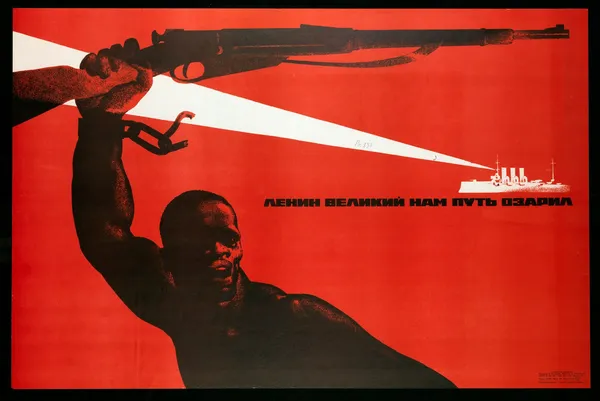
“Nkrumah spent a number of years during the fifties and, right up to when he was overthrown—that would cover at least ten years—in which he was searching for an ideology. He started out with this mixture of Marxism and Protestantism, he talked about pan-Africanism; he went to Consciencism and then Nkrumahism, and there was everything other than a straight understanding of socialism.”
— Walter Rodney[1]
“Marxists hold that man's social practice alone is the criterion of the truth of his knowledge of the external world. What actually happens is that man's knowledge is verified only when he achieves the anticipated results in the process of social practice (material production, class struggle or scientific experiment). If a man wants to succeed in his work, that is, to achieve the anticipated results, he must bring his ideas into correspondence with the laws of the objective external world; if they do not correspond, he will fail in his practice. After he fails, he draws his lessons, corrects his ideas to make them correspond to the laws of the external world, and can thus turn failure into success; this is what is meant by "failure is the mother of success". — Mao Tse-tung[2]
Pan-Africanism and Idealism
In order for our movement to advance, it is necessary for us at times to step back and assess the efficacy of our practice and to re-examine our theoretical assumptions. For some of the Black left however, there are a number of ideas that are above criticism and whose correctness is accepted unquestioningly. Among these ideas are “the primacy of Africa” and subsequently “revolutionary Pan-Africanism”, which by virtue of their unblemished Blackness/Africanity cannot be challenged as political horizons.
This attitude is reflective of a prevailing idealism present in the U.S., where certain ideas are deemed superior to the material world. Indeed, the modern resurgence of Pan-Africanism itself is a product of an unchecked idealism that becomes shockingly apparent once it is revealed. In Black-owned storefronts, Black barber shops, hair salons, plastered across t-shirts, pendants, logos, and artwork you are sure to find it: the silhouette of the continent Africa. Where once we would have found crosses or depictions of Christ, some more progressive Black/Africans have replaced them with a more noble God. Our reverence for this God conveniently renders all strategies to strengthen its position superior to criticism, and thus make any scientific inquiry or challenge impossible. Pan-Africanism thus becomes an infallible idea, and unless we are able to understand this flaw of idealism, and to shed our reverence for metaphysical identities, we will be blind to errors in our practice. As with all things, Pan-Africanism must be observed scientifically.
Pan-Africanism and Dialectical Materialism
In his 1970 text Class Struggle in Africa, Kwame Nkrumah defines revolutionary Pan-Africanism as a struggle for “the total liberation and unification of Africa under an All-African Socialist Government”.[3] As a logic that identifies socialism as the objective, Pan-Africanism is necessarily subscribed to socialism’s organizing logic: dialectical materialism.
...Marxism is intimately linked with a philosophy and a method: those of dialectical materialism. It is therefore indispensable to study this philosophy and this method in order to fully understand Marxism and to refute the arguments of bourgeois theories as well as to undertake an effective political struggle.[4]
In order to understand the error of Pan-Africanism, it is necessary to understand a few fundamental concepts of dialectical materialism.
Dialectical materialism contains two component parts: materialism and dialectics. Materialism is the scientific understanding of the world that matter creates thought. It is the assertion that there exists an objective world, which we can perceive and base our ideas off of. Materialism exists in contrast to idealism, a logic that insists the opposite: thought creates matter. The idealist says, because we can only know the world through our senses, there is no way to know anything objectively.
Dialectics is the observation that all things in the universe are in a state of motion and change. Rather than seeing things as unchanging and fitting into neat categories, the dialectical method insists that all things exist in a state of contradiction or disputation:
When we reflect on Nature, or the history of mankind, or our own intellectual activity, the first picture presented to us is of an endless maze of relations and interactions, in which nothing remains what, where and as it was, but everything moves, changes, comes into being and passes out of existence.[5]
In its essence, the dialectical method exists in opposition to the metaphysical method.
The metaphysical or vulgar evolutionist world outlook sees things as isolated, static and one-sided. It regards all things in the universe, their forms and their species, as eternally isolated from one another and immutable. Such change as there is can only be an increase or decrease in quantity or a change of place.[6]
According to the metaphysical method, the world is considered to be ossified: things are as they are, and always will be. Things are distinct and do not change or become each other.
It is important to note here that the metaphysical outlook, having emerged in the materialist tradition in the 18th century, has since been demonstrated to be false and its assertions reflect an unscientific view of the world. From the natural sciences to the social sciences, the metaphysical method has been found not to reflect the actual character of the world around us. Consider: plants grow and change form, societies change shape and character, people learn and do away with old ideas, even glaciers and planets move.
What is Pan-Africanism?
What does all this have to do with Pan-Africanism? Let us first articulate the concept, its manifestation in struggle, and the arguments in its favor, as this will help illustrate its error.
Pan-Africanism, articulated as a struggle for the total liberation and unification of Africa under scientific socialism, proposes a concrete goal: the unification of the continent under a single socialist government. In unifying in this way, Africans can present a greater counter-force to imperialist powers and solidify the advancements towards world communism as they are taking place on the continent.
The argument for why “Africa” as a particular project can be articulated in terms of both its geographic makeup and the identity-based cultural through-lines that span the continent. Most Pan-Africanists understand that there is no one unified “African” culture, but emphasize the numerous similarities between neighboring peoples. Additionally, our centuries of shared experience of colonialism, slave trafficking, and imperialism form the basis for a shared struggle against these forces. For Africans in the diaspora, Pan-Africanism is an insistence on our connection to the homeland from which we were stolen, forced out of, or left for other reasons. Again, it is an insistence that our shared experiences of the violent manifestations of capitalism and imperialism can form the basis of an identity from which we can organize toward socialism, and eventually world communism.
For Pan-Africanists in the diaspora, the primary site of struggle continues to be the continent. There are a variety of opinions diaspora Pan-Africanists express about what is to be done on the lands they have come to inhabit, but the majority of efforts are put toward organizing on the continent. What do these Pan-African efforts look like in the diaspora? They include:
- Building organizational capacity
- Political Education (internal & external)
- Financial support to organizations and efforts on the continent (charity or mutual aid)
- Cultural production (maintaining, reclaiming and developing a revolutionary African culture)
- Agitation around particular issues (e.g. Westwin’s cobalt refinery in Oklahoma, Apple’s blood minerals, etc.)
For the Pan-Africanist in the diaspora, the balance between international solidarity work and waging struggle locally are effectively flipped: Africa becomes the primary site of struggle, and our new geographies become (one of) the sites of occasional solidarity work. We agitate and educate our people here, but the primary theory of change rests in Africa. To the Pan-Africanist, the socialist projects there represent the greatest potential advancements for our people. As Malcolm X articulated:
Whenever the African becomes proud of the African image and this positive image is projected abroad, then the Black man in America, who up to now has had nothing but a negative image of Africa — automatically the image that the Black man in America has of his African brothers changes from negative to positive, and the image that the Black man in America has of himself will also change from negative to positive. And the American racists know that they can rule the African in America... only as long as we have a negative image of ourselves. So they keep us with a negative image of Africa. And they also know that the day that the image of Africa is changed from negative to positive, automatically the attitude of twenty-two million Africans in America will also change from negative to positive.[7]
It is unlikely that any but the most dogmatic Pan-Africanist would deny the importance of the struggles being waged in the diaspora. Certainly the advancement of the proletariat in Haiti or in Jamaica or here in the heart of empire is of value to all organizing toward communism. For the Pan-Africanist, it is a matter of priority: the struggles on the continent come first as their advancement will represent the greatest advancement for African people wherever they are.
This brings us to the heart of the contradiction: Pan-Africanism, articulated as a struggle for the total liberation and unification of Africa under a scientific socialist government, is not aligned with dialectical materialist principles on a number of points, namely that it commits errors of metaphysical thinking.
Pan-Africanism’s Metaphysical Errors: Identity
In order to be put into practice, Pan-Africanism relies upon a clear definition of African identity. To use Nkrumah’s definition, “all people of African descent, whether they live in North or South America, the Caribbean, or in any other part of the world, are Africans and belong to the African Nation”.[8]
This insistence ossifies African identity and denies the dialectical nature of all things: the reality that all things, people, and struggles are in motion. It attempts to reduce both Africans and non-Africans to their identity and thus commits an error of metaphysical thinking. To organize a Pan-African socialist government would be dependent on an irreconcilable contradiction between a society or government nominally committed to the principles of dialectical materialism and a rigid metaphysical concept that is itself a product of bourgeois society. In doing so, the government would be forced to legislate and make decisions based upon who is and is not considered a part of this identity. Additionally, it would condemn non-Africans or struggles in the diaspora to a subordinate position, or declare that there are simply no gains to be made in those regions.
This is the same error that the vulgar evolutionist makes in delineating the dog and the cat as absolutely distinct species. There is no fundamental categorical difference between Africans and non-Africans, and this becomes increasingly clear at the margins of any attempts at definition. To not fall into biological essentialism (whose historical implications we should well remember), one could only point to geography to define the bounds of Pan-Africanism.
Pan-Africanism’s Metaphysical Errors: Geography
In order to be put into practice, Pan-Africanism would necessarily make geographic Africa distinct from its environs and neighboring lands. In doing so, it would again fall victim to metaphysical thinking, namely the isolation of things (see Politzer, Elementary Principles of Philosophy, Ch3). It would attempt to base the construction of a political project on an arbitrary and metaphysical geographic concept. At what point in the sands of Palestine does Pan-Africanism cease? How many kilometers from the coastal mainland do African islands become foreign lands? These are impossible questions to answer scientifically because there is no qualitative difference in their distinction.
As a demonstration of the political implications of this error, let’s imagine the following scenario: tomorrow, the Alliance of Sahel States (AES) officially becomes a scientific socialist, Pan-African project and formalizes its federation. A year from now, Egypt, a liberated Palestine, Jordan and Lebanon, all having had their socialist revolutions, form a separate confederation, but express no interest in federation amongst themselves or with the AES. How does the Pan-Africanist react? The Egyptian proletariat has seized power and formed an alliance of convenience with neighboring countries, but in doing so has turned its back on Pan-Africanism. If this state of things were to be maintained, would the Egyptians be treated differently? Would we insist on the dis-unification of their confederation? What if the Palestinians wanted to federate with a Pan-African alliance? The point of this exercise is not to scrounge for answers to rhetorical questions, but to highlight the arbitrary nature of the insistence on federated continental unity. It is to point out that to ossify a political project under the terms of an identity (geographic, racial, etc.) introduces dangerous contradictions and opens the door to internal and external divisions.
Additionally, if world communism and a dissolution of all states is the end goal, why would we create a larger state to replace a collection of smaller states? This is to create another (and indeed a larger) obstacle on the road to world communism.
“But we’re stronger together!” the Pan-Africanist insists. And they are not wrong, but they forget that people can exercise unity across borders without indulging in exclusivity or needing to navigate the logistical nightmare of fusing 54 states together only to dissolve them at some time in the future. This brings us to the final error.
Pan-Africanism’s Metaphysical Errors: The Static Settler/Colonizer
In order to build a true internationalist ideology in the minds of the masses on our long march toward world communism, we must learn to practice unity with the proletariat and exploited masses of all nations. Those of Africa, Asia, the Americas and Europe. It is not enough to insist that the proletariat of the colonizing, imperialist nations are class traitors, “house negroes” or “stool pigeons” who have benefited from the scraps of the imperialist bourgeoisie. They have certainly benefited, but to condemn them as a class that will always be our enemy is to do the work of our shared oppressor and to indulge in metaphysical fantasies. People and their ideas are forever changing. This is a fundamental dialectical truth.
Pan-Africanism falls into the same trap that Afro-Pessimism does: it views the non-African proletariat of whatever lands we inhabit as incapable or less capable of effectively waging struggle due to chauvinistic and racist attitudes. Again, this represents a fundamental error of dialectical materialist thinking: that things are fixed in their nature and cannot be changed.
The Pan-Africanist here could argue that perhaps they are able to change, but that we would be more effective in waging struggle with and amongst Africans. This is typically founded in the understanding that white chauvinism has long been a foil to advancing our movement. But it both neglects what should be obvious challenges of organizing people hundreds of miles away and denies our commitment to engage in struggle with the people in the places we inhabit.
For Africans in the diaspora (and indeed for all people anywhere), it would be very difficult to justify in materialist terms putting the majority of your energy toward fighting capitalism and imperialism anywhere other than the land that you are standing on. This is because imperialism is a global system that has as its defining feature a dialectical struggle between capitalism and socialism that is underway in all corners of the globe. Thus, any place you stand is a suitable place to agitate and struggle against imperialism and for socialism.
To declare that we are somehow better suited to organize a vastly diverse group of people half a world away, with whom we share only a few hours of daylight, and who speak a variety of languages that we have (for the most part) not bothered to learn would be a remarkably audacious claim.
In the quote from Malcolm above, he articulates an idea often referenced by Pan-Africanists arguing why we in the diaspora should prioritize Africa: “the day that the image of Africa is changed from negative to positive, automatically the attitude of twenty-two million Africans in America will also change from negative to positive”. The kernel of truth in his assertion is that witnessing socialist revolution abroad makes the possibility of such advancements in other countries seem more feasible. But Malcolm limits the horizon to Africa (or Africans), and thus implies that the advancements the proletariat of other nations would not have similar effect. Why should it not? Any attempt to articulate what makes revolution in Africa unique would necessarily fall into idealism or the metaphysical errors outlined in the previous sections.
Malcolm’s assertion about the mental unshackling of proletarian revolution abroad must not be looked at one-sidedly as it pertains to Africa and the African working class. This analysis must also be extended to the achievements of the proletariat of all nations, as history has demonstrated that working class movements are frequently inspired by developments in countries that sometimes have quite disparate cultures. The Black Panther Party (BPP) took inspiration from China’s socialist project and the writings of Mao Tse-tung, with Huey P. Newton writing at length of the influence visiting socialist China had on him in Revolutionary Suicide.[9] Similarly, Robert F. Williams, who was also invited to visit China, and the Revolutionary Action Movement (RAM) of which he was a part found inspiration and developed their theory based on the advancements of the Chinese proletariat.[10] Chinese communists drew inspiration from the Bolsheviks in Russia, and in turn the Russians drew inspiration from the Paris Commune in France. The international proletariat has consistently demonstrated this tendency to draw strength from revolutions abroad, regardless of superficial similarities. People socialized by bourgeois society may be more likely to relate their struggles to people who look like them or share ethnic or clan backgrounds, but to base an entire political project off of this backwards tendency would be unwise.
Malcolm’s articulation of this point also implies that the image the African working class in the diaspora have of themselves will only be transformed once continental Africans transform their image of themselves. While Malcolm himself was deeply committed to waging struggle domestically, and eventually made the ultimate sacrifice to return home in spite of growing danger, this aspect of Pan-Africanism encourages nihilistic attitudes toward domestic struggle amongst Africans in imperialist nations. In insisting on the primacy of struggles on the continent, we again relegate our capacity to wage struggle domestically to a future beyond the point of continental unity. In doing so, we conveniently push the labor of revolution onto the people we claim to be prioritizing while accepting a less dangerous and far more comfortable supportive role.
Practical Consequences and Dangers of Pan-Africanism: Pan-Europeanism
In accordance with the laws of dialectics, identifying Pan-Africanism as the primary objective sets the Pan-African project in contradiction to an opposing pole. What is this opposing pole? When we identify socialism as the primary objective, divorced from regional specificity, it is set in contradiction to capitalism. But Pan-Africanism is more specific in its focus, and thus its dialectical opposite must be too.
If we return to the rationality for Pan-Africanism as expressed by its adherents, we are reminded that the perceived urgency of this socialist project is grounded in an opposition to the violence of the bourgeois forces of Europe and its colonial outposts. Having identified socialism with a region (Africa), Pan-Africanism must also identify imperialism with a region. The simplest and most logical articulation of this opposing pole has been identified in some Pan-African circles as Pan-Europeanism. This creates two problems: 1) it condemns the entire peoples of Europe and all of its classes as opposed to revolutionary Pan-Africanism, and 2) it neglects to address imperialist domination of Africa from outside Europe and the West.
If we are to take Nkrumah’s definition of “African” referring to all people of African descent no matter where they reside or their class position and apply it to “Pan-Europeanism”, who have we condemned? If we accept Nkrumah’s definition, we must apply “European” to denote all people of European descent no matter where they reside or their class position. The Pan-Africanist may express an understanding of the nuance of class distinctions within the Black/African community and the Black bourgeoisie/comprador class, but by the laws of dialectics, we shuttle these class enemies back into the camp of the African “socialists” and push the European proletariat into the camp of the imperialists.
This dynamic is apparent in Black left movements today who are increasingly identifying capitalism and imperialism with Pan-Europeanism in particular. As Pan-Africanism remains unchallenged, this contradiction will heighten the tensions between the African proletariat on the continent and in the diaspora and the European proletariat in Europe and in the diaspora. In so doing, we set ourselves to the task that the bourgeois class and its intelligence services would otherwise have to labor at alone.
Practical Consequences and Dangers of Pan-Africanism: Democratic Centralism & Mass Line in the Party
Inside the Pan-African party, these contradictions manifest in other ways. The most noticeable of these is the implications for the practice of democratic centralism. The party organizes itself around the achievement of socialism for those bounded by a metaphysical idea (African) and in doing so creates unscientific categorical boundaries between the in-group and out-group of this ongoing project. At a point, Pan-Africanism must define “non-African” and declare these people to be outside of the bounds of the project. Because of this, the party creates a dynamic in which the centralist aspect becomes principal to the democratic aspect. This is because certain people must be excluded on unscientific grounds, and so the membership is perpetually in question and ends up being subordinated and policed by the central bodies.
This is an incorrect application of mass line and democratic centralism as articulated by Mao Tse-tung and the Communist Party of China. As Mao explains, “first democracy, then centralism”.[11] The party’s line and its various policies and practices must emerge from the masses:
In all the practical work of our Party, all correct leadership is necessarily “from the masses, to the masses”. This means: take the ideas of the masses (scattered and unsystematic ideas) and concentrate them (through study turn them into concentrated and systematic ideas), then go to the masses and propagate and explain these ideas until the masses embrace them as their own, hold fast to them and translate them into action, and test the correctness of these ideas in such action.[12]
This inversion of democratic centralism reinforces petty-bourgeois and patriarchal tendencies within the party. By privileging Africans in its analysis instead of the undivided working class, the party renders itself the “one true representative” of Africans and forecloses all possibility of theoretical struggle from both within and without. While the communist party can be readily criticized by all who carry the mantle of working class struggle, the Pan-Africanist party can refute any and all ideas that it finds misaligned with the idealism of Africanity. Even the most correct of criticisms could be handily tossed aside by declaring them “un-African” or out of line with the party’s particular interpretation of what it considers to be African cultural values. In this way, legitimate criticisms of tendencies that exist in all organizations struggling under bourgeois society like male or petty-bourgeois chauvinism would become impossible terrains of struggle. This tendency would also predictably lead to accusations of infiltration and sectarianism amongst the rank-and-file and the reproduction of distinctly petty-bourgeois dynamics within the party like members engaging in antagonistic competition for leadership roles and ratting out comrades to curry favor with leadership, and leadership playing junior members against each other as a means to further consolidate power and obtain reports on other members.
These are the logical outcomes of any organization which put thought primary to being and declare themselves the “one true representative” of a people. Any political project based upon the idealism of race, clan, family name, gender, or other metaphysical identity would be subject to these contradictions. We cannot have an All-African socialist project any more than we can have an All-White or All-Hmong, All-Men, or All-Christian socialist project. They would inevitably collapse under the internal contradictions of what is ultimately a bourgeois ideology.
This has been demonstrated throughout history. In socialist China during the Great Proletarian Cultural Revolution, the tendency for the bourgeois class to exploit ethnic, clan, or family identities to divide the working class and to reinforce patriarchal ideas was similarly observed. In one region where many shared the family name “Chiang”, the masses became aware that the former landlords and rich peasants who bore the name would go around saying to people “we Chiangs are all one family”. In articulating the danger of this to his daughter, one peasant explained:
The Chiangs are divided into two. Some were landlords before, others were poor and lower-middle peasants. Most of the Chiangs are now taking the socialist road, but some prefer capitalism. The two kinds are not of the same family but are hostile to each other. ‘All one family’ is a reactionary idea spread by the class enemy, who fears being exposed by the revolutionary people. So don’t be fooled! To consolidate the dictatorship of the proletariat, we must struggle hard against such class enemies.[13]
Similarly, when we go around insisting “we Africans are all one family”, we put the race contradiction ahead of the class contradiction and engage in idealistic thinking. Like family name, race is a component of the superstructure and emerges from the base. Class must always be primary, including in how we conceive of our political objectives and how we refer to the people we struggle for. There will only be one world communism and the sooner we dispel with this idealism, the sooner we will be able to come together and forge a real and scientific path toward socialism.
Conclusion
As descendants of Africa, we are correct in our analysis that we share aspects of our culture with the peoples of the continent and in the diaspora. We can and should embrace these as one of the bases for building with the African masses. There is no negativity in embracing certain revolutionary aspects of traditional African cultures or in engaging in international solidarity work. Both are essential features of fighting imperialism. But to neglect to struggle with non-Africans or to subordinate their development as revolutionaries is liberalism and reflects an unwillingness to engage in the difficult tasks ahead of us.
Of the Pan-Africanists I have spoken to, all have expressed that part of their reason for taking up Pan-Africanism is the perceived value of a lost culture and homeland. For colonized people, the re-discovery and development of our language, dress, music and other cultural manifestations is deeply rewarding, and can also be of a revolutionary utility. The rotten bourgeois culture that we have been immersed in must be destroyed, and the more actively we do so, the less susceptible we will be to its various poisons and intoxicants. But we must simultaneously be vigilant and not take a one-sided view of these cultures and practices that we are taking up. As Mao emphasizes in On New Democracy, “we should assimilate whatever is useful to us today not only from the present-day socialist and new-democratic cultures but also from the earlier cultures of other nations.”13 As with all things, communists must be discerning in their attitude toward which aspects of a particular culture are in alignment with proletarian values.
12 Philosophy is No Mystery: Peasants Put Their Study to Work. Peking: Foreign Language Press, 1972. p. 37. 13 Mao Tse-tung, On New Democracy. Marxists Internet Archive, 1940.
By training our focus on the African continent and neglecting to wage struggle domestically, we isolate ourselves from the global proletariat and facilitate the fascistic backsliding currently underway in the U.S. In insisting on our unity in isolation and our uniqueness in a global context, we commit fundamental errors of metaphysical thinking that hamper our movement domestically. Simultaneously, we neglect our responsibilities to the international proletariat whom our government continues to slaughter with relatively little effective contest.
Without a serious study of dialectical materialism, we will continue to stumble over these revisionist ideas and repeat the errors of those who came before us. The primary task right now is for us to re-commit ourselves to the study of Marxism—a science we collectively have not thoroughly grasped—engage in ideological struggle, combat incorrect ideas, and arrive at more scientific determinations for how we will chart a clear path to socialist revolution. This will necessarily involve forging unity amongst the fractured left and going into the working
class movement domestically. Our struggle is here and the greatest advance we can make for the working people of the world is to become the rain and wind that finally washes away this terrible paper tiger.
Liked it? Take a second to support Cosmonaut on Patreon! At Cosmonaut Magazine we strive to create a culture of open debate and discussion. Please write to us at submissions@cosmonautmag.com if you have any criticism or commentary you would like to have published in our letters section.
-
Walter Rodney, Decolonial Marxism: Essays from the Pan-African Revolution. London: Verso, 2022.
↩ -
Mao Tse-tung, “On Practice: On the Relation Between Knowledge and Practice, Between Knowing and Doing,” Marxists Internet Archive, 1937.
↩ -
Kwame Nkrumah, Class Struggle in Africa. New York: International Publishers, 1970.
↩ -
Georges Politzer, Elementary Principles of Philosophy. Paris: Foreign Language Press, 2021. p.1
↩ -
Engels, Friedrich. Anti-duhring: Eugen Duhring’s revolution in science. Moscow: Foreign Languages Publishing House, 1959. p. 26
↩ -
Mao Tse-tung, “On Contradiction,” Marxists Internet Archive, 1937.
↩ -
Malcolm X, Speech at the University of Ghana. May 13, 1964. Emphasis added.
↩ -
Kwame Nkrumah, Class Struggle in Africa. New York: International Publishers, 1970. p.87.
↩ -
Huey P. Newton, Revolutionary Suicide. New York: Penguin Books, 2009. p.348.
↩ -
Ruodi Duan, “Black Power in China: Mao’s Support for African American ‘Racial Struggle as Class Struggle’”. Fairbank Center for Chinese Studies. March 8, 2017. https://fairbank.fas.harvard.edu/research/blog/black-power-in-china-maos-support-for-african-american-racial-struggle-as-class-struggle/
↩ -
Marxism-Leninism-Maoism Basic Course: Revised Edition. Paris: Foreign Language Press. Ch.28.
↩ -
Mao Tse-tung, Selected Works. Vol 3, p. 119.
↩ -
Philosophy is No Mystery: Peasants Put Their Study to Work. Peking: Foreign Language Press, 1972. p. 37.
↩