The 2020s have been defined by a striking political contradiction. Americans have rarely been more polarized, yet this polarization has yet to coalesce into durable mass organization. The 2020 urban rebellions inaugurated a renewed cycle of social conflict and repression that has become undeniably visible across American social life, even as the federal government continues to pursue a tighter integration of policing between federal, state, and local jurisdictions.[1] Where are the revolutionary parties and mass organizations capable of meeting the moment? How can we understand the growing dissonance between political conflict and its institutional expression within civil society?
Both conservative and leftist accounts share the same presupposition: that civil society once functioned as a neutral sphere of social mediation between individuals and the state, and that its decline explains our contemporary political volatility. From Robert Putnam’s Bowling Alone to Anton Jäger’s diagnosis of “hyperpolitics,” the crisis of contemporary society is interpreted through the narrative of civil society’s decline. But this narrative mistakes transformation for decline. Civil society did not decline through the late twentieth century; rather, it was reorganized through the real subsumption of social life under capitalist state planning. Civil institutions that appeared to mediate social antagonism—churches, trade unions, voluntary organizations, fraternal societies—were increasingly integrated into the political management of capitalist social reproduction itself. What appears as the late twentieth century’s “atomization” of civil society is in fact its reorganization into a more carceral infrastructure through which the state governs racialized surplus populations.
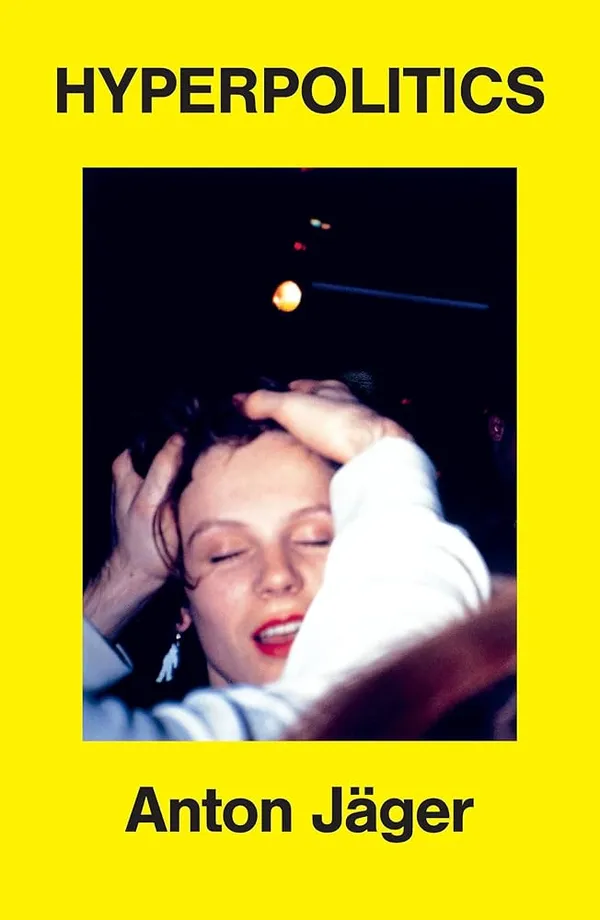
One influential rearticulation of the decline narrative has been Belgian political historian Anton Jäger’s Hyperpolitics. Jäger argues that we have entered an era in which general politicization has made a comeback at the same time as the institutions of civil society—churches, trade unions, voluntary organizations—have not. Situating his argument within Putnam’s earlier thesis in Bowling Alone, Jäger interprets the present moment as a paradox between intensifying political conflict and eroding civil life.[2]
While empirically suggestive, Jäger’s account is limited by its presupposition of civil decline. The crises of the period—from the urban rebellions of the 1960s to the seeming fragmentation of civil life through the 1970s—express not breakdown but rearticulation: the reorganization of civil society into a regime of surveillance, discipline, and individualized management directed against America’s racialized working class. The limits of Jäger’s analysis originate from the absence of a theory of mediation capable of explaining why the “success” of the New Deal order fundamentally transforms rather than simply weakens civil society. Extending Marx’s categories of formal and real subsumption to state formation provides a way of conceptualizing this transformation and how mediation becomes internal to capitalist accumulation itself.
CONTRA CIVIL DECLINE
To grasp this transformation, we must move beyond sociological accounts of civil society’s decline and investigate how mediation is reorganized within capitalist social reproduction. Missing from Jäger’s analysis is a conceptual schema that articulates how civil institutions that appear to stand between individuals and the state are themselves integrated into the reproduction of capitalist social relations. Marx’s conceptual distinction between formal and real subsumption of labor provides such a framework for conceptualizing the historical transformation of civil society. Formal subsumption entails capital’s takeover of the labor process in such a way that capital is the director and manager of labor, but conflict appears external to capital’s social reproduction. “[Labor is] subordinated to its command as *an imported foreign force*, born outside of capital's domain.”[3] However, as capital subsumes labor (a historically uneven process), it tends to destroy old labor processes and substitute new ones. Labor is now born within capital, struggling against capital, but as a stranger in a strange land. Subsumption moves from being formal to real, i.e., when the craft workshop in which antagonism is obvious is transformed into the factory, where antagonism appears more concealed. The laborer no longer confronts his conditions of production as their own, but as an alien force they are slotted into (i.e. the mass worker who operates and supervises the factory machines).[4]
Applied to civil society, the concept of real subsumption clarifies why it cannot be treated as a neutral sphere constituted of voluntary organizations, associations, and parties that mediate between individuals and the state. Under conditions of real subsumption, the institutions of civil society increasingly become mechanisms through which capitalist social relations are more directly managed by the state. Civil institutions like churches, unions, and neighborhood associations cease being formally independent mediators of social conflict and increasingly participate in the conflict itself by managing, surveilling, and administering racialized surplus populations on behalf of the state. This does not mean that civil society no longer mediates social struggle or functions as a site of solidarity. Rather, it means that these institutions increasingly operate within a larger social totality through which capitalist society directly engages in and manages class antagonism. The historical implications of this shift, particularly the relationship between welfare and carceral forms of governance, will be developed in what follows.
The neutrality of civil society is a key but unspoken presupposition throughout Jäger’s analysis. Although conflict appears within civil society, it is treated as incidental or as the product of breakdown rather than constitutive of civil society itself. This follows from the absence of a conceptual schema that diagnoses the class character of civil society. As a result, Jäger neglects the distinct historical forms through which class struggle is structured through racial antagonism. To assert that civil society itself has a class character may appear scandalously partisan. Yet because Jäger does not problematize civil society in this way, his analysis is limited to a more sociological or empirical register that struggles to go beyond Putnam’s original thesis of civil decline.[5]
This limitation becomes clear in Jäger’s reconstruction of the increasing disconnection between party bureaucracies and their social bases. By the sixties, Jäger argues, “parties that had once fought for the particular interests of specific milieus or classes transformed into ‘catch-all parties…aiming to appeal to broader swaths of the electorate.”[6] Though empirically grounded, Jäger risks substituting description for analysis—framing conflict as the product of rather than also the producer of civil society—and obscuring the more fundamental historical processes generating civil society’s transformation throughout the twentieth- and twenty-first century. Grasping this historical transformation and moving beyond the sociological register requires us to reconstruct the historical forms of civil society through which class antagonism has been structured and organized.
NINETEENTH-CENTURY MASS SOCIETY AS ORGANIZED ATOMIZATION
To understand mid-twentieth-century civil society’s apparent erosion and bureaucratization, we must reconstruct the role nineteenth-century civil society played during the ascendant phase of industrial capitalism. The emergence of mass society in the early to mid-nineteenth century gave rise to institutions that mediated but also reproduced social conflict. Churches, neighborhood associations, fraternal organizations, and unions did not stand above the dynamics of industrial capitalism, but derived their form from the same logic of wage-labor and factory discipline that organized the production process. These forms of community, which emerged to defend particular interests, were simultaneously expressions of the atomization of social life, as class struggle within the factory extended into and structured the local neighborhood. Automation and the rise of the mass worker, far from resolving class struggle, reorganized and heightened it.[7] What appears as the emergence of civil society as an independent sphere of mediation is better understood as an early phase of its integration into the reproduction of capitalist social reproduction itself.
But critical to this narrative is how race structures and mediates the rise of mass society. Jäger’s analysis at times risks framing race as a phenomenon external to civil society. I repeat: we cannot understand the formal emergence of civil society in the nineteenth century and its real subsumption in the twentieth century without racial antagonism. Race was a critical moment of mediation that structured the massification of the worker and the emergence of these civil institutions throughout the nineteenth and twentieth centuries. The power of the northern urban Roman Catholic church came from the ghettoization of Irish immigrants in the 1830s-1850s, followed by Italians, Czechs, Polish, and Serbs in the late-nineteenth century. The strength of these churches and fraternal associations within these ethnic neighborhoods was predicated on their opposition to other racial and ethnic groups, not just spatially but also economically, politically, and culturally. Du Bois writes:
For the immediate available jobs, the Irish particularly competed and the employers because of race antipathy and sympathy with the South did not wish to increase the number of Negro workers, so long as the foreigners worked just as cheaply. The foreigners in turn blamed blacks for the cheap price of labor. The result was race war; riots took place which were at first simply the flaming hostility of groups of laborers fighting for bread and butter; then they turned into race riots.[8]
The ambiguous role race plays in Jäger’s analysis leads him to presuppose a distinction between American civil society and the carceral logic of the state. As a result, the transition between the midcentury of politicized “mass” politics and the depoliticized and seemingly deinstitutionalized “postpolitics” of the late-twentieth century remains unresolved. Discussing the economic crisis of the sixties, Jäger mentions the crisis of “Southern sharecropping” that led to urban northward migration and “early deindustrialization” and how “factories could no longer absorb the growing surplus of labor—and in times of recession, Black workers were the first to be let go, on the principle ‘last hired, first fired.’”[9] But the abstraction of class conflict in Jäger’s analysis reifies this hiring “principle” by not showing how it finds its origin within class struggle itself. Jäger’s difficulty explaining why the failure to “absorb” the growing surplus of labor takes the specific form of Black workers’ marginalization on the factory floor unintentionally undermines the agency of the racialized working class in determining the contours of this principle that Jäger mentions. The marginalization of race becomes decisive once we examine how the New Deal state’s integration of racialized class conflict into the political management of capitalist social reproduction structured its reorganization of civil society.
THE POSTWAR STATE AS COLLECTIVE CAPITALIST
To understand how civil society was reorganized to manage this growing surplus of racialized labor, we must turn to the transformation of the American state under the New Deal. The absence of race as a mediating moment within Jäger’s analysis is connected to his under-theorization of how the State mediates civil society. This blocks his analysis from showing the way in which the New Deal state lays the groundwork for the atomization of mass society itself. Historical consensus often takes for granted that what made the New Deal distinct as a mode of state formation was the intensified degree to which the state intervened in the economy. Jäger formally acknowledges the periodization between a more “wild” to a more “embedded” form of mass society before and after 1945.[10] But his periodization only mentions the “temp[ering of] militancy” and “newfound emphasis on the consumer household,” radically underselling just how far of a qualitative leap the New Deal state was, even compared to the Progressive era. Luciano Ferrari Bravo argues that what made the New Deal state distinct was “no longer a question of interventionism [into the economy] but of the direct responsibility of the state, in the first person, for the entire production of value.”[11] The regulation of “price fixes, production quantities, wage conditions” meant nothing less than capital’s integration of class conflict into itself, legitimizing it as an essential moment of capital accumulation. Mike Davis writes,
Administered by a priestly order of arbitrators, mediators and conciliators, collective bargaining constituted a main support of the postwar social order. According to the gospel of Cold War liberalism, promulgated by Galbraith, Hofstadter and Bell, collective bargaining fine-tuned the countervailing influences of management and labor, while expanding the ambit of interest-group democracy into the workplace itself.[12]
Antonio Negri’s analysis of formal versus real subsumption with respect to civil society allows us to see exactly what Jäger’s historical account unintentionally conceals: how the New Deal reconfigures civil society such that the “golden age” of civil society atomizes itself just two decades after the postwar consensus. It is in the post-New Deal State that we see the real subsumption of civil society itself. Civil society up to the period of the New Deal is only formally subsumed as a moment in capitalist society’s valorization. This subsumption is formal because civil society’s relationship with the state appears ambiguous. During the Progressive era, unions, churches, and charities were not explicitly acknowledged by the state as essential moments of American capital’s reproduction, and remained formally “outside” of it, just as the working-class union retained an ambiguous relationship with the state and capital. But the New Deal State stood as a qualitative change in the manner through which capitalist antagonism was organized. Now, civil society was subsumed as the New Deal planner state took on the responsibility for society’s social reproduction beyond the factory. Or to use the language of the Italian autonomists, society itself became an extension of the factory: the social factory.[13] Civil society shifted from mediating class and racial antagonism to directly organizing it as churches, pool halls, unions, and charities were integrated into state planning.
Importantly, civil society’s real subsumption by the state was generated by class conflict. By the early twentieth century, automation was losing its edge as a weapon within the class struggle; indeed, automation socialized mass labor within the community at the same time as it seemed to individualize it in the factory. Taylorism created the conditions for mass communist parties in states like Russia and Germany that could contest the authority of the State itself. After the successful Bolshevik revolution of 1917, refusal to formally acknowledge the working class as a political actor was no longer viable.[14] The spread of mass strikes through the 1920s and 1930s, and the knowledge that these workers had the USSR as their political reference point, meant that the most viable form through which New Deal antagonism could take was integration. Specifically, the institutional legitimation of workers as necessary moments within the political management of capitalist production, whose role as consumers drove effective demand. In the midst of the capitalist crisis of the 1930s, the field of economics came to integrate the worker—their capacity to not only produce but consume enough commodities to satisfy the needs of capital valorization—as a necessary component of macroeconomic policy and state planning. This indicated a level of involvement on behalf of the state in the functioning of civil society beyond the factory, entailing a qualitative change in not only the modern capitalist state but also American civil society as such.
In the American context, the Roman Catholic urban parish became one primary site through which civil institutions were really subsumed into the planning logic of the New Deal state. From the beginning, the New Deal coalition worked closely with urban Catholic parishes to mobilize ethnic white voters displaced by the Depression.[15] This integration became especially pronounced as homeownership became a central mechanism of postwar capitalist accumulation. Before the New Deal, homeownership functioned as an aspirational rite of passage for working-class white ethnics, securing both familial stability and the parish neighborhood’s material cohesion.[16] Under the New Deal order, however, the federal government actively subsidized and institutionalized this aspiration, thus transforming what had previously been localized social practice into a pillar of national policy and capital accumulation.
Through the 1940s and 1950s, billions of dollars subsidized the expansion of cheap suburban housing for the white ethnic working class. Property ownership, Catholic religiosity, and political anticommunism became mutually reinforcing forms of political identity. The parish, therefore, became a crucial node in the cultural, ideological, and material consolidation of the postwar order, anchoring white ethnic support for the Cold War state and the “American way of life.”[17] Though the local parish remained formally distinct from the federal government, the parish’s material reproduction increasingly depended on the prosperity and stability generated by postwar state planning. In this way, the parish was integrated into the architecture of national postwar state planning that organized capitalist social reproduction—even as the parish appeared to still only operate at the local level. The urban parish serves to show how civil institutions that once formally mediated working-class antagonism and collective life were reorganized into nodes through which the postwar state stabilized capitalist social reproduction.
URBAN REBELLION AND THE LIMITS OF POSTWAR MEDIATION
But while the planning state materially uplifted large sections of the white working class, it also suppressed and excluded the Black and Latino working classes, accentuating and socializing racial conflict to a level unmatched even in the early days of Jacksonian urban democracy.[18] Jäger’s marginalization of race leaves undeveloped how the real subsumption of mass civil society under the postwar order became the very conditions for its breaking apart and “atomization.” Keeanga-Yamahtta Taylor has underscored the way in which the impoverishment of the collective life of the increasingly ghettoized Black inner-city and the wealth of the white socially isolated suburbs were “dialectically connected.”[19] The emergence of “white power” among propertied working-class white ethnics became a negative form of solidarity and the “logical corollary” to the Black Power movement in the 1960s.[20]
Challenging the white monopoly on homeownership in the neighborhood necessarily meant contesting the civil institution that made possible mass homeownership in part because of its real subsumption into the State—the business union. The New Deal state’s internalization of racial antagonism across housing, unemployment, and political representation forced the racialized proletariat to confront the entire postwar capitalist order. As the Black proletariat and middle-classes confronted both shop-floor segregation and housing segregation, the unions that enforced the former and gatekept the latter became objects of struggle rather than vehicles of mediation.
An increasingly radical and aggressive Black and Latino working class emerged to oppose not only the Jim Crow assembly line, but the State that legitimized those racist union bureaucracies, which du jure upheld segregation in the automobile factories of cities like Detroit.[21] Black radical leaders like Malcolm X and Martin Luther King Jr. regularly connected the issues of neighborhood housing, job unemployment, the imperialist Vietnam War, and the Jim Crow political state as three sides of the same problem. These issues could no longer be opposed “one by one,” but all at once. The New Deal order’s real subsumption of racial antagonism created the conditions for the mass urban rebellions of the late sixties in which the racialized working classes now opposed civil society as such. Jäger’s neglect of race as an essential moment in civil society’s constitution in his analysis leaves out the texture of the postwar class struggle.
THE CARCERAL REORGANIZATION OF CIVIL SOCIETY
One of Jäger’s prescriptions regarding the present crisis is, citing John Clegg and Adaner Usmani, to correct the “overdevelopment” of the carceral state and of the “underdevelopment” of the welfare state. Yet this analysis is limited by its undertheorization of the relationship between civil society and the carceral state itself. Jäger writes that “if this situation is to be fundamentally altered…what is required is the construction of a mature welfare state and its concomitant set of social rights [and to] force the ruling elites to accept a redistribution of resources.”[22] But because race does not occupy a central place in his analysis, Jäger struggles to articulate why the American case exhibits such a lopsided development. Welfare and carcerality appear as distinct institutional trajectories rather than mutually constitutive forms of governance that emerge together to discipline and manage a growing population of racialized surplus labor. What appears as the “overdevelopment” of the carceral state is therefore better understood as the transformation of civil society itself into a carceral infrastructure by which racialized surplus populations are managed.
This transformation becomes historically visible in the crisis of the postwar order in the late 1960s, when civil society increasingly struggled to mediate social conflict, and stabilization was forced to take on more direct and visible carceral forms. Throughout the 1960s, the terrain of American civil society was rearticulated in militarized and weaponized terms against the insurgent Black and Latino working classes in the inner-city. As Elizabeth Hinton demonstrates, the roots of American mass incarceration lay partly within the social welfare programs of President Johnson’s Great Society program.[23] Federal funds flowed into a proliferation of non-profits and non-governmental organizations designed to deliver services in Black urban neighborhoods by bypassing hostile, white-controlled municipal governments.[24] Race structured the emergence of a professional mediator stratum: Community Action Programs were usually administered by professionals and social workers rather than local residents, assuring white political constituencies that urban Black constituencies would not exercise too much autonomous control over these institutions.[25] Although these programs provided welfare and jobs services, they also functioned as apparatuses through which urban populations may be monitored and surveilled.[26]
As urban rebellions spread across the United States amid mounting international capitalist crisis, this latent carceral logic within these Great Society programs became increasingly explicit. The War on Poverty’s social service programs were increasingly converted into the War on Crime’s forward garrisons in the low-income urban ghettos as a response to the urban rebellions in Watts, Detroit, and Newark. These civil organizations, originally intended to mediate social conflict, increasingly became instruments of conflict. The War on Crime emptied out Black neighborhoods in Los Angeles, New York, Chicago, and Detroit as prisons played an increasingly important function both as a weapon of war against the American Black working class and as a means of displacing the crisis of American political economy and capitalist social reproduction. Contextualized, the expansion of the carceral state did not occur alongside civil society, but through its reorganization into the very governing infrastructure through which class antagonism may be more effectively waged.
CIVIL SOCIETY AND THE AGONY OF THE AMERICAN LEFT
The "revitalization" of civil society would not restore democratic mediation but instead entail the expansion and intensification of the carceral state. Under neoliberalism, the state no longer requires the civil society of mass politics to reproduce capitalist social relations. Jäger writes relatively little on how financial debt functions as a means of discipline, producing an individualized subject at the same time as churches, public schools, households, and unions are reconfigured to morally and structurally reinforce the ethic of individual accountability.[27] Jäger avoids reifying an “idealized golden age of social democracy” that made these mass organizations possible.[28] Yet without a theory of mediation capable of grasping this transformation of civil society, his analysis is forced to fall back on the call for “a reinstitutionalization of political engagement.” Under conditions of real subsumption, such a project would not overcome these contradictions but deepen them, further subordinating the racialized working class to the demands of the capitalist planner-state. Contemporary civil society has been rearticulated to intensify the individualization of an already individualizing mass society. As Negri writes, “The State no longer has a need for mediatory mechanisms of legitimation and discipline: antagonisms are absent (or invisible) and legitimation…the State of the real subsumption is no longer interested in mediation but separation, and thus the institutions of civil society as sites of the social dialectic gradually lose their importance. Not the State, but civil society has withered away!”[29]
The insight of Jager’s Hyperpolitics is less in what it has to say than in what it cannot say. Jäger’s commitment to a robust social democratic project is limiting to the extent to which he can problematize the notion of civil society and move beyond the descriptive level (a dimension over-trodden by both conservatives and leftists). To problematize civil society, to situate it as something increasingly hostile to America's racialized and propertyless proletariat, would render the project of a social democratic politics extraordinarily difficult.
Because of this historical block, Hyperpolitics is most productively read as a theoretical expression of the self-understanding of an American left attempting to resolve the set of contradictions roiling American society of which it is structurally a part. The vanguard of the American left is composed of well-educated but downwardly-mobile professionals. This stratum is split between its opposition to the horrors of the American state’s carceral logic and its material alignment with the NGOs, public schools and universities, government agencies, hospitals, and craft union bureaucracies whose vitality explicitly depends on federal funding and, ultimately, the American empire. Many American leftists contest civil society’s militarization not on the basis of its inherently antagonistic relationship to the proletariat, but on the assumption that civil society could be reorganized in a manner compatible with capital accumulation, equitable redistribution, and a less overtly hostile relationship with the American working class. The organized American left is, therefore, limited at this historical juncture in its capacity to confront this contradiction, because doing so would require recognizing its alignment with a state project that increasingly requires the carceral subordination of the American working classes at the same time as it relaunches a revanchist imperial project abroad.
We may even go so far as to say that the historical separation between the vanguard of the American left and the racialized working class can be located in the transitional decade of the 1970s. As civil society was transformed into a more explicitly carceral infrastructure, a large stratum of white professionals (whom Barbara Ehrenreich would later analyze as the professional-managerial class) came to occupy positions as managers, administrators, and directors of these very same nonprofits and NGOs that policed and administered the racialized working class. This reconstructive history, in which race mediates this form of governance, helps to explain the limits of organizations like DSA in gaining traction within the working class. The decline of the mass, voluntary organization and rise of the professional nonprofit cannot be understood without race, which mediated this historical transformation. It is within this carceral civil society that DSA operates: a significant portion of DSA’s class composition, eighty-five percent of whom identify as white,[30] is employed within and helps to manage civil institutions that have a historically and structurally antagonistic relationship to America’s racialized working class, functioning as key sites for the expansion of the carceral state through civil society itself. The overwhelmingly white racial composition of DSA’s membership is not incidental, but emerges from the way civil society has been reorganized to manage the racial segmentation of the American working class.
This contradiction has become more explicit in the dynamics of the past half-decade’s urban rebellions and proletariat confrontations with the state, most recently in the Minneapolis uprising. Solidarity networks have emerged across Minneapolis’s civil society, extending across class lines within civil society in opposition to the ICE surge, with the middle-class strata of the vanguard mobilizing to defend a form of life dependent upon undocumented labor even as it presents itself as inclusive of it.[31] For the racialized and undocumented proletariat at the center of the uprising, however, elective participation is not an option and is instead structured by immediate exposure to state coercion. The conflict to discipline and police the racialized proletariat as a source of surplus labor, therefore, unfolds throughout civil society itself: the embedding of ICE, CBP, and local officers in schools, hospitals, and restaurants disciplines undocumented labor as a pool of surplus labor and organizes antagonism through forms of everyday life rather than within the factory alone. Minneapolis reveals that what appears in everyday life as the fragmentation of civil society is in reality the radical restructuring of civil society into a carceral infrastructure through which surplus labor is disciplined, confirming that the real subsumption of civil society and the racial antagonisms through which it is structured—first consolidated under the postwar New Deal order—continues to mediate contemporary class struggle.
In light of the struggles of Minneapolis and the carceralization of civil society, we should approach Jäger’s Hyperpolitics with a critical eye. At the very least, it shows that the theoretical relationship between the American left and civil society remains underdeveloped. Though the proliferation of concentration camps throughout America seems to be a political initiative that nobody but the Trump administration wanted, we cannot deny that the roots for this expansion of concentration camps and comprehensive integration of federal and municipal policing were laid long before Trump’s second electoral victory. The expansion of the carceral state and its indissoluble integration with civil society has been a bipartisan project even during the heyday of America’s social democracy in the 1960s. The hard limits of Jäger’s Hyperpolitics should inspire an unflinching look at the ways in which civil society—its churches, unions, schools, bowling leagues—has functioned as a weapon of war against the racialized American proletariat in the midst of articulating its own political forms of resistance.
In his Introduction to Dialectics, Theodor Adorno compliments the “desperate leap out of the dialectic” that Hegel does in the Philosophy of Right, introducing extraneous institutions like the family and the state to preserve his political system. Adorno argues that Hegel’s failure nevertheless gives us a profound insight into the nature of civil society as capitalism matures:
For bourgeois or civil society, insofar as it tries to maintain itself as such under its own conditions, is ultimately driven in the final phase of its development to generate organizational forms of a statist or authoritarian kind, forms which no longer trust to the immanent play of economic forces but now attempt to stem this dynamic in a coercive fashion and return society to the stage of simple self-reproduction.”[32]
Elsewhere, Adorno remarks on the individual being the “ultimate abstraction” whose weakness renders him incapable of the “strength for freedom.[33]
The atomization of the individual, therefore, represents the “triumph” of civil society: what appears as collapse disguises transformation. Yet this triumph takes the appearance of failure—mass organizations and associations have proven inadequate in their stabilizing functions in a more mature, multinational capitalism. The velvet glove comes off to reveal an iron fist. What appears as the “decline” of civil society is in reality its reorganization into more carceral forms: armed officers patrol school hallways, churches are enlisted by state governments to supervise parolees, and forms of permanent occupation once confined to racialized urban neighborhoods increasingly structure everyday civil life. Surveillance, jails, barbed wire, and permanent occupation now substitute for “organic” mass institutions—churches, unions, and pool halls—that previously were adequate for containing working class antagonism, but prove less so under the conditions of a more barbaric century.
Liked it? Take a second to support Cosmonaut on Patreon! At Cosmonaut Magazine we strive to create a culture of open debate and discussion. Please write to us at submissions@cosmonautmag.com if you have any criticism or commentary you would like to have published in our letters section.
-
Stuart Schrader, “Authoritarianism from Below,” The New York Review of Books, February 14, 2026, https://www.nybooks.com/online/2026/02/14/authoritarianism-from-below-trump-city-takeovers-police/
↩ -
Anton Jäger, Hyperpolitics. Verso Press. 27.
↩ -
Antonio Negri. Labor of Dionysus. University of Minnesota Press. 239.
↩ -
Lukacs, History and Class Consciousness. Massachusetts Institute of Technology Press. 88-90.
↩ -
It is worth quoting Fredric Jameson in full on this point: “We may therefore say that what distinguishes the Marxist from the sociological notion of class is that, for the former, class is precisely a *differential* concept, that each class is at once a way of relating to and of refusing the others. Whatever its philosophical presuppositions, the sociological view is *formally* wrong to the degree that it allows us to think of the individual classes in a kind of isolation from each other, with the almost physical separation of social groups in city or countryside, or as ‘cultures’ somehow self-developing and independent from each other: for the notion of the isolated class or social group is just as surely a hypostasis as the notion of the solitary individual in eighteenth-century philosophy.” Marxism and Form. Princeton University Press. 382.
↩ -
Jäger, 36.
↩ -
Antonio Negri. Keynes and the Capitalist Theory of the State post-1929. 1-2. https://libcom.org/article/keynes-and-capitalist-theory-state-post-1929-antonio-negri
↩ -
W.E.B Du Bois. Black Reconstruction. 33-34.
↩ -
Jäger. 83.
↩ -
Jäger. 6.
↩ -
Luciano Ferrari Bravo. The New Deal and the New Order of Capitalist Institutions. https://viewpointmag.com/2014/10/02/the-new-deal-and-the-new-order-of-capitalist-institutions-1972/
↩ -
Mike Davis. Prisoners of the American Dream. Verso Press. 105.
↩ -
Negri. Revolution Retried: Writings on Marx, Keynes, Capitalist Crisis, and New Social Subjects. Red Notes. 208-212.
↩ -
Negri. Revolution Retrieved. 7-10
↩ -
McGreevy, *Parish Boundaries*, 123-128
↩ -
McGreevy, John T.. Parish Boundaries: The Catholic Encounter with Race in the Twentieth-Century Urban North. The University of Chicago Press. 19.
↩ -
Chinnici, Joseph. American Catholicism Transformed: From the Cold War Through the Council. Oxford University Press.
↩ -
Hirsch, Arnold R. Making the Second Ghetto: Race & Housing in Chicago, 1940-1960. The University of Chicago Press. 40-67
↩ -
Taylor, Keeanga-Yamahtta. “Race for Profit: How Banks and the Real Estate Industry Undermined Black Homeownership.” 37.
↩ -
McGreevy. Parish Boundaries. 229.
↩ -
Dan Georgakas and Marvin Surkin. Detroit, I Do Mind Dying: A Study in Urban Revolution. Haymarket Books.
↩ -
Jäger, pg. 83.
↩ -
Hinton, Elizabeth. From the War on Poverty to the War on Crime: The Making of Mass Incarceration in America. Harvard University Press. 96-134.
↩ -
Piven, Regulating the Poor, pg. 260-264
↩ -
Hinton. War on Poverty, War on Crime. 40-42; 46-47
↩ -
Hinton, War on Poverty War on Crime, 116-118
↩ -
Melinda Cooper. Family Values: Between Neoliberalism and the New Social Conservatism. Zone Books. 67-166
↩ -
Jäger, 94.
↩ -
Negri. Labor of Dionysus. 273.
↩ -
Democratic Socialists of America, Growth & Development Committee, 2021 Member Survey Report (2021): https://www.dsanorthstar.org/uploads/1/1/8/2/118222942/2021_member_survey_gdc_report.pdf
↩ -
Brian Phillips, “Inside the Hidden Network of Resistance in Minneapolis,” The Ringer, February 19, 2026, https://www.theringer.com/2026/02/19/national-affairs/minneapolis-resistance-network-ice-federal-agents-protests-alex-pretti-renee-good
↩ -
Adorno, Introduction to Dialectics. Polity Press. 80-81.
↩ -
Adorno, Minima Moralia. Verso Press. 190.
↩