The communist project, in its ideal form, is undeniably noble: a radical transformation of society, state, and economy to dismantle the exploitative structures of capitalism and the political power of the bourgeoisie, replacing them with a system that serves the collective needs of the people. As a man gifted with common sense, I view this ultimate goal with
profound sympathy. However, the historical execution of this vision has often been marred by a critical flaw: a tendency towards haste and a dogmatic insistence on totalizing change that disregards practicality and local material conditions. This approach, however pure in its ideological fervor, frequently sows the seeds of its own collapse by creating immense social disruption and alienating the very masses in whose name the revolution was waged.
What has repeatedly undermined socialist movements is not a lack of commitment to radical transformation, but the persistence of what can be described as revolutionary romanticism. This is not a question of revolutionary intent or moral seriousness, but of strategy. Revolutionary romanticism treats revolution as an event rather than a process, privileging immediacy, total rupture, and dramatic confrontation over the slower, more difficult work of building durable power under specific material conditions. At its core, revolutionary romanticism assumes that society can be rapidly reshaped through ideological clarity and political will alone. Existing institutions, cultural norms, and economic habits are treated as obstacles to be swept away rather than as historically produced relations that must be strategically navigated. Speed becomes a substitute for analysis, and intensity a substitute for legitimacy. In this framework, legal continuity, transitional compromises, and phased restructuring are dismissed as reformist deviations rather than understood as mechanisms through which power can be consolidated and opposition neutralized. This mindset also encourages a dangerous misreading of resistance. When rapid transformation provokes backlash, it is often explained away as false consciousness or external manipulation, rather than recognized as a predictable response to social destabilization imposed without sufficient preparation or consent. As a result, strategic errors are moralized instead of corrected, and failure is attributed to insufficient radicalism rather than flawed sequencing.
The persistence of revolutionary romanticism is not merely a historical problem. It continues to shape contemporary left discourse, particularly in tendencies that fetishize collapse, glorify insurrectionary aesthetics, or treat questions of governance and transition as secondary concerns. Such positions may offer rhetorical clarity, but they evade the central strategic problem of socialism: not how power is seized, but how it is exercised, stabilized, and reproduced over time. If socialism is to avoid repeating its historical cycle of dramatic advance followed by catastrophic reversal, it must abandon romantic conceptions of rupture and confront the harder task of strategy. The question is no longer whether capitalism should be dismantled, but how this dismantling can occur without destroying the social foundations upon which a new system must be built.
The problem is not with socialist goals, but with romantic revolutionary strategies that ignore material conditions and treat society as a blank slate. A mature left must embrace what we might call "strategic gradualism"—a methodical approach that systematically dismantles capitalist power while building sustainable alternatives. This is not reformism disguised as radicalism, but revolutionary strategy informed by historical materialism.
The Afghan Catastrophe: When Revolution Devours Itself
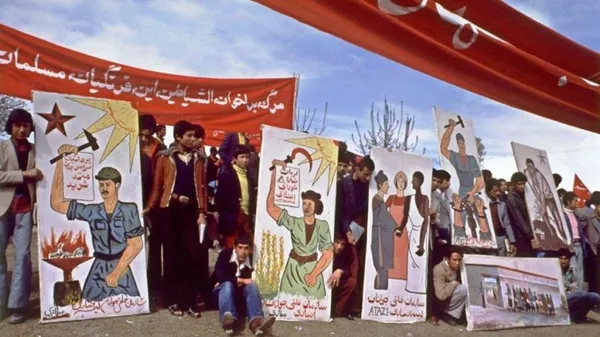
The collapse of the Democratic Republic of Afghanistan illustrates with particular clarity how revolutionary romanticism can transform progressive intent into a strategic disaster. Following the Saur Revolution, the new socialist leadership attempted to compress decades of social transformation into a matter of months, pursuing sweeping land reforms, cultural restructuring, and political centralization in a society that lacked both the institutional capacity and the social conditions to absorb such rapid change.
Afghanistan at the time was overwhelmingly agrarian, economically underdeveloped, and socially decentralized. Political authority functioned largely through local, tribal, and religious structures rather than through a strong centralized state. Yet the revolutionary government proceeded as though it possessed the administrative reach and coercive legitimacy of an industrialized socialist state. Reforms were issued as decrees rather than negotiated transformations, creating a widening gap between revolutionary ambition and state capacity. This mismatch ensured that even well-intentioned policies would be experienced not as liberation, but as arbitrary disruption imposed from above. The land reforms, often cited as emblematic of the regime’s radicalism, exemplify this failure of sequencing. While intended to dismantle feudal exploitation, they were implemented without sufficient understanding of local land tenure systems or peasant survival strategies. In many cases, peasants depended on traditional arrangements not out of ideological loyalty, but as mechanisms of economic security. The sudden dismantling of these arrangements, without viable alternatives in place, generated fear and resentment among precisely the class the revolution claimed to represent. Revolutionary policy thus alienated the peasantry not because it was socialist, but because it destabilized material life faster than it could be reorganized.
Cultural and social reforms followed a similar pattern. Efforts to challenge patriarchal and religious norms were pursued through coercive enforcement rather than patient social transformation. This approach ignored the reality that social consciousness does not advance at the same pace as legislative decree. By treating resistance as a reactionary obstruction rather than a predictable response to imposed disruption, the state converted potential allies into passive opponents and active enemies.
Crucially, the counterrevolution that followed was not the primary cause of the regime’s collapse, but its consequence. External actors such as the United States and Pakistan exploited a situation that revolutionary haste had already destabilized. Foreign intervention succeeded precisely because the socialist state had failed to construct a durable social base capable of withstanding pressure. The revolution did not fall because it lacked enemies, but because it lacked legitimacy and rooted support when those enemies mobilized.
The Afghan case, therefore, does not demonstrate the impossibility of socialist transformation under difficult conditions. Rather, it demonstrates the danger of attempting to leap over historical development through force of will. By prioritizing speed over consolidation and ideological purity over strategic sequencing, the revolutionary government undermined its own survival. The tragedy of Afghanistan lies not in excessive ambition, but in the refusal to recognize that lasting transformation requires time, legitimacy, and careful navigation of existing social contradictions.
The Primacy of Material Conditions Over Ideological Blueprints
The failure in Afghanistan underscores a fundamental Marxist principle that is too often forgotten in revolutionary practice- the need for a concrete analysis of concrete conditions. A successful transformation cannot be a simple copy-paste of another nation's model, whether Soviet, Chinese, or Cuban. It must be a process rigorously grounded in the specific, concrete material conditions of the region—its stage of economic development, its cultural and religious context, its class composition, and the historical consciousness of its people.
To ignore this constitutes a form of idealism that Marx explicitly rejected. A revolution that treats existing social relations as obstacles to be swept away, rather than contradictions to be carefully navigated, inevitably creates unnecessary enemies and squanders precious revolutionary energy.
A Pragmatic Path: Transforming Power Without Unnecessary Collapse
My critique is not a defense of the capitalists and elites. The goal of dismantling their exploitative power remains paramount. However, the process must be strategic and pragmatic, designed to minimize collateral damage to the innocent and to prevent the kind of instability that invites foreign intervention or internal collapse. We must recognize that for
most within the bourgeoisie and petite-bourgeoisie, and even within the masses, the capitalist way of life is not a malicious conspiracy but a deeply ingrained normality—the water in which they have always swum. A sophisticated strategy must account for this reality.
The alternative to revolutionary romanticism is not reformist accommodation but strategic transition—a systematic approach that neutralizes capitalist power while maintaining economic stability and popular support.
This strategy begins with seizing what Lenin called the "commanding heights" of the economy —not through dramatic expropriations that create panic, but through democratic legislation backed by mass popular movements. The state must establish parallel economic structures that demonstrate socialism's superiority in practice, gradually making capitalism obsolete rather than simply outlawing it. The old system is not bombed into oblivion; it is gently phased out as the new one proves its worth.
A Concrete Illustration: The Case of Reliance Industries
Let us apply this pragmatic framework to a hypothetical reform of a massive corporation like Reliance Industries in India. A dogmatic revolutionary might call for the immediate expropriation of Mukesh Ambani's assets and his possible execution. This would be needlessly disruptive, create a power vacuum, and terrify the professional and middle classes, likely triggering capital flight and economic paralysis.
A more nuanced and effective approach would be as follows:
- Fiscal and Legal Restructuring: We would not seize the company outright. Instead, we would employ the existing state apparatus to enact a radical progressive tax policy, closing all loopholes, to ensure Reliance pays its true social share.
- Workers' Empowerment and Democratic Control: We would legislate for robust workers' rights, mandating the formation of independent unions and granting workers seats on the board of directors. This ensures they receive deserved salaries, have a say in corporate governance, and claim a fair share of the profits.
- Strategic State Oversight: Government overseers would be installed to ensure compliance with new social and environmental mandates. Any land or resources acquired through dubious means would be audited and returned to their rightful owners or the public domain.
- Integration into the New System: Reliance would be compelled, through regulation and incentive, to set up its production and distribution networks with the national plan. Its infrastructure could be leveraged for public good, even while the company technically remains under private ownership.
- Consequences for Sabotage: The key deterrent is clear: any attempt by Ambani or management to sabotage the government, hoard essential goods, or orchestrate capital strikes would result in the immediate and total seizure of his assets and the nationalization of the company.
In this model, there is no dramatic, overnight "radical transformation." Yet, the outcome is profoundly transformative. The company's power is systematically neutered, its wealth is redirected towards social needs, and its operations are bent to serve the people's interests, all while maintaining economic stability. The capitalist retains a shell of ownership but is stripped of his political power and his ability to exploit. It is a strategic win-win that achieves core socialist goals without triggering the catastrophic instability born of revolutionary overreach.
Building Socialism Through Demonstration, Not Coercion
The genius of strategic transition lies in proving socialism's superiority through practical demonstration rather than ideological assertion. By creating more efficient, democratic, and humane economic structures alongside existing capitalist ones, socialist forces can win popular support through results rather than rhetoric.
This requires patience and strategic thinking—qualities often dismissed as "reformist" by revolutionary romantics who mistake tactical flexibility for political compromise. But Marx himself understood that revolutionary strategy must be adapted to specific historical conditions. What remains constant is the goal: complete transformation of social relations in favor of the working class.
Strategic transition also recognizes that revolution is not a single dramatic event but a prolonged process of social transformation. The Russian Revolution did not end in October 1917; it began then, requiring years of patient work to build new institutions and transform social consciousness.
Conclusion: Revolutionary Strategy for the Long Term
If the socialist movement fails to abandon romantic conceptions of revolution, the consequences will not be theoretical but material. Movements that mistake intensity for strategy repeatedly exhaust their social base, provoke repression they cannot withstand, and retreat into moralism after defeat. Each cycle of failure narrows the space for future transformation, reinforcing public skepticism and strengthening the hand of reactionary forces that present stability—however exploitative—as preferable to chaos.
The refusal to engage seriously with questions of transition, governance, and institutional durability has already rendered much of the contemporary left politically marginal. Where power is treated as something to be seized momentarily rather than exercised continuously, revolutionary politics collapses into performance. Collapse is aestheticized, failure is reframed as martyrdom, and strategic critique is dismissed as betrayal. In this environment, socialism becomes a posture rather than a project. The danger is not that revolutionary goals will be compromised, but that they will become permanently unrealizable. A left that cannot govern cannot transform; a left that cannot sustain power cannot abolish exploitation. History does not reward ideological purity divorced from strategic competence. It rewards those who understand that transformation is measured not by the speed of destruction, but by the durability of what replaces it.
The test of revolutionary seriousness is therefore not how rapidly one can dismantle the existing order, but how effectively one can construct a new one capable of enduring pressure, resistance, and time. Without this strategic maturity, socialism risks remaining an aspiration endlessly rehearsed and endlessly defeated, rather than a historical force capable of reshaping society.
The choice facing the contemporary left is not between revolution and reform, but between romantic and strategic approaches to revolutionary transformation. Romantic revolutionaries, intoxicated by the aesthetics of dramatic change, often create the conditions for their own defeat. Strategic revolutionaries, committed to lasting transformation, understand that the most radical act is building socialism that actually works. This does not mean abandoning revolutionary goals or accepting permanent compromise with exploitation. It means pursuing those goals through methods that maximize our chances of success while minimizing opportunities for counterrevolution.
The ultimate test of revolutionary strategy is not its ideological purity but its practical effectiveness in building working-class power and creating genuine alternatives to capitalist social relations. By this measure, strategic gradualism offers our best hope for achieving the communist project's noble aspirations without repeating the tragic failures that have haunted the socialist movement for over a century. The revolution we need is not a romantic adventure but a patient reconstruction of society from the ground up—one that demonstrates socialism's superiority through practical success rather than ideological fervor. Only by taking this strategic approach can we build a movement capable of sustaining the long struggle for genuine human liberation.
Liked it? Take a second to support Cosmonaut on Patreon! At Cosmonaut Magazine we strive to create a culture of open debate and discussion. Please write to us at submissions@cosmonautmag.com if you have any criticism or commentary you would like to have published in our letters section.