U.S. communism confronts an organizational crisis that demands a materialist explanation. Despite growing working-class discontent with capitalism—manifest in strike waves, widespread dissatisfaction with declining living standards, and mounting anger at ruling-class impunity—communist organizations remain marginal, fragmented, and unable to transform this anger into revolutionary consciousness and organization. We have no mass communist party. We have no stable organizational forms capable of sustained work in workplaces, neighborhoods, and mass movements. We have no coherent strategy for building revolutionary power in the imperial core. The persistence of these failures amid escalating economic, ecological, and political crises demands that we examine not only our organizational forms but also the analytical frameworks that shape our understanding of past defeats.
Any such historical materialist explanation must begin with the actual conditions of workers' lives, the class structure of society, and the economic relations that shape our movement's possibilities and obstacles. It means analyzing why particular ideas emerge and gain purchase among specific social groups at certain historical moments. It means treating consciousness as a product of social being, rather than as an autonomous force that shapes reality according to its own logic. For Marxists, this should be elementary. Yet a troubling tendency has emerged within contemporary Marxist scholarship: the substitution of institutional conspiracy for class analysis as the primary explanation for Western Marxism's accommodation to imperialism.
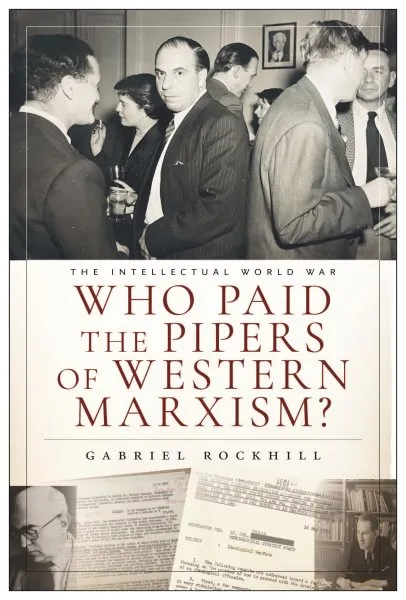
Gabriel Rockhill's recently published Who Paid the Pipers of Western Marxism? is a version of this approach.[1] Through hundreds of pages of archival evidence, Rockhill demonstrates that U.S. intelligence agencies and ruling-class foundations promoted the Frankfurt School as what he calls a "compatible left"—one that would remain "ultimately compatible with capitalism and the interests of U.S. imperialism."[2] The CIA's Congress for Cultural Freedom operated as a massive front organization funding intellectuals, journals, conferences, and publications across the capitalist world. Rockhill documents how this operation "established offices in thirty-five countries, mobilized an army of about 280 employees, published or supported some fifty prestigious journals around the world, planned or sponsored 135 international conferences and seminars, published at least 170 books, [and] ran a press service whose reports reached five million readers."[3] Leading Frankfurt School figures—Theodor Adorno, Max Horkheimer, Herbert Marcuse, and others—collaborated with intelligence operatives, published in CIA-funded journals, and participated in Agency-sponsored cultural warfare against communism.[4] These facts are documented and historically significant. No one seriously committed to understanding postwar intellectual history can ignore them.
Rockhill's thesis goes beyond documenting these institutional relationships. He argues that CIA operations did not merely promote intellectuals who happened to be useful but actively shaped the development of Western Marxism itself. The Agency identified theoretical tendencies that served imperial interests—pessimism about working-class revolutionary potential, the equation of Soviet communism with fascism, a focus on cultural critique rather than political organization—and institutionalized them through strategic funding and promotion. On this account, Frankfurt School accommodationism was not an accident of individual biography or class position but a product of deliberate imperial intervention in the "theory industry." The appeal of this thesis is considerable: it offers a clear, documentable explanation for why Western Marxism diverged so sharply from revolutionary politics. If the CIA spent decades and millions of dollars promoting anti-communist Marxism, we have identified a concrete institutional mechanism for theoretical corruption. The enemy is visible, the money trail is traceable, and the task is exposure rather than explanation.
This review, however, argues for an inversion of Rockhill's causation: class position creates ideological orientation, and the imperial superstructure recognizes and amplifies tendencies that serve its interests. CIA operations are effects of class dynamics, not their cause. Understanding this distinction matters for revolutionary strategy. If we misidentify the cause of past failures, we will misidentify the cure, wasting limited resources on the wrong battles while the actual obstacles to revolution remain unaddressed. By treating CIA operations as the primary cause of Western Marxism's theoretical weaknesses—instead of as amplification of tendencies rooted in class position—this approach offers contemporary communists a seductive but politically damaging explanation for organizational failure. It allows us to externalize responsibility for our weakness onto past institutional manipulation, deflecting attention from the material obstacles and strategic questions that serious communist organizing in the imperial core must address. If the left's failures stem primarily from CIA sabotage and not from our own inadequacies—our inability to build organizations workers want to join, our mechanical application of models developed for different conditions, our sectarian fragmentation—then no fundamental self-critique is necessary. The problem becomes one of exposure (revealing the sinister enemy's machinations), rather than learning hard lessons concerning organizational reconstruction and strategic development.
The conspiracy-focused framework emerging in works like Rockhill's (and shared, with different emphases, by Domenico Losurdo's Western Marxism: How It Was Born, How It Died, How It Can Be Reborn) reflects a broader methodological error: the substitution of empiricist documentation for a truly dialectical analysis. These authors treat historical outcomes as determined by institutional forces rather than as products of class struggle in which revolutionary agency remains possible. If we misdiagnose the sources of past defeats, we will replicate rather than overcome them.
The Political Consequences of Misdiagnosis
Before examining Rockhill's methodology in detail, we should clarify the political stakes. What happens when Frankfurt School accommodationism is explained primarily through CIA manipulation, when their theoretical weakness is attributed to intelligence agencies rather than emerging from their class position and the problems they confronted? The practical response of contemporary Marxist intellectuals is suspicion toward funding sources, institutional affiliations, and potential "connections" rather than comradely debate of theoretical and strategic questions. We see this dynamic constantly in contemporary left discourse: articles and social media threads devoted to tracking who receives grants from which foundations, who publishes with which presses, and who speaks at which conferences. The assumption underlying this activity is that financial relationships and institutional positions determine political content. If we can expose the money trail, we will understand why someone's politics are wrong. If the problem is CIA manipulation, we need only be more vigilant about infiltration.
This cultivates paranoia, rather than the collective theoretical work revolutionary strategy requires. It encourages communists to spend time investigating each other's funding sources instead of engaging substantively with arguments. Intellectual work itself becomes suspect, particularly when conducted within academic institutions or supported by foundations. The practical effect is to reinforce anti-intellectualism and undermine the patient, collective theoretical labor necessary for developing a strategy adapted to our conditions.
The deflection from organizational inadequacies runs deeper. If Western Marxism failed because the CIA promoted it, our task becomes exposing institutional manipulation rather than examining why U.S. communists have repeatedly built organizations workers do not want to join, why we mechanically apply models developed for different conditions, and why sectarian fragmentation has characterized U.S. Marxism for decades. The CIA did not force the CPUSA to purge itself in the 1950s, compel the New Left to reject party structure in the 1960s, or cause the proliferation of competing organizations since the 1970s. These choices had material causes rooted in class composition, organizational culture, and strategic confusion. The conspiracy framework allows us to avoid examining them..
The conspiracy framework also obscures the material obstacles to revolutionary organizing in the imperial core that any serious strategy must address. U.S. workers materially benefit from imperialism through higher wages than workers in the periphery, cheaper consumer goods produced through super-exploitation abroad, and living standards subsidized by the extraction of value from the Global South. This material position generates objective pressure toward accommodation, not because workers are "bought off" but because their immediate material interests are bound up with the maintenance of imperialism. Higher wages depend on imperialist super-profits. Cheap consumption depends on peripheral exploitation. Stable employment depends on American firms' global dominance. These are objective facts about class structure in the imperial core that shape workers' consciousness and create obstacles to revolutionary politics.
The conspiracy framework lets us avoid confronting these material realities as well. If U.S. workers are conservative because of CIA propaganda rather than material interests, then the solution is counter-propaganda, exposure, and better "messaging." We do not need to examine how to build revolutionary consciousness among workers who benefit from the system we seek to overthrow, how to connect anti-imperialism with workers' struggles, or how to develop organizational forms that can sustain long-term work despite these material obstacles. These are tough strategic questions with no apparent answers. Conspiracy theories let us evade them.
Perhaps most fundamentally, this framework naturalizes defeat by treating it as the inevitable product of institutional forces. If CIA operations shaped eighty years of Western intellectual life so powerfully that they determined the character of Marxist theory, what possibility exists for revolutionary theory and organization today? If the Agency could corrupt the Frankfurt School despite their sophisticated understanding of capitalism, what chance do contemporary communists have? The conspiracy framework explains past failures, but it also forecloses future possibilities by suggesting that institutional power is so overwhelming that genuine revolutionary theory and organization cannot develop within the imperial core.
This contradicts what scientific socialism requires: grasping contradictions as opportunities for transformation, rather than as fixed constraints that determine outcomes. Capitalism creates both obstacles to revolution (through labor aristocracy, ideological hegemony, and repressive apparatus) and opportunities for revolution (through economic crisis, inter-imperialist rivalry, proletarianization of new sectors, and ecological catastrophe that undermines capital's reproduction). The task of the communist organization is to identify and exploit these contradictions, to build power in the openings that capitalism's development creates. This requires confidence that revolutionary transformation is possible despite enormous obstacles. This confidence must be grounded not in naive optimism but in materialist analysis of how capitalism's internal contradictions create space for intervention.
The conspiracy framework undermines this confidence. If the enemy is so powerful that it controlled Western Marxism for eighty years, what hope do we have? If institutional manipulation rather than class struggle determines outcomes, what is the point of organizing? The effect, whatever Rockhill's intentions, is to produce political paralysis disguised as radical exposure. These political problems stem from a methodological error that deserves separate examination. Rockhill's framework fails twice: first in its strategic implications, as outlined above, and second in its substitution of empiricist documentation for dialectical analysis. Understanding this second failure clarifies what a genuinely materialist approach to intellectual history would require.
Empiricism Dressed as Materialism
Rockhill's central claim is straightforward: the CIA identified the Frankfurt School as a vehicle for advancing imperial interests and actively shaped the development of Western Marxism through funding, institutional support, and cultural Cold War operations. Frankfurt School figures published in CIA-funded journals, received Agency money, worked for intelligence agencies during World War II, and collaborated with anti-communist psychological warfare programs. Therefore, their theoretical accommodationism (their equation of Soviet communism with fascism, their pessimism about working-class revolutionary potential, their focus on culture and consciousness rather than political economy and state power) was primarily a consequence of CIA manipulation rather than their bourgeois class position.
This argument contains a methodological error that Rockhill shares with Domenico Losurdo and others engaged in similar projects: the substitution of empiricist documentation for dialectical analysis. Losurdo accumulates impressive evidence that Western Marxism accommodated imperialism, tracing how Frankfurt School figures and similar intellectuals aligned with power during the Cold War. He roots this accommodation in the labor aristocracy. As Losurdo argues, "There is often a powerful confluence of interests between the imperial intelligentsia and anticommunist ideology."[5] Rockhill accumulates extensive CIA files, FOIA documents, and archival materials that prove intelligence involvement in Frankfurt School careers and cultural Cold War operations. Both treat this accumulation of evidence in itself as a materialist analysis.
The problem is not that their evidence is wrong. Labor aristocracy is a real phenomenon with profound effects on working-class consciousness in imperial countries. The CIA did fund anti-communist intellectuals as part of cultural warfare against the Soviet Union and communist movements globally. These facts are documented and essential. The problem is treating these facts as stumbling blocks to revolution, insurmountable barriers to class consciousness. That is not Marxism or communism but a species of fatalism dressed in materialist language. Scientific socialism demands something fundamentally different. Material conditions create obstacles to revolution. Institutional power shapes intellectual production and constrains the circulation of ideas. The repressive state apparatus disrupts revolutionary organization. But the dialectical method grasps all of these as contradictions to be overcome through conscious revolutionary organization, not as fixed constraints that predetermine outcomes.
To understand why this is a methodological error, we need to clarify what dialectical materialism actually means as a method of analysis. Dialectical materialism is not about accumulating facts to prove a thesis. It is about grasping the internal contradictions within phenomena, understanding how these contradictions drive development and change, and recognizing the possibility of revolutionary transformation through conscious intervention in these contradictory processes. When Marx analyzed capital, he did not merely document exploitation. He grasped exploitation as a contradictory process that simultaneously creates wealth and immiseration, develops productive forces and proletarianizes masses, generates capital accumulation, and makes its own gravediggers. The point was not to prove that workers are exploited (that is obvious) but to understand how exploitation creates the material basis for revolution—how capitalism develops the proletariat as a class capable of overthrowing it.
Similarly, when Lenin analyzed the labor aristocracy, he grasped it as a contradiction that must be understood and addressed through specific organizational responses—not as a fixed constraint foreclosing revolutionary possibility. In Imperialism, the Highest Stage of Capitalism, he analyzed how "the receipt of high monopoly profits by the capitalists in one of the numerous branches of industry, in one of the numerous countries, etc., makes it economically possible for them to bribe certain sections of the workers, and for a time a fairly considerable minority of them, and win them to the side of the bourgeoisie." Yet this same imperialism generates crises—inter-imperialist war, colonial resistance, economic breakdown—that can undermine the labor aristocracy's material position and create openings for revolutionary politics. The labor aristocracy is not a fixed constraint but a contradictory phenomenon open to transformation.[6]
Lenin's organizational innovations were designed to build revolutionary consciousness despite the labor aristocracy, exploiting contradictions that imperialism itself creates: a vanguard party capable of bringing revolutionary consciousness to workers beyond their immediate economic struggles; theoretical clarity to combat reformist tendencies reflecting workers' immediate material interests; international solidarity with anti-imperialist struggles in the colonies that could undermine imperialism's material basis; and the combination of legal work in parliament and unions with illegal revolutionary organizing. The point was never to explain why revolution did not happen but to develop the consciousness, organization, and strategy to make it happen despite substantial obstacles.
Losurdo's and Rockhill's methods differ from those of Marx and Lenin. They accumulate evidence of obstacles to revolution (labor aristocracy, CIA operations) and treat these obstacles as determinative of outcomes. Losurdo's framework implies Western Marxism had to accommodate imperialism, given the material conditions in the imperial core. There was no real alternative because the labor aristocracy made revolutionary consciousness impossible. Rockhill adds that CIA operations ensured this outcome, institutionalizing accommodationism and suppressing revolutionary options. Both conclude: revolution in the imperial core was impossible given these constraints. This is historical fatalism—treating the past as inevitable—not dialectical materialism, which grasps the past as a field of struggle in which different outcomes were possible through conscious intervention.
Consider a parallel case that illuminates this shared methodology: Grover Furr's archival work on Stalin and the Moscow Trials. Furr has performed impressive archival labor, locating documents in Soviet archives and producing voluminous evidence. In Khrushchev Lied, he sets himself "the task of presenting the best evidence that I can find, drawn in the main from former Soviet archives to demonstrate the false character of Khrushchev's Speech."[7] Like Rockhill's archival work on the CIA, Furr's documentary research is extensive and detailed. Like Losurdo's materialist-sounding explanations of Western Marxism, Furr provides materialist frameworks for understanding Stalin's actions: traitors had to be purged because the Soviet Union faced genuine counterrevolutionary conspiracies backed by imperialist powers.
But documents require a theoretical framework to be meaningful. Furr concludes from his archival research that he has "identified sixty-one" false assertions in Khrushchev's secret speech, and that "virtually all of those 'revelations' that can be checked are, in fact, falsehoods."[8] His framework uses historical evidence to vindicate a politically convenient position: Stalin was right to purge because traitors were real, the violence was necessary, and there was no alternative. The subtitle of his book makes the claim explicit: "The Evidence That Every 'Revelation' of Stalin's (and Beria's) 'Crimes'...is Provably False."[9]
The problem is not so much that Furr takes these archived documents at face value, although he is guilty of that. The problem is treating documentary evidence as if it resolves political and strategic questions that require theoretical analysis. Did Soviet intelligence face genuine threats? Even historians unsympathetic to Stalin and the purges agree it did. Did Stalin's purges strengthen or weaken the Soviet Union's capacity to resist fascism? That question cannot be answered by accumulating documents. It requires analyzing which organizational forms, leadership selection, and political cultures produce movements capable of sustained revolutionary struggle. Furr's method forecloses this analysis by treating the question as resolved: the documents prove Stalin was right, so no interrogation of Stalin is required.
Just so, Losurdo's framework concludes that Western Marxism failed because the labor aristocracy rendered its failure inevitable. Rockhill concludes that the Frankfurt School served imperialism because the CIA controlled them. All three—Furr, Losurdo, Rockhill—substitute documentation for dialectical analysis. All three reify material or institutional constraints into fixed determinants. All three reach conclusions that externalize problems rather than confronting revolutionary agency. Stalin's purges were necessary because conspiracies were real. Western Marxism was accommodationist because the labor aristocracy made it so. The Frankfurt School served imperialism because the CIA created it. Historical actors had no choice; overwhelming forces determined outcomes, and the task of analysis is to document these determinations.
But this methodological error is not inevitable. Thinkers working within and alongside the Marxist tradition have demonstrated how to analyze the relationship between material conditions and intellectual production without collapsing into fatalism. Ironically, Rockhill himself acknowledges one such approach, though he dismisses it rather than learning from it.
In discussing Pierre Bourdieu's analysis of Martin Heidegger's relationship to Nazism, Rockhill notes that Bourdieu rejected both "the absolute autonomy of the philosophic text" (as if ideas developed according to purely internal logic without relation to material conditions) and "the direct reduction of the text to the most general conditions of its production" (as if ideas were mechanical reflections of economic base or political power).[10]Bourdieu argued that the philosophic field operates with its own relatively autonomous logic, structured by material conditions but not mechanically determined by them. There are mediations, logics of intellectual discourse, and struggles over symbolic capital within the academic sphere, all shaped by (but not reducible to) manipulation or determinism.
Rockhill dismisses this as Bourdieu's rejection of Marxism, his abandonment of materialism for idealism. But the critique exposes Rockhill's methodological error. Bourdieu is refining materialism, not abandoning it. He's insisting on what Marx himself understood: that different spheres of social life (economy, politics, culture, philosophy) have their specific logics that cannot be reduced to simple determination, even as they remain rooted in material conditions. What does "relatively autonomous logic" mean in practice? Take Heidegger's relationship to Nazism, Bourdieu's original case. Heidegger joined the Nazi Party and served as rector of Freiburg University under Nazi rule. His philosophy served Nazi purposes in some respects: the mystification of the German folk spirit, the rejection of Enlightenment rationalism, and the celebration of authentic rootedness against cosmopolitan modernity. Heidegger was a Nazi. His philosophy served Nazism. His philosophy is merely Nazi ideology.
But this cannot explain why Heidegger's philosophy had an influence far beyond Nazism, why intellectuals (including Marxists like Marcuse, who studied with Heidegger) engaged seriously with his work, or why his concepts (Being, thrownness, authenticity, care) resonated in contexts unrelated to fascism. To understand this requires recognizing that philosophy operates according to its own internal logic, i.e., problems inherited from previous philosophy and standards of rigor enforced by the philosophical community. All these variables shape which ideas can succeed philosophically, independent of their political utility. Heidegger's philosophy worked philosophically (it solved problems in phenomenology) even as it also served politically (it could be mobilized for Nazi purposes). The relationship between philosophical work and political function was mediated through the autonomous logic of philosophical discourse.
Herbert Marcuse grasped this dialectical relationship between material conditions and intellectual autonomy, though Rockhill does not engage with these insights. In One-Dimensional Man, Marcuse describes how "the philosophic concepts retain and explicate the pre-scientific mediations (the work of everyday practice, of economic organization, of political action) which have made the object-world that which it actually is, a world in which all facts are events, occurrences in a historical continuum."[11] Philosophical concepts emerge from practical experience—the work of everyday practice, economic organization, and political action—but transform this experience through theoretical abstraction, developing concepts according to internal logical requirements that are not reducible to the material conditions that gave rise to them. This mediation cannot be collapsed into direct determination.
Rockhill's method (what Bourdieu calls "the direct reduction of the text to the most general conditions of its production") treats intellectual production as a passive reflection of state power, rather than as a complex process mediated by specific logics of academic fields and intellectual struggle. This is vulgar economism transplanted to the realm of intelligence agencies. It cannot explain why Frankfurt School theory took its specific form: why the particular philosophical frameworks deployed (critical theory, negative dialectics, psychoanalytic Marxism), why the focus on culture and consciousness rather than other possible anti-communist orientations, and why the pessimism about the revolutionary subject took the particular philosophical shape it did. These require analyzing the logic of philosophical discourse, the problems Frankfurt School intellectuals inherited from German idealism and Western Marxism, the academic contexts in which they worked, and the standards of rigor enforced by the philosophical community.
The CIA recognized intellectuals whose existing theoretical orientations served imperial interests and amplified them through the autonomous logic of the philosophic field. The Frankfurt School had already developed sophisticated philosophical frameworks that engaged with Hegel, Marx, Freud, and Weber—work that met standards of philosophical rigor, addressed theoretical problems, and made contributions to philosophy independent of their political utility. This philosophical work could be mobilized for anti-communist purposes (the equation of Soviet communism with fascism, pessimism about revolutionary transformation) because it operated according to an internal philosophical logic that rendered it credible and sophisticated.
The CIA did not need to dictate its theoretical vocabulary or corrupt its philosophical work. It only required recognizing that this work served imperial interests and amplifying it through funding, publication, and institutional position. The work succeeded philosophically (it was rigorous, sophisticated, and engaged seriously with major thinkers) even as it functioned politically (it undermined revolutionary communism and supported Western liberal democracy). As with Heidegger, the relationship between philosophical sophistication and political function was mediated through the autonomous logic of intellectual discourse.
A properly dialectical analysis maintains these tensions. Frankfurt School theory did accommodate imperialism, but not because the CIA dictated it. Their work contained genuine critical insights (the study of authoritarianism and fascism, the critique of instrumental rationality, the examination of the culture industry's role in social control) alongside ideological limitations (pessimism about revolutionary transformation, the equation of all forms of collective organization as authoritarian, retreat from political economy to cultural critique). Their class position generated theoretical sophistication (access to elite philosophical training, leisure to develop complex arguments, institutional resources for sustained research) and political accommodation (dependence on bourgeois institutions, distance from working-class struggle, material interests in system stability). The CIA amplified the accommodationist elements while their critical insights were marginalized. This occurred through the complex mediation of academic fields and discourse rather than through direct institutional control.
This is what distinguishes dialectical materialism from both idealism and mechanical materialism. Idealism treats consciousness as independent of material conditions, as if having the "correct" ideas could transform reality regardless of material circumstances. Materialism treats material conditions as mechanically determining consciousness, as if ideas simply reflect the economic base with no mediation or autonomy. Dialectical materialism grasps the relationship as contradictory: consciousness emerges from material conditions but is not mechanically determined by them, and conscious intervention can transform material conditions themselves. This creates space for revolutionary agency and for an organization that exploits contradictions within capitalism to transform the system despite obstacles.
Rockhill's framework, whatever his intentions, abandons this space for agency. By treating CIA operations as determining the development of Western Marxism and by suggesting that intellectual production in the imperial core is so thoroughly controlled by intelligence agencies that independent revolutionary theory cannot emerge, he implies that past defeats were inevitable and future victories impossible. This is politically paralyzing. If we take Rockhill's framework seriously, what follows? Should we be suspicious of any Marxist intellectual working in universities or receiving foundation funding? Do we conclude that revolutionary theory cannot be developed in the imperial core because the CIA controls the "theory industry." Should we focus on exposing institutional manipulation rather than building organization and developing strategy?
Class Position, Not Conspiracy
The materialist alternative begins with class analysis, not with CIA operations. Theodor Adorno and Max Horkheimer's ideology did not require CIA creation. It flowed directly from their class position and the material conditions of intellectual production in the imperial core.
Both came from wealthy families. Adorno's father was a prosperous wine merchant who provided comfortable material support, allowing Theodor to pursue philosophical and musical studies without financial pressure. Horkheimer's father was a successful textile factory owner, a millionaire whose wealth funded Max's education and early intellectual work. Neither had ties to socialist political life or party membership.[12] They were bourgeois intellectuals from birth, shaped by family wealth, elite education, and cultural capital. They maintained careful distance from what Perry Anderson describes as "explosive political events" to pursue "personal concerns"—philosophical and aesthetic projects that reflected their class position.[13]
What does this mean for understanding their theoretical orientation? As petty-bourgeois intellectuals—members of the professional-managerial stratum whose labor is primarily mental rather than manual, whose work conditions give them relative autonomy, whose income and status separate them from working-class life—they rejected working-class organization and party discipline not because the CIA told them to but because party discipline threatened their autonomy, their freedom to pursue intellectual work according to professional standards rather than political directives. Horkheimer explicitly "rejected the position of Lenin, Lukács, and the Bolsheviks that critical theory must be 'rooted' in the working class."[14] This was not CIA manipulation. It was a class position finding a theoretical expression.
The professional-managerial class (PMC) occupies a contradictory location in capitalist social relations. While the Ehrenreichs coined this term in 1977, the class formation it describes predates the concept.[15] Weimar Germany's expanding universities, research institutes, and cultural industries created precisely the professional stratum—salaried intellectuals dependent on institutions yet possessing relative autonomy—that would later be theorized as the PMC. Members do not own the means of production as capitalists do, nor do they perform the direct productive labor that characterizes working-class experience. They work for wages, but those wages are typically higher than those of the working class, and their working conditions afford substantial autonomy and control. They serve capital's interests by managing workers, reproducing capitalist ideology through education and media, and developing technologies that increase exploitation. But they also depend on capitalism's continued functioning for their own reproduction as a class. This creates specific ideological tendencies: a belief in expertise and professional autonomy, in opposition to both capitalist control and working-class direction; a preference for gradual reform over revolutionary transformation that might threaten their status; and an attraction to cultural and educational solutions over political organization and class struggle.
Frankfurt School theory reflected these class tendencies perfectly. The focus on culture and consciousness rather than political economy and state power reflects PMC experience, in which cultural capital and educational credentials matter more than direct control over production. The pessimism about working-class revolutionary potential reflects the PMC's distance from working-class life and struggle. The equation of all forms of "domination" (capitalist and communist, fascist and Soviet) as expressions of "instrumental reason" reflects PMC anxiety about subordination to any collective discipline, be it a capitalist hierarchy or a communist party. The retreat into philosophical critique, disconnected from political organization, reflects PMC investment in intellectual autonomy, independent of any external direction.
Yet—and this is crucial—their theoretical project addressed a genuine problem that required explanation: why had capitalism proved far more resilient than Marx's Capital predicted? Why had the working class in advanced capitalist countries not developed revolutionary consciousness despite deepening exploitation? Why did fascism emerge from the capitalist crisis in Germany and Italy rather than the proletarian revolution? How did mass culture in the United States integrate the working class into capitalist social relations despite objective conditions that should have produced radical opposition?
These were genuine questions that demanded theoretical attention. The crisis of Marxism after World War I was profound. Revolutionary movements had been defeated across Europe. Social democratic parties had betrayed internationalism to support imperialist war. The Soviet Union stood isolated, forced to build socialism in conditions of economic devastation and hostile encirclement. Fascism had triumphed in major European countries. The working class in the advanced capitalist West had not developed revolutionary consciousness despite predictions that capitalism's contradictions would inevitably produce it. Frankfurt School intellectuals confronted these problems and developed theoretical frameworks to explain them.
Their answers were profoundly limited by their class position. But dismissing their questions as CIA-inspired betrayal misses what they were attempting: to understand why capitalism had not collapsed as predicted and how it maintained itself despite contradictions that should have produced revolutionary transformation. The CIA did not need to create this orientation. It was already there, emerging from class position and the problems intellectuals in that position confronted. The CIA recognized intellectuals whose existing theoretical orientations served imperial interests and amplified them through funding, publication, and institutional support. This is how hegemony operates: through the recognition and support of tendencies that serve ruling-class interests.
Consider what happened when the Institute for Social Research relocated to the United States during the Nazi period. Rockhill himself documents how it "censored its own past and present work to suit local academic or corporate susceptibilities," expunging "Marxism," "revolution," and "communism" from publications.[16] When Walter Benjamin's famous essay "The Work of Art in the Age of Mechanical Reproduction" contrasted communism's politicization of art with fascism's aestheticization of politics, the Institute changed "communism" to "the constructive forces of mankind" for American publication. This was not CIA mind control. It was opportunistic self-censorship by intellectuals seeking funding and respectability in their new context, willing to moderate their language and politics to maintain their institutional position.
Rockhill documents this extensively yet attributes it primarily to CIA influence rather than material interests. But which is cause and effect? Did the CIA corrupt revolutionary intellectuals, or did it support and amplify those whose anti-Soviet positions and accommodationist politics already made them useful? Rockhill's own evidence supports the latter. The Institute was already accommodating capitalism, already rejecting Communist Party organizing, already expressing pessimism about workers, already moderating its language before extensive intelligence collaborations developed. The CIA found and amplified existing orientations that served imperial interests. It did not create them.
This points to a properly materialist account of Western intellectuals' position. They constitute a professional-managerial stratum whose material well-being depends on imperial super-profits. They work in universities funded by capitalist foundations, corporate donors, and state grants. They publish with capitalist presses that function as for-profit businesses. They consume goods produced by exploited peripheral labor—cheap electronics manufactured in Chinese factories, cheap clothing from Bangladeshi sweatshops, cheap food from Mexican agricultural workers. They enjoy living standards—home ownership, health insurance, retirement savings, international travel—subsidized by imperialism's extraction of value from the Global South. Their children attend elite schools that reproduce class position across generations.
This material position generates objective pressure toward imperial accommodation. Not crude "selling out" where intellectuals consciously betray principles for money, but structural accommodation where material interests shape what questions seem essential, what answers seem plausible, and what political positions seem realistic. An intellectual whose mortgage depends on university employment, whose retirement depends on stock market returns, whose children's future depends on maintaining class position—such an intellectual will find anti-imperialism that threatens these material conditions difficult to sustain. They may support various progressive causes (racial justice, LGBTQ rights, environmental protection) that do not threaten their class position. But revolutionary politics that would genuinely undermine imperialism, and with it their material security? That's much harder.
Within this material context, some intellectuals develop Marxist critiques, but in forms that do not threaten their economic position. The result is Frankfurt School "critical theory"—Marxist enough to feel radical and maintain intellectual credibility, sufficiently compatible with capitalism to secure foundation funding and university positions. The CIA recognized this dynamic and exploited it, funding anti-communist Marxism that could serve as an alternative to revolutionary communism and amplifying intellectuals whose politics were helpful.
A historical materialist analysis thus inverts Rockhill's causation. Class position creates ideological orientation. The imperial superstructure recognizes practical orientations and amplifies them. CIA operations are effects of class dynamics, not their cause. Getting this causation right matters for strategy. If CIA manipulation caused Western Marxism's accommodation, then our task is vigilance against institutional manipulation, exposure of funding sources, and suspicion toward intellectuals with institutional connections. But if class position caused accommodation and the CIA simply amplified it, then our task is to build organizational forms that connect revolutionary intellectuals with working-class struggle, develop theoretical work genuinely rooted in mass organizing rather than academic careers, and create material conditions in which intellectuals' interests align with revolutionary transformation rather than system maintenance.
Strategic Implications for Communist Organizing
The determinism shared by Losurdo and Rockhill (whether manifested as labor aristocracy determinism or CIA determinism) limits revolutionary strategy. If material conditions in the imperial core inevitably produce accommodationist Marxism, what space exists for revolutionary organization? Neither Losurdo nor Rockhill answers this question because their shared framework forecloses it. They use materialist analysis to explain why Western Marxism failed, yet they do not develop a strategy for how revolutionary organizing might still succeed.
This creates a politics of defeat: an orientation that serves the contemporary left's psychological needs rather than its revolutionary imperatives. By attributing Western Marxism's weakness to insurmountable structural constraints (labor aristocracy) or to institutional manipulation (the CIA), this framework allows us to externalize responsibility for organizational failure. The weakness is not our fault. We do not need to examine our organizational incompetence, our inability to connect with workers, our sectarianism and dogmatism, or our failure to adapt Marxism-Leninism to U.S. conditions. The problem is material conditions or CIA operations that make success impossible. This is psychologically comforting but strategically paralyzing.
Yet successful revolutionary movements demonstrate the opposite. They confronted enormous material obstacles—often far greater than those facing U.S. communists—and succeeded through superior organization, strategic clarity, and genuine adaptation to national conditions.
Understanding this matters for revolutionary strategy. If intellectual production is determined solely by institutional manipulation or the economic base, then our task is exposure and vigilance. But if intellectual production operates through relatively autonomous logics mediated by but not reducible to material conditions, then our task is more complex: building intellectual work genuinely rooted in working-class struggle while maintaining theoretical rigor and sophistication, creating institutions that can support revolutionary intellectual production without subordination to bourgeois academic standards, developing cadre capable of both serious theoretical work and organic connection to mass organizing.
The historical record of successful revolutionary movements demonstrates a fundamentally different approach to material obstacles. The Bolsheviks operated under Tsarist autocracy with no legal space for organizing, where activists faced imprisonment, exile, or execution. The working class constituted a small minority in an overwhelmingly peasant society. Opportunist tendencies within the movement constantly threatened revolutionary politics. Yet through decades of patient underground work, they built organizational forms (democratic centralism, party press, cell structure) that could sustain revolutionary activity despite brutal repression. Their theoretical clarity about the revolutionary party's nature and relationship to the working class, developed in works like What Is to Be Done? and One Step Forward, Two Steps Back, provided foundations for strategic flexibility that combined legal and illegal work, parliamentary engagement with revolutionary principles, and peasant alliances with working-class hegemony.
The Chinese Communist Party faced conditions that orthodox Marxism deemed unsuitable for proletarian revolution—an agrarian society with a minimal industrial working class. Beyond domestic state repression, they confronted Japanese invasion and U.S.-backed Kuomintang forces in civil war. Rather than mechanically applying Soviet models, Mao developed the "mass line," which he described as "take the ideas of the masses (scattered and unsystematic ideas) and concentrate them (through study turn them into concentrated and systematic ideas), then go to the masses and propagate and explain these ideas until the masses embrace them as their own."[17] This creative adaptation enabled rural-based areas, a protracted people's war suited to Chinese conditions, united front politics that isolated principal enemies while building broad alliances, and organizational forms (rectification campaigns, criticism and self-criticism) appropriate to peasant society. When urban areas proved impossible to hold after the 1927 massacre, they retreated to the countryside and developed a rural revolution.
Vietnamese communists faced perhaps the most overwhelming military power differential in revolutionary history—French colonial forces, Japanese occupation, reconquest attempts, then U.S. carpet-bombing, chemical warfare, and massive ground deployments. General Vo Nguyen Giap articulated their strategic approach: "the war of liberation of the Vietnamese people proves that, in the face of an enemy as powerful as he is cruel, victory is possible only by uniting the whole people within the arms of the worker-peasant alliance and the wide national union front."[18] They sustained revolutionary organizing despite genocidal violence through organizational forms capable of decades-long struggle, combined political and military work, mobilized peasants while maintaining working-class leadership, built international solidarity, and developed cadres who maintained revolutionary purpose despite extraordinary suffering.
All these movements faced repression far worse than what American leftists endure—systematic murder, torture, bombing, and chemical warfare. All succeeded through superior organization, strategic clarity, and genuine adaptation to national conditions. None of them accepted material constraints as determinative. All grasped them dialectically as contradictions, creating specific tasks for the revolutionary organization. All demonstrated that revolutionary transformation is possible despite enormous obstacles when movements develop appropriate organizational forms, strategic clarity, and theoretical frameworks. The problem for U.S. communists is that we have not developed organizational forms, strategic orientations, and theoretical frameworks capable of building revolutionary power in the conditions we face.
Scientific socialism demands grasping the contradictions in actually existing capitalism as opportunities for revolutionary intervention, not as fixed constraints that make revolution impossible. Labor aristocracy in the imperial core depends on continued imperialist super-profits. But global resistance to imperialism and economic crisis can undermine this material basis. Consumer capitalism in the imperial core generates dissatisfactions and ecological catastrophes that create openings for anti-capitalist politics. Imperial chauvinism conflicts with working-class internationalism that can be cultivated through patient political work. State repression reveals the violence underlying bourgeois democracy and can radicalize those it touches. These contradictions create openings for revolutionary consciousness.
The task is not to document why a revolution has not yet occurred. The task is developing organizational forms and strategic approaches that can exploit contradictions in contemporary capitalism to build revolutionary power now. This requires moving beyond the deterministic framework (whether labor aristocracy determinism or CIA determinism) that naturalize defeat. It requires confidence in the revolutionary possibility, grounded in a materialist analysis of capitalism's contradictions and how conscious organization can exploit them.
Unresolved Questions for Revolutionary Practice
This critique of the conspiracy-focused framework leaves us with difficult questions that any serious strategy for building a mass democratic communist movement must address. These questions cannot be answered through historical interpretation alone. They require organizational experimentation, theoretical development grounded in practice, and ruthless self-criticism about what works and what does not. They require the hard work of building a revolutionary organization under extraordinarily difficult, yet not impossible, conditions.
How do we build revolutionary consciousness among workers who materially benefit from imperialism? This is not a question historical analysis can resolve. It requires a concrete examination of how contemporary conditions might create openings despite this material obstacle. When U.S. corporations move production abroad to reduce costs, when wages stagnate despite productivity increases, when housing becomes unaffordable and retirement impossible, does this undermine workers' stake in imperialism? How does climate catastrophe—droughts, floods, fires, heat waves—challenge imperial consumption patterns and create openings for anti-capitalist politics that connect ecological survival to anti-imperialism? How does Black radical tradition, with its long history of linking domestic oppression to global imperialism, offer resources for building anti-imperialist consciousness among broader working-class sectors? How do we connect workplace organizing around immediate economic struggles to broader anti-capitalist and anti-imperialist politics? These questions require concrete analysis of class composition, economic conditions, and possibilities for political intervention.
Why have U.S. Marxists repeatedly built organizations that workers do not want to join? The CPUSA destroyed itself through sectarianism and slavish subordination to Soviet directives inappropriate to American conditions. During the Popular Front period, it subordinated revolutionary organizing to liberal coalition-building, training a generation of cadres to view the Democratic Party as an ally rather than a class enemy. During the Stalin period, it purged its own members in witch hunts mirroring Moscow's paranoia, creating a climate of suspicion that undermined genuine revolutionary organizing. When Khrushchev's secret speech was delivered, the Party collapsed because it was built on sand, with members whose commitment to socialism was contingent on Soviet infallibility rather than grounded in an analysis of U.S. conditions.
The New Left rejected party structure entirely, embracing spontaneity and horizontal organization as if Lenin's critique of "economism" and anarchism had never been written. Students for a Democratic Society imploded through sectarian splits, with factions like Weathermen pursuing adventurist violence that served the state's repressive agenda far more effectively than any FBI infiltrator could. Contemporary formations remain marginal, sectarian, and disconnected from working-class life. The Democratic Socialists of America, despite its many successes, functions primarily as the left wing of the Democratic Party. Trotskyist sects proliferate, spending more energy attacking each other over doctrinal minutiae than building working-class power. Maoist formations mechanically apply "people's war" concepts to contexts radically different from mid-century China.
This reflects organizational incompetence, not primarily CIA sabotage. What organizational forms can sustain long-term revolutionary work in the imperial core? How do we develop a cadre capable of bringing revolutionary consciousness to workers while maintaining an organic connection to their daily struggles? How do we build organizations that combine ideological clarity with political flexibility, revolutionary principles with tactical adaptation, theoretical sophistication with accessibility to workers without elite education? How do we create organizational cultures that combine the discipline necessary for sustained work with democracy that allows learning from mistakes? How do we develop leadership that can provide strategic direction without bureaucratic ossification or cult of personality?
How do we develop a Marxist theory adapted to imperial-core conditions rather than mechanically applying models from other contexts? Lenin, Mao, and Ho demonstrated what Rockhill himself describes as "innovation of the essence...to solve practical problems and chart new territory."[19] Lenin adapted Marxism to Russian autocracy, developing theories of imperialism, labor aristocracy, and the revolutionary party suited to conditions Marx hadn't examined. Mao adapted Marxism-Leninism to China's agrarian conditions, developing theories of protracted people's war, rural revolution, and the mass line.
U.S. Marxists have predominantly failed to engage with this innovation, creating what we might call cargo cult Marxism—mechanically quoting texts written for agrarian societies or early industrial capitalism without developing a theory for the deindustrialized, financialized, service-economy 21st-century United States. What does revolutionary strategy look like in conditions where manufacturing employment has declined dramatically, where service work and logistics have become central sectors, where precarious "gig economy" arrangements replace stable employment, where finance capital dominates, where mass incarceration functions as labor control and surplus population management? What does it mean to build a working-class organization when "the working class" includes Amazon warehouse workers, Uber drivers, Starbucks baristas, healthcare workers, teachers, and tech workers with very different material conditions and consciousness? How do we analyze class composition when traditional categories do not fit neatly, and large sectors of workers do not identify as "working class" at all?
How do we build a unified communist movement capable of sustained work despite sectarian tendencies and theoretical differences? The proliferation of competing organizations (each claiming authentic revolutionary consciousness while workers ignore them all) reflects organizational immaturity and the petit-bourgeois composition of most "socialist" groups. Intellectuals trained to debate fine theoretical points treat political organizing as another venue for demonstrating their sophistication, their mastery of Marxist texts, and their purity compared to others' opportunism. Material security derived from PMC positions allows them to maintain sectarian commitments without the pressure to unite that arises from facing state repression.
Can we develop organizational forms that maintain theoretical clarity while building the broad unity necessary for mass work? How do we distinguish between principled differences that require separate organization and sectarian splits that reflect organizational immaturity? How do we create political cultures that allow comradely debate about strategy and tactics while maintaining unity in action? How do we develop processes for resolving disputes that do not require splits or purges? How do we build trust across organizational lines so that coordinated work becomes possible despite theoretical differences?
These questions have no obvious answers. They require practical experimentation—trying different organizational forms, different strategic approaches, different ways of combining theory and practice—and learning from what works and what does not. They require theoretical development from practice—analyzing concrete organizing experiences to develop concepts and strategies suited to our conditions. They require patience to build the cadre and mass connections necessary for sustained revolutionary struggle. Most fundamentally, they require rejecting both conspiracy theories that externalize failure onto CIA operations and materialist determinism that naturalizes failure as inevitable, given the labor aristocracy.
Both tell us why revolution did not happen in the past but not how we might make it happen in the future. Both naturalize defeat, treating contradictions as fixed constraints instead of opportunities for intervention. Both serve psychological needs (the comfort of explanation, the relief from responsibility) rather than revolutionary imperatives.
Conclusion: Toward Revolutionary Strategy
Rockhill's archival work documents important facts about CIA involvement in postwar intellectual life that students and scholars engaging with Frankfurt School theory should know. The extent of intelligence agency operations, the mechanisms by which anti-communist intellectuals were funded and promoted, and the institutional infrastructure of the cultural Cold War—all of these are historically significant and warrant serious attention. This contribution should be recognized and built upon by historians examining the material conditions of intellectual production in the imperial core.
But the interpretive framework Rockhill imposes on this documentation produces the political consequences examined earlier: it encourages surveillance over debate, deflects attention from organizational inadequacies, obscures material obstacles, and naturalizes defeat as inevitable rather than grasping it as a field of struggle in which different outcomes remain possible.
Scientific socialism requires something different. It requires grasping material constraints not as chains of determination that foreclose possibility, but as contradictory processes open to transformation through conscious organization. Labor aristocracy is real and shapes workers' consciousness, but economic crisis and global resistance to imperialism can undermine its material basis and create openings for revolutionary politics. CIA operations and state repression are real and constrain what organizing can accomplish, but they also reveal the violence underlying bourgeois democracy and can radicalize those who experience them. The petit-bourgeois composition of most socialist organizations is real and produces sectarianism and disconnection from workers, but building genuine mass work can, over time, transform organizational composition and culture. The error in Rockhill's framework is one of causation: he treats CIA operations as the cause of Western Marxism's accommodation, when a materialist analysis recognizes them as effects of class dynamics that imperial institutions amplified.
The task facing communists committed to building a mass democratic movement in the United States is not primarily exposing past CIA operations. It is developing the organizational forms, theoretical clarity, and strategic approaches necessary to exploit contradictions in contemporary capitalism and build revolutionary power despite enormous obstacles. This requires moving beyond the framework that substitutes historical interpretation for revolutionary practice, beyond explanations that naturalize defeat, and beyond approaches that externalize rather than confront our own failures.
Studying how successful revolutionary movements built parties and adapting those lessons to the realities of the imperial core is essential, as is producing rigorous analysis of contemporary U.S. capitalism, racial formation, and class composition. What does the modern working class look like? How do different sectors relate to capital and to each other? What are the material bases for consciousness in various groups? Where are the contradictions that create openings for political intervention? How do economic crisis, ecological catastrophe, and imperial decline create conditions different from stable postwar capitalism?
Theoretical work must be treated as a necessary component of revolutionary practice rather than viewed with suspicion as inevitably compromised by institutional position. Lenin was a theorist. Mao was a theorist. Revolutionary movements require theoretical work that analyzes conditions, develops strategy, and provides political education. The problem with Frankfurt School theory was not that it was theoretical but that it was disconnected from revolutionary practice and shaped by bourgeois class position. The task is to build theoretical work that is genuinely rooted in working-class struggle while maintaining rigor and sophistication—not abandoning theory for anti-intellectual activism.
These are the strategic questions the conspiracy-focused framework helps us avoid. They are also the questions we must confront if we are serious about building communism in the imperial core. Rockhill's book, despite its archival contributions, encourages avoidance rather than confrontation. It offers psychological comfort (explaining failure through external manipulation) rather than the painful self-critique that genuine revolutionary renewal requires. For communists committed to scientific socialism and mass democratic organizing, this limits its usefulness as a tool for revolutionary strategy.
The U.S. left will remain marginal until we abandon empiricist documentation for dialectical analysis, historical determinism for revolutionary agency, and elaborate explanations of defeat for the hard work of building organization. We must stop blaming the CIA or "the feds" for our failures and start building the party, the cadre, the strategy, the connections with workers, and the theoretical clarity necessary for revolutionary transformation. We must grasp contradictions in contemporary capitalism as opportunities for intervention rather than as fixed constraints that make revolution impossible. We must maintain confidence in revolutionary possibility despite enormous obstacles, confidence grounded not in naive optimism but in rigorous analysis of how capitalism's contradictions create space for building revolutionary power. These are complex tasks with no guarantee of success. But they are the tasks revolutionary conditions demand. Rockhill's book does not help us accomplish them.
Liked it? Take a second to support Cosmonaut on Patreon! At Cosmonaut Magazine we strive to create a culture of open debate and discussion. Please write to us at submissions@cosmonautmag.com if you have any criticism or commentary you would like to have published in our letters section.
-
Gabriel Rockhill, Who Paid the Pipers of Western Marxism? (New York: Monthly Review Press, 2025).
↩ -
Rockhill, Who Paid the Pipers, 119.
↩ -
Domenico Losurdo, Western Marxism: How It Was Born, How It Died, How It Can Be Reborn, ed. Gabriel Rockhill, trans. multiple translators (New York: Monthly Review Press, 2024), 25-26.
↩ -
Rockhill, Who Paid the Pipers, 26, 179.
↩ -
Losurdo, Western Marxism, 151.
↩ -
V.I. Lenin, Imperialism, the Highest Stage of Capitalism, in Collected Works, Vol. 22 (Moscow: Progress Publishers, 1964), 280-281.
↩ -
Grover Furr, Khrushchev Lied: The Evidence That Every "Revelation" of Stalin's (and Beria's) "Crimes" in Nikita Khrushchev's Infamous "Secret Speech" to the 20th Party Congress of the Communist Party of the Soviet Union on February 25, 1956, is Provably False (Kettering, OH: Erythros Press and Media, 2011), 15.
↩ -
Furr, Khrushchev Lied, 14-15.
↩ -
Furr, Khrushchev Lied, title page.
↩ -
Rockhill, Who Paid the Pipers, 76-77; Pierre Bourdieu, The Political Ontology of Martin Heidegger, trans. Peter Collier (Stanford, CA: Stanford University Press, 1991), 2.
↩ -
Herbert Marcuse, One-Dimensional Man: Studies in the Ideology of Advanced Industrial Society, 2nd ed. (London: Routledge, 2002), 126.
↩ -
Thomas Wheatland, The Frankfurt School in Exile (Minneapolis: University of Minnesota Press, 2009), 24, 13.
↩ -
Perry Anderson, Considerations on Western Marxism (London: Verso, 1989), 33; Steven Müller-Doohm, Adorno: A Biography, trans. Rodney Livingstone (Cambridge: Polity Press, 2005), 94.
↩ -
John Abromeit, Max Horkheimer and the Foundations of the Frankfurt School (Cambridge: Cambridge University Press, 2011), 42
↩ -
Barbara Ehrenreich and John Ehrenreich, "The Professional-Managerial Class," Radical America 11, no. 2 (March–April 1977): 7–31.
↩ -
Rockhill, Who Paid the Pipers, 144.
↩ -
Mao Zedong, "Some Questions Concerning Methods of Leadership" (June 1, 1943), in Selected Works of Mao Tse-Tung, Vol. III (Peking: Foreign Languages Press, 1965), 119.
↩ -
Vo Nguyen Giap, People's War, People's Army (New York: Praeger, 1962), 103.
↩ -
Rockhill, Who Paid the Pipers, 339.
↩