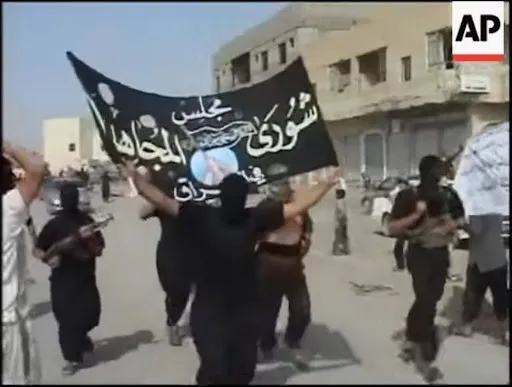
Dawlat al-Islam
NOTE: All parenthetical citations refer to pages from Ch. 6, The Study of the Insurgency in Anbar Province.
MSC’s Weaknesses
Amidst all the signs of Al Qaida in Iraq (AQI) power in Anbar (and therefore Iraq), other signs indicated deeper problems in the organization. One was the continued absence of a top sharia official, which began with the death of Shaykh Abdul-Rahman on 7 June.
The absence of spiritual leadership may have hindered AQI’s decision-making process. Like Soviet commissars, religious leaders within groups like AQI ensured ideological purity and unity, and their absence could create at least temporary confusion over motivation and ultimate goals. In this particular instance, the result of no religious leadership within AQI was to prevent a reconciliation of AQI’s tactics with the global objectives of AQSL. (180)
This absence worsened the already significant ideological and strategic gaps between Mujahidin Shura Council (MSC) and Al Qaida Central (AQC). Since the beginning, AQC had urged the Iraqi jihadists to set aside sectarian warfare and create a popular movement against the Coalition. In contrast, the Iraqi jihadists had commenced sectarian bloodletting from the very beginning, operating on strategically accelerationist logic. The absence also muddled the ideological response to the Sahawat, leading to confusion on how best to argue against this deeply threatening phenomenon while it was still nascent. The Study reports that MSC requested AQC to send top sharia leaders to fill the gaps, but I am skeptical, as this would suggest that AQC was privy to the discussions leading up to the declaration of the Islamic State of Iraq (ISI). The evidence instead points to the opposite conclusion: That AQC had no knowledge of these discussions and found out about ISI on the same day that the whole world did. This will be discussed at great length below.
Another sign of MSC’s troubles was the recruitment of female fighters, particularly in Al Qaim and far western Anbar. Al Qaim had witnessed the first female suicide bombers, but this recent step was a significant escalation. Now, women were recruited as street-level combatants, such as in Anah, where a female branch fought in early October.
The decision to incorporate females into AQI was made by Zarqawi prior to his death, a decision that [REDACTED] supported and sought to exploit in order to use females as fighters, suicide bombers, and smuggling facilitators. AQI’s major limitation regarding its use of female operatives, however, lay in its ability to recruit them. While the use of female operatives by AQI remained relatively uncommon for this reason, they continued to be employed by the group as couriers and suicide bombers. (181)
Islamic law and Arab customs prohibit women from partaking in warfare as combatants, so this move would suggest that AQI was growing desperate in its recruitment. The lack of male recruits would have encouraged local leadership to expand the recruit pool to women. It would also reflect a growing ultra-extremism in the organization, further alienating it from its Sunni base.
Yet perhaps the most disturbing indication of MSC’s internal troubles was the use of child soldiers. Since early 2006, MSC and other insurgent groups had recruited children for minor tasks, such as planting IEDs. By October 2006, this had escalated into regular visits by AQI to high schools throughout Anbar to recruit teenagers as insurgents. The jihadists targeted impoverished youth who would be most susceptible to financial incentives.
AQI recruiting efforts for these teenagers included paying them a lump sum of $27 per operation with the option of earning a monthly salary of up to $400. This recruitment may have been motivated by the belief that the Coalition would not suspect that teenagers would be assisting AQI, but it may also have been another indication of weakness, since recruiting children for operations is typically a sign of poor recruitment of military aged males within an insurgency. To ensure the compliance of the recruits, AQI operatives intimidated and coerced members of their family if they did not comply with their assigned tasks. For instance, AQI coerced the student body and faculty of a Ramadi high school into leaving the school in order to create a greater pool of teenagers from which to recruit. (181)
Teenagers were typically assigned to minor tasks, such as lookout, surveillance, or IED planting. It is worth treating the Study’s narrative with caution, as the author almost certainly seeks to preemptively justify incidents of Coalition soldiers murdering children with the pretext that these children were used by the insurgency. At the same time, MSC’s ideological extremism had reached profoundly depraved heights. In the most hideous cases, AQI deceived or coerced teenagers to become suicide bombers. There are reports of youths from Fallujah or Ramadi being sent as bombers to Mosul and Baghdad. “Some Iraqi AQI members were even radicalized enough to recruit their own children to use as suicide bombers. While the examples of the latter occurring were rare and extreme cases, they underscored the level of religious extremism that was now dominant within the membership of AQI.” (181-82) One can see why many Sunnis in Anbar were growing to view AQI as the greatest threat to their lives.
It is notable that two years later, in 2008, Islamic State co-leader Abu Hamza al-Muhajir gave an interview, in which he categorically denied any use of female or child soldiers.[1] His answer is quite revealing:
This is a blatant lie. As for children, it is impossible for us to accept into the ranks of our army someone who has not reached the age of puberty. As for women, the ruling on female jihad in defensive jihad is well-known. Nevertheless, the Commander of the Faithful has declared over and over again that it is not permissible for a woman to carry out a martyrdom operation, except in circumstances where men are unable to, provided that her faith is sound and her honor is safe from the slightest harm, taking exaggerated precautions necessary to ensure this is secured.
That Muhajir felt it necessary to deny the use of child soldiers highlights his glaring insecurity on this point, suggesting there was some truth to it. Equally telling is that he admits to using women as fighters, with the added admission that this only took place where the organization failed to recruit enough men. Although the interview was two years after the events described above, it retroactively reveals a great deal about the group.
Developments in the Sahawat
In early October, the Anbar Emergency Council renamed itself the Sahwa al-Anbar (SAA) or “the Anbar Awakening.” From this point onward, the movement would be officially called the Sahawat, though we have used this label from the start of the movement as such. The Sahawat continued their efforts to gain official support from the Iraqi national government, but Prime Minister Nuri al-Maliki continued to rebuff them.
He and other top government officials attempted to form another tribal council from the Iraqi Islamic Party (IIP), which was much easier to control from Baghdad. The Sahawat expressed their displeasure with Maliki in a letter, stating they did not seek to link with the IIP or to partake in politics in general. Their only stated goal was to fight MSC. Yet this was not exactly true, as they (not unjustly) saw “Governor Mamoun and the Anbar provincial government as only slightly less of a menace to Anbari society as that posed by AQI.” (182) When Maliki finally met with Sahwa representatives, he astonishingly claimed that security forces were winning across Anbar, Ramadi’s public services were functioning, and AQI was being steadily expelled from the city. None of this was remotely true, but it reflected the extent to which Maliki preferred to live in a world of delusions than deal with Sunni political forces that were not to his liking. The whole episode portended Maliki’s constant sabotaging and eventual betrayal of the Sahawat, leading to the 2014 Islamic State sweep.[2]
Despite such tensions, the Coalition facilitated rapprochement between the Sahawat and the Iraqi national government on the basis of their shared interest in MSC’s defeat. On 10 October, there was a meeting where Shaykh Sattar Abu Risha (head of the Sahawat) and Anbar Governor Mamoun (representing the Iraqi government) publicly reconciled and formed an agreement to cooperate on reconstruction and security efforts. This encouraged the police forces, many of whom had feared an imminent political split that may lead police officers to side with the Sahawat over the government. In parallel to negotiations, the Sahawat continued to deal blows to AQI. On the same day as the meeting, Sahwa fighters killed several AQI operatives, seized an arms cache, and gave it to the Coalition. Two days later, on 12 October, Sahwa fighters successfully attacked an AQI patrol on Ramadi highway, capturing thirteen operatives and eight stolen trucks.
These successes inspired tribes in other provinces to “Awaken,” either forming their own anti-AQI militias or outright joining the Sahawat. Several of these militias had formed from the police, which was slowly transforming into a robust counter-insurgent force, while the Iraqi Army continued to be inept. Many tribes began flocking to the Sahawat of their own initiative. This was the case near the Walid border crossing, where three prominent local tribes said that “they were willing to do everything in their power” to fight AQI. (184) Accordingly, the Sahawat formed a branch in Rutbah and issued threats to local AQI members in a startling contrast to prior years. The “Awakening” soon reached the highest levels of Anbari police, with senior Sahwa leader Brigadier General Hamid Hamad al-Shawqa being appointed Anbar provincial police chief in early October. Although the appointment was only provisional, this was a significant political victory for the movement, as it represented both their further legitimization and true representation in the post-2003 Anbari government.
The Sahawat wasted no time in consolidating this growing support. It again reached out to the Anbar Central Council, and the two agreed to meet in early November for further negotiations. In a clever move, the Sahawat also began facilitating surrenders of AQI fighters:
With one of their leaders now in charge of Anbar police, the Anbar Revolutionaries began setting up a mechanism under which AQI members could surrender to authorities by turning themselves in at the Jazira police station, giving up their weapons, and returning to their homes with the understanding that they would not be given a second chance to surrender if they were encountered again on the battlefield. The Jazira police personnel were all drawn from the Albu Assaf, Albu Ali Jassim, and Albu Dhiab tribes, all of which were represented in the SAA. (185)
The official integration of the tribes into the police gave it much-needed popular legitimacy and standing. Sahwa fighters soon began operating as auxiliary police, in one case threatening to kill anyone who moved Coalition checkpoints. They encouraged Ramadi residents to collaborate with the Coalition. On the one hand, this would assist the Coalition’s war on MSC, and on the other hand, it would ingratiate the Sahawat as valuable partners to the Coalition. To further contrast itself from AQI, the Sahawat arrested and handed over AQI operatives, instead of killing them on sight. This gave it the aura of a legitimate police authority rather than a rival insurgent paramilitary. MSC’s long list of abuses and usurpation of tribal authority was finally having consequences.
Another sign of MSC’s waning fortunes was Ansar al-Sunnah’s renewed distance from the organization. This was precipitated by two events in Haditha. First was the theft of Ansar al-Sunnah arms, ammunition, and money by AQI operatives. Second was a meeting between Ansar and AQI local leadership, where the AQI representatives behaved extremely arrogantly, alienating their Ansar counterparts. By early October, several top Ansar leaders wrote a letter denouncing AQI as ultra-extremists, leading to a loss of public support. Most shockingly, several Ansar leaders attempted to open negotiations with the Coalition, whom they now saw as a lesser evil compared to Iran. One of these leaders was a known AQI opponent, having produced a “formal study as far back as 2004 intended to document the evils of working with AQI.” (187) Relations between AQI and Ansar al-Sunnah were effectively destroyed in the Haditha area.
MSC’s Cross-Province Ties
And yet, despite all the signs indicating MSC’s weaknesses, the organization continued to operate at will not only across Anbar but throughout Sunni Iraq and even Shiite regions in the South. The campaign was most intense in the north of the country, particularly Salahuddin Province:
There were strong ties between the AQI organizations in Anbar and Salahaddin province. Much the profit made off of oil smuggled from the Bayji refinery and sold on the Anbar black market was used to finance VBIED attacks in both Anbar and Salahaddin. AQI senior leader [REDACTED]’s network spanned all the way from al-Qaim into Haditha, Bayji, and Kirkuk. The AQI presence in Kirkuk was supported by AQI networks in Anbar that extended into [Syria], Salahaddin, and al-Tamim. AQI leader [REDACTED] also continued to maintain his network of contacts with other cell leaders in Salahaddin.
The AQI network based in Anbar stretched across Salahaddin, al-Tamim, and Nineveh provinces. This network enabled fighters to transit rapidly from one area to another with little difficulty. For instance, in response to Operation RIVERGATE AQI shifted from Hit to Bayji and the small villages north of Lake Thar Thar in order to escape Coalition pressure. AQI leaders were also able to transit rapidly between Rutbah, Ramadi, Haditha and Bayji. After Coalition pressure was reduced, the AQI fighters generally returned to their point of origin. Following the Askariyya bombing, AQI fighters traveled to Baghdad province in an effort to support other AQI and other Sunni elements fighting against Muqtada al-Sadr’s Mahdi Army. (188)
During this time, the Mahdi Army was also waging an offensive in Salahuddin, alarming AQI leadership in Baghdad. They feared that their supply lines would be cut off and the Baghdad branch would be encircled. To preempt this, AQI deployed hardened fighters from Anbar and Ninawa to fight the Mahdi Army in Salahuddin. The brutal sectarian persecution of Sunnis in southern Iraq also created communities amenable to AQI:
AQI also relied on smugglers from the Shurayfat and Zagharid tribes to bring weapons into the province from An Najaf and Karbala through Rahaliyah. From Rahaliyah, the weapons were smuggled by boat across Lake Razzazah (Bahr al-Milh) to Ramadi. AQI’s reliance on smugglers in southern Iraq was due to the fact that the group’s traditional smuggling routes in western Anbar were becoming increasingly problematic for its networks in eastern Anbar and western Baghdad, forcing them to rely instead on the northern route through Nineveh province. As a result, AQI cells in Fallujah and Ramadi were forced to supplement their operational support using smuggled supplies and fighters from Najaf and Karbala provinces. (188)
Almost a decade later, southern fighters would be well-represented in Islamic State ranks, reflecting the lingering effects of sectarian violence in this region.
The State Is Declared
Celebration
However, nothing better symbolized MSC’s belief in its absolute victory than the declaration of the Islamic State of Iraq (ISI) on 15 October, 2006. This was preceded by the announcement of the Hilf al-Mutayyibin (“Alliance of the Perfumed Ones”) on 12 October, which politically united MSC, Jund al-Sahaba, Saraya Ansar al-Tawhid wal-Sunnah, and six Sunni tribes. Upon the declaration of the “State,” the tribes were integrated into the newly-created Central Tribal Council, through which ISI gained the official bayah, or loyalty pledge, of tribal authorities. Of the six pledged tribes, the most important were the Albu ‘Ubayd, Albu Fahd, and Albu Farraj. The inclusion of the Albu Fahd was most troubling, as prominent members of this tribe had been key supporters of the Sahawat and the political process, both of which were now undermined. In addition to these tribes, ISI had the loyalty of many individual tribal leaders throughout Anbar, Ninawa, and other predominantly Sunni regions. All were motivated out of fear of ISI or the belief that they would gain ISI’s financial and material support, reflecting ISI’s alarmingly deep influence in Sunni Iraqi society.
The public ceremonies celebrating ISI’s establishment are extremely revealing of this “State’s” authority in many parts of Anbar:
On October 18, to celebrate the creation of the Amirate [sic], AQI fighters and supporters dressed in white held rallies throughout Ramadi, hosting demonstrations at a number of mosques and at Anbar University. […] AQI also organized demonstrations in support of the new Amirate in Haditha, Haqlaniyah, Bani Dahir, Rawah, and Rutbah, with additional demonstrations planned for Fallujah and Amariyah. In Rutbah, the AQI demonstration was particularly geared towards responding to a threat from the Anbar Revolutionaries that AQI fighters should leave the town or they would be killed. At every demonstration a statement from the Mujahideen Shura Council was read, demanding that the Coalition withdraw from Iraq immediately. (190)
In the spirit of “celebration,” ISI issued public statements to its enemies, urging them to “repent.” A flyer recovered from the village of Baghdadi read:
To those who joined the police and sold their religion and faith for petty drachmas, and are content to be bound to serve the Americans, who killed our Muslim brothers. To whoever has become a shield for them against the mujahedin, to the traitors and renegades, to those who joined the Islamic Party, to all who accept contracts against them, we warn you in the precious month (Ramadan) to turn to God and ask forgiveness and penitence, turning to the mujahedin’s amir, Sheikh Abu Hamza al-Muhajir, for whom we ask victory from God. Your penitence is more interesting to us than killing you. (191)
ISI demonstration in the western regions of Anbar were especially concerning:
For Haditha residents, the declaration of the Islamic Amirate of Iraq was announced on local television and radio stations followed by celebratory gunfire. In the days that followed the announcement, AQI fighters armed with AK-47s distributed chocolates and bottles of Pepsi-Cola to residents in Bani Dahir, telling them to celebrate the formation of a Sunni Islamic state.
All the AQI parades and demonstrations in Ramadi, Haditha, Haqlaniyah, Bani Dahir, Rawah, and Rutbah encountered no resistance from the Iraqi police, the Coalition, or the general population. Not only did this further intimidate the general population, but it also increased the confidence of AQI fighters by showing the group’s ability to organize demonstrations even in areas where police or other anti-AQI groups were known to be active. (191)
In Ramadi on October 18-22, further parades were held, each lasting for several hours. In the areas under its influence, ISI had already established, or was in the process of establishing, sharia courts to legally administer its territories as a “state” would. One regional sharia court in Haqlaniyah was representative. It is worth quoting the Study at length:
All its documents were written in an official and legalistic tone in an effort to establish the court’s legitimacy as a sanctioned body within the Islamic Amirate of Iraq. Information gathered by AQI’s internal security wing on alleged apostates, police, and others who gained employment with the Coalition were presented to a qadi (religious judge) who then determined the proper hadd punishment. Sentences in the recovered documents range from intimidation to kidnapping to assassination. The shari’ah court was primarily concerned with “traitors,” i.e. those working for the Coalition or who were believed to be giving information on AQI activity to the Coalition. Of secondary concern to the court was the issue of apostasy: those who did not conform to the qadis’ views of how Muslims should act under shari’ah. One result of this concern was that women in Barwanah began to wear the niqab like their counterparts in Haditha and Haqlaniyah.
Among those who were considered apostates were individuals who acted in the name of jihad either as a cover for criminal activity or without proper authorization from AQI. The courts concerned themselves too with political parties that it believed held objectionable ideologies. Non-Salafist political parties had the potential to rally public opinion and as such had to be monitored by AQI’s internal security wing. Not surprisingly, this shari’ah regime resulted in an increase in assassinations against the Haditha police force. Twenty-nine officers were killed between September 23 and October 7 even before the declaration of the Islamic Amirate of Iraq. All these efforts were intended to set the stage for the creation of a totalitarian Salafist theocracy as soon as the Coalition withdrew from Iraq. (192-93)
Indeed, ISI leadership had far more radical ambitions than a mere theocracy in Iraq. They intended to restore the caliphate; and the newly-formed polity that had been celebrated in the streets of Ramadi, Haditha, and so many other cities was precisely this reborn caliphate.
Revolution
Politically, the formation of ISI was a profoundly revolutionary step in the global jihadist movement.[3] In the Study, the author mistakenly calls it an “amirate,” or Imarah, which downplays the significance of the declaration. In reality, this was a “state,” or Dawlah, which carried caliphal connotations. As Nibras Kazimi observed:
The creators of the Islamic State of Iraq understood it as the most ambitious jihadist venture to date. They could, they believed, lay claim to the leadership of the global jihadist movement, since they had surpassed in scope, purpose, and martial triumph the generation of jihadists that came before them, including bin Laden. Among other things, they believed that their state would elevate the Islamic struggle against the West to a new level of confrontation: rather than have disparate groups of jihadists retaliating against Western targets by terrorist means, the Islamic State of Iraq would confront its foes as would an emerging empire—and in the same fashion as the early Islamic conquests. Moreover, defeating the United States, the world’s mightiest military and economic power, on the battlefield of Iraq was to be the harbinger of even greater victories for Islam.[4]
It is notable that the first leader of this “State,” Abu Umar al-Baghdadi (real name: Hamid Dawud al-Zawi), was awarded the title of amir al-muminin (“commander of the faithful”) while Usama bin Ladin was subtly demoted with the title of shaykh al-mujahidin (“leader of the mujahidin”). Abu Umar’s title was especially significant given his purported Hashemite and Qurayshite ancestry, both being key criteria to be the Caliph. By declaring the “State,” the jihadists in Iraq made two steps in one. First, they had quietly usurped Al Qaida Central as the vanguard of the global jihadist movement. Second, and even more provocatively, they had pushed ahead with actually forming a Caliphate, whereas all Sunni attempts after the Ottomans were stillborn. In effect, the Iraqi jihadists radically broke from Sunni political squabbling and planted their caliphal flag on the ground, presenting it as a reality for the world to accept. ISI preemptively responded to critics in a publication titled ‘Alam al-Anam bi Milad al-Dawlat al-Islam (Informing the People about the Birth of the Islamic State), wherein the anonymous jihadist author made the case for restoring the caliphate in dialogue with established Islamist discourse.
In historical Sunni jurisprudence, the selection of the caliph is the task of the ahlul-hall wal-‘aqd (“those who loose and bind”).[5] This refers to the established elite of any particular region in the Muslim world. If there is already a Caliphate and the Caliph has appointed a Caliphal Shura Council, then this group is the global ahlul-hall wal-‘aqd. If there is not a caliphate–as is the case in the post-Ottoman era–then the ahlul-hall wal-‘aqd is any group of Muslim soldiers, scholars, and individuals with social prominence (e.g., tribal shaykhs) in a region who have come together to elect a figure to be the Caliph, given he meets the criteria. That is, the exact ahlul-hall wal-‘aqd differ per region. Whoever is elected as the Caliph and then either is able to impose his authority in various regions through military conquest or is accepted by the various regional ahlul-hall wal-‘aqd,[6] then he becomes the global Caliph, and all (Sunni) Muslims are obligated to obey and pledge loyalty to him.
Since the abolition of the Ottoman Caliphate in 1924, the Muslim world has been politically divided into regions that are either subject to imperialist aggression (e.g., Iraq, Afghanistan, or Palestine) or aligned with a Western great power (e.g., Saudi Arabia). In light of this, none of the established methods for selecting the caliph are practical. It was here that most historical Islamists halted their quest for the caliphate. For who would comprise the initial ahlul-hall wal-‘aqd, and who would be the caliph? These Islamists realized that any answer to these questions–and therefore any attempt at the caliphate–would be far too politically controversial and fractious. They therefore opted to defer restoration of the caliphate until a later point when the Muslim world was sufficiently powerful and united.
However, the author of ‘Alam al-Anam struck a bolder path. Alongside traditional methods of selecting the caliph, he emphasized another dimension:
The starting point that the mujahidin employed in their declaration of [the Islamic State of Iraq] was a compounded mixture of religious facts derived from the [Quran] and the sunna [together] with realistic and political outlooks borne out by experience and practice.[7]
This emphasis on practical necessity and political realism was a notable break by ISI from traditional Sunni thought, though it still fit within the full body of Sunni juridical thought. In this respect, ISI was more fundamentalist than traditionalist. The author of ‘Alam al-Anam then went further and arrogated to the Iraqi jihadists the title of ahlul-hall wal-‘aqd, thus evading the awkward debate entirely and declaring his movement the unequivocal vanguard–it was this step that was truly revolutionary. He did so on the basis that the jihadists were fighting for the cosmic victory of Islam and were therefore the leaders of the Ummah. In addition, the jihadists had scholars in their ranks and the support of local tribal shaykhs and other notables. Thus, they fulfilled the aforementioned criteria of being ahlul-hall wal-‘aqd in their region (Iraq) and could nominate a Caliph, with the implication that he would eventually be owed loyalty from all Sunni Muslims, let alone all jihadists. In defining the Zarqawist movement in this way, the jihadist author formally demotes Sunni clerics, subordinating them to jihadist fighters, whose authority is derived from and justified by their battlefield prowess. He inherited this position from Abu Musab al-Zarqawi and Abu Anas al-Shami, who both forcefully argued that the validity of doctrine was tested in combat, not theological arguments.[8] Note the odd convergence of political materialism and Salafi ideology here.
Having established the “caliphate,” the author of ‘Alam al-Anam lists its key duties. The most basic and essential is establishing sharia, proselytizing Islam by word and by sword, fighting for Muslims wherever they are under (perceived) attack, collecting taxes, and other administrative tasks. The author boasts that the jihadists in Iraq had already accomplished all of this, making the Sunni regions of Iraq the “most monotheistic” in the world due to the “blessed rule of sharia.” But this raises an important question, as observed by Kazimi:
Yet if Islam was being promoted by the jihadists even before their declaration of the Islamic State, one wonders about their motivation for forging ahead with the caliphate venture anyway. In a sense, the jihadists in Iraq had turned things around: the empowerment of Islam was the means to the state. The decades-long quest for the caliphate had turned the idea of the state, rather than its function, into something of a jihadist fetish, a longing that the jihadists were overeager to gratify.[9]
Kazimi mistakenly downplays an even more important dimension: the drive to lead global jihadism as such. Despite both being jihadists, the Zarqawists were profoundly different from AQ Central. As discussed elsewhere, they emerged from and belonged to entirely separate jihadist traditions. Several figures among the Zarqawists had always chafed under AQ. The “State,” therefore, permitted them to supersede this authority, though they continued to disagree with the manner in which relations between ISI and AQC were continued. This ambiguity led many within and outside of the jihadist movement to wrongly assume ISI was merely a new form of the AQ project in Iraq.
For this reason, it was unclear for several years whether the declaration of ISI originated in AQ Central or in AQI.[10] The author of the Study argues the former on the grounds that the formation of ISI fulfilled two goals: (1) it fully “Iraqified” AQ’s local branch; and (2) it formalized AQI’s major advances, setting the ground for AQ’s territorial takeover in the Middle East. In 2011, Brian Fishman argued similarly.[11] In contrast, in 2008, Nibras Kazimi argued that the move was entirely local and presented the global jihadist movement, including AQ Central, with a fait accompli: the Caliphate-in-Making. “They thereby captured the imagination of a new generation of jihadists who were already enthralled by the alleged victories of the Zarqawists in Iraq.”[12] I agree with Kazimi’s interpretation due to the distinctly caliphal ambitions of ISI, which AQ Central almost certainly would have noticed and found alarming.
Indeed, the formation of ISI complicated AQ Central’s formal allegiance to the Taliban, or the Islamic Emirate of Afghanistan (IEA). In a later interview, Ayman al-Zawahiri stated that the two emirates (ISI and IEA) held higher authority than Al Qaida itself, but did not fully explain how the two related to each other or to AQ individually. Both Mullah Omar and Abu Umar al-Baghdadi bore the title amir al-muminin (“commander of the faithful”), which seemingly placed them on equal ground. However, Baghdadi’s supposed Qurayshite and Hashemite ancestry, in addition to this title, posed him as an obvious caliph, which would grant him higher authority than Mullah Omar, therefore placing ISI above IEA. Ever the watchful strategist, AQ Central leader Atiyatullah al-Libi immediately pointed this out:
It probably would have been better to call him “Emir” without adding “of the Faithful” so that the evident reference would be to “Emir” of this “State,” because the term “Commander of the Faithful” gives the illusion that he is the Grand Imam, and gives the impression that our brothers may consider him so! And it has been accepted as a tradition among Muslims from the time of our master Umar bin al-Khattab, may Allah regard him well, that the title is synonymous with the “Grand Imam” who is also the Caliph. And if it were added to that that he—may Allah preserve and aid him—is a Qurayshite and a Husaynite, then the illusion is strengthened.[13]
Atiya raised even harsher concerns in private. Something extremely strange was taking place in the jihadist movement. Later in 2010, as revealed by the Abbottabad Letters, another AQ Central leader, Adam Gadahn, wrote a document, in which he urged AQ Central to formally dissociate from ISI: “The relations between al-Qaeda and the [Islamic State of Iraq] have been practically cut off for a number of years. The decision to declare the State was taken without consultation from Al Qaida leadership. Their improvised decision has caused a split in the Mujahidin ranks and their supporters inside and outside Iraq.” The key split thus took place in October 2006.
As the clear vanguard, IS sought to lead the global jihadist movement. This led to recurring behind-the-scenes tensions with AQ Central, but both organizations passed over these, as there was no reason to directly address them. The longstanding ideological differences between the two could be overlooked for pragmatic reasons, but the later feud in Syria over Jabhat al-Nusra resurfaced these tensions and brought into question AQ’s and IS’s roles in the global jihadist movement. AQ attempted to assert its authority over IS, while IS attempted to buck its parent organization and assert its own authority. This meant that IS’s leadership of global jihadism was no longer possible within the AQ sphere–so IS had to make its own. The 2006 State declaration was the necessary condition for this. IS could unilaterally solve its problem with AQ by declaring a caliphate–which was always implicit–and thus create its own jihadist umbrella.
However, this came at the cost of splitting global jihadism, which, by 2014, was deemed acceptable by IS. All of the questions raised by the 2006 State declaration were answered by the fateful split, beginning in February 2014 when IS broke from AQ and culminating in June of that year when IS declared the caliphate. The fight between AQ and IS is therefore political, rather than ideological, although it is often framed in the latter terms. Once the final split transpired, those inclined to Wahhabism (or Najdi Dawah) joined IS, while those inclined to Qutbist Muslim Brotherhood populism remained in AQ. In this respect, both organizations changed, even if neither Baghdadi nor Zawahiri suddenly transformed on that eventful day.[14]
The State Regroups
Let us return to the insurgency. The Sahawat’s advances in Ramadi should not be conflated with the disruption of ISI operations in Ramadi. The “State” remained a serious force in the city, now physically represented by robust checkpoints in several major districts. At each checkpoint stood twenty heavily-armed fighters who regularly fought Coalition or Iraqi security forces in pitched street battles. On a day during Ramadan, ISI initiated a citywide operation that reflected an alarmingly complex and well-coordinated network throughout the city. ISI fighters simultaneously attacked every Coalition position in Ramadi at specific time intervals, typically fighting until the death or until ammunition had run out. The attacks revealed that the Sahawat-inflicted leadership losses in ISI had not disrupted the organization’s military capabilities. Indeed:
The AQI fighters were personally commanded by AQI Ramadi amir [REDACTED] from a vehicle with his signature mounted Dimitrov gun. The planning for this attack may have been organized in the Hay al-Dhubat Thanya district, where safe houses for AQI’s foreign fighters, as well as a VBIED factory, were located on B Street in Al Andalus. (194)
The Study continues to refer to ISI as “AQI” due to the mistaken belief that ISI was simply a rebrand of AQI. As established above, ISI had dissolved AQI, and in doing so, politically superseded AQ Central itself. The author’s mistake here is common to most analysts from the period, who simply did not comprehend just how extreme Iraqi jihadism had become and thus where its ambitions would take it next.
In any case, the “State” expanded its recruiting and began vetting all potential recruits, a marked contrast from prior years. ISI recruiters were sent to local markets to identify young men (age 15-25) who would be susceptible to recruitment, usually out of poverty, isolation, or social disgruntlement. Upon identification, recruiters monitored the daily lives of potential recruits for up to a week to see if the individual collaborated with the Coalition. When a potential recruit was deemed “safe,” the recruiter approached them with an offer to join ISI’s ranks.
Once the recruit agreed to join AQI, the recruiters met with their families, photographed them, and collected information on their place of employment and the location of any relatives in the city. This information was used both to locate other potential recruits and to retain control over the recruits should they be tempted to collaborate with the Coalition. (194)
In so doing, ISI could effectively spy on large parts of the population, thereby exerting control. Recruits were subjected to media-intensive indoctrination, primarily consisting of videos and written works carrying hardline Salafi Jihadist themes.
An interesting development during this period was the collaboration between ISI and Ba’athists. This was not out of any shared ideological or political affinity but convenience, though much moreso for ISI than the Ba’athists, who were patently deluded. The collaboration primarily consisted in funds sent to ISI:
Former regime financiers also continued to assist AQI. Since 2004, Sheikh Abdul Kareem Abdul Razzaq al-Tikriti had financed AQI cells in Ramadi, Fallujah, and Baghdad as well as Ba’athist cells in Kirkuk using money obtained from Saddam Hussein’s daughters Rana and Raghad. In addition, Sheikh Razzaq’s financial network acted as a means through which AQI supporters in [Syria, Turkey] and [the Gulf][15] the could send money to the organization on a regular basis. While not all this support went to AQI (the 1920 Revolution Brigade in Haditha was also a beneficiary of [REDACTED] financiers), the group received more than enough in addition to its already self-sufficient funding to support its operations. (195)
The Ba’athists thought that this would ingratiate them with ISI. In reality, ISI utterly despised them, owing to many ISI leaders’ (including Abu Umar himself) years of militant opposition to the Ba’ath even before the war. Indeed, in a recovered arms cache, the Coalition discovered that ISI labeled the Ba’ath Party as “Spies and Traitors”–the exact same category as the Da’wa Party and the Badr Brigades, both of which ISI ferociously hated.
The Sahawat’s Growing Pains
The Sahawat struggled to unite the various non-ISI insurgent groups into a cohesive entity aligned to the Coalition. Many of these groups simply rejected the concept of a ceasefire with the Coalition, which they (rightly) still saw as an occupying invader. This severely hindered Sahwa efforts to secure ceasefires and prioritize the fight against ISI. The Iraqi national government continued its attempts to bring non-ISI insurgents into the political process. For instance, in late October, Vice President Tariq Hashimi met with the spiritual leader of the 1920 Revolution Brigades. This individual “wanted to depose Harith al-Dhari as AMS secretary-general with support from IIP or to break with AMS altogether and form a new clerical organization.” (199) Naturally, Dhari was outraged and accused this figure of betraying the Sunni resistance, leading to further fragmentation among non-ISI insurgents. More disturbing was the second thoughts of some Sahawat-aligned tribal leaders:
Some tribal leaders who were members of the SAA now began to reconsider their anti-AQI stance. With the establishment of the Islamic Amirate of Iraq and the Central Tribal Council, the AQI leadership in Ramadi began to negotiate a cease-fire with tribes in the SAA, arguing that an AQI victory would pose no threat to the tribal leaders or their authority. By uniting with AQI, the Ramadi tribes could become part of the Islamic Amirate of Iraq once the Coalition had been defeated. This adoption of a more pragmatic view of its opposition by AQI was due to the guidance of AQSL members [REDACTED], both of whom relayed orders directly from UBL for the AQI leadership to begin brokering deals with tribal leaders. (199)
In parallel, ISI doubled down on its already extensive murder and intimidation campaign in Haditha, hoping to preempt any “Awakening” in the city. This was primarily due to Haditha’s strategic location, serving as a key ISI node for Ramadi, Bayji, Mosul, and Kirkuk.
Despite these troubles, the Sahawat continued to grow in stature and authority in late October and November. Shaykh Sattar Abu Risha’s charm offensive with several top Iraqi officials bore fruit. The Interior Minister informed the press: “If the chieftains and the people of al-Anbar ask for the help of the national police, then we are ready to be the first to offer it after an official decision is issued by the prime minister. The national police will be at the disposal of al-Anbar’s people.” (200) The Ministry of Interior then appointed Sattar as director of counter-terrorism in Anbar and made Hamid Hamad al-Shawqa’s role as provincial police chief permanent. Sattar also announced that every member-tribe of the Sahawat had each supplied 200-300 volunteers as fighters. Slowly but surely, the tribes were beginning to “awake.”
The Sahawat Expands
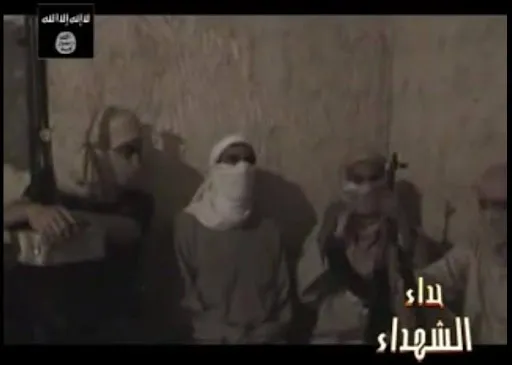
Brief Recap
We previously analyzed the October 2006 declaration of the Islamic State of Iraq (ISI), which had grown out of and subsumed the Mujahidin Shura Council (MSC) and several other jihadist groups. This move officially dissolved AQI and, by extension, the Al Qaida project in Iraq. From that point on, operational relations between ISI and AQ Central were forever severed, though the two maintained political ties for eight more years. Just prior to ISI’s emergence, in September, the undercurrent of Sunni tribal resistance to the Zarqawists finally cohered into the Sahwa movement, colloquially called the Sahawat, or “Awakenings.”
The “State” and the “Awakening” were essentially twin phenomena. ISI represented the height of jihadist power, but this height reflected the many enemies that the Zarqawists had created, especially within Sunni Iraqi society. While ISI could justifiably claim the support of most tribal youth, this directly antagonized many tribal authorities, whose power it directly undermined. These authorities stomached this challenge because they could not pose a durable challenge to the jihadists. The Sahawat, under the leadership of Shaykh Sattar Abu Risha, was exactly the challenge they had sought for so long. Slowly but surely, many tribal leaders joined Abu Risha’s movement, which even inspired anti-AQI insurgents to follow suit, though this carried its own tensions.
Sahwaji Insurgents
The anti-AQI wing of the insurgency had been largely marginalized by the Zarqawists. This wing began to fragment in 2005, a process which rapidly accelerated in 2006. Throughout the year, various non-AQI groups splintered, with many members allying with or outright defecting to MSC. This was a function of multiple factors. First was MSC’s immense power and prestige. As brutal as the organization was, it had genuine appeal because of its unassailable combat credentials against the Coalition and Shiites. Second was MSC’s ruthless targeting of rivals that did not subordinate themselves to the jihadist project. For rank-and-file fighters, it was better to join MSC (and later ISI) to continue the struggle than to risk death in intra-insurgent battles. Third was confusion and disorganization in non-jihadist ranks, which lacked MSC’s iron discipline and fanatical ideology:
While the leadership of the SAR [Sunni Arab Resistance] insurgent groups detested AQI, each group had different goals, methodologies, and patrons from the street level to the senior leadership. As a result, funding and weapons from AQI often outweighed the intangible benefits of unity against them, preventing a consensus from emerging among the remaining SAR groups. Even so, many SARs opted to join the SAA as well as the legitimate Iraqi army and police forces. Sheikh Abdul Sattar hoped to use [REDACTED]’s influence to strengthen his position to convince other SAR leaders and more importantly their street level fighters to join the Iraqi security forces. (201)
One such group was the 1920 Revolution Brigades. Like other non-AQI groups, this organization had splintered throughout 2006, suffering huge losses to the Zarqawists. The remnants of the Brigades were primarily localized to Ramadi, which encouraged its leader Harith Dhahir Khamis al-Dhari (not to be confused with his uncle, also named Harith al-Dhari) to ally with Sattar Abu Risha and the Sahawat. The two quickly formed a good working relationship. Harith Dhahir hoped that his alliance with the Sahawat would lead to an amnesty for himself and his fighters, alongside their favorable integration into the new Iraqi political order. The internal dysfunction of the Brigades meant Dhari had little influence beyond Ramadi, so he had to rely on local allies. In Fallujah, one such ally convinced fighters of the local 1920 Revolution Brigades to fight ISI, but could not halt their attacks on Coalition forces.
This portended a major meeting at the end of October, where the Sahawat agreed not to arrest or attack SAR fighters on the condition that they had not previously spilled Iraqi blood, whether it be National Guard, police, or civilians. Sattar Abu Risha then began to lobby for the release of detained SAR fighters who had fought the Coalition but not attacked fellow Iraqis. A key tactic was to couple insurgent amnesties with the enlistment in Sahwa militias: “Before the release occurred, SAR fighters had to agree to join the ‘honorable insurgency’ of the SAA and help it to defeat the ‘outsiders’ and ‘Takfiris.’” (201) The Sahawat thus escalated its propaganda against ISI, portraying them as foreign terrorists who oppressed Iraqis, and themselves as patriots defending Iraqi society. Note the irony here: The objectively quisling Sahawat called the anti-Coalition ISI foreign usurpers. Although the Sahawat’s motivations were sympathetic and understandable, their role was to solidify the US occupation of Iraq and shore up the fragile post-2003 political order. This specific line built upon a much older Coalition psyop against the Sunni insurgency, and it is worth tracing the lineage of this particular line as it dates to even before the war.
In the run-up to the invasion, the US began falsely portraying Iraq as a safe haven for foreign jihadist networks under the leadership of Zarqawi. These claims went together with the lies that the Ba’athist government was seeking weapons of mass destruction. Both were central in Colin Powell’s infamous speech to the UN on 5 February, 2003, where he made the case for war against Iraq. This was the “preemptive” argument, while the “affirmative” argument was that the Iraqi people wanted to be liberated by the US from the Ba’ath Party’s tyranny. Come 9 April of that year, Saddam Husayn’s regime had been toppled, and Husayn himself was a fugitive on the run. The ease of the invasion and the relative calm of the immediate aftermath led the American government and media to boost their claims that the Iraqi people welcomed Coalition forces as liberators. Then cameearly stirrings of Iraqi resistance, first sporadic, then slowly taking shape across the country, especially the Sunni Arab regions.
The Coalition portrayed this as the work of the jihadists it had identified prior to the invasion. Such claims were seemingly bolstered by the spate of suicide bombings that commenced in the summer of 2003, beginning with the Jordanian Embassy attack on 7 August. Although Zarqawi’s network was indeed responsible for such strikes, the truth was that he had already integrated several Iraqi jihadist groups and began recruiting Iraqis into his ranks. It is extremely unlikely that they would have had such a permissive environment had the Saddam Husayn regime remained in place–something that Iraqi JTJ founders like Abu Muhammad al-Salmani later openly admitted. As the Sunni insurgency matured in late 2003 and escalated in early 2004, the Coalition doubled down on its claims that all insurgent activities in Iraq were the work of “foreigners”–a highly questionable label when we take the term literally. Were Coalition troops not foreign to Iraq? Zarqawi himself commented on the irony: “Who is the foreigner, O cross-worshippers?! You are the ones who came to a land of Muslims from your distant corrupt land!” The Coalition continued to repeat this psyop, but it lost its effectiveness as the Iraqi insurgency became more and more undeniable as a widespread movement in Iraqi society.
Somewhere along the way, this psyop was picked up by insurgent rivals to the jihadists, who had taken leadership of the insurgency after the First Battle of Fallujah. Although initially muted, this line gained more and more currency as Zarqawist dominance became clear. It gained a major boost when JTJ transformed into AQI, thus becoming the Iraqi branch of the Khorasan-based AQ Central. The foreign fighters in the movement–although insignificant in absolute terms (likely ~5% at any given moment)–were the grain of truth in the accusation. Their presence in leadership positions earned them the spotlight and thus gave the accusation its potency.[16] However, this potency dwindled over time as the native Iraqi appeal and character of the Zarqawist movement became undeniable. Indeed, it was native Iraqi jihadism from before the war that most defined Zarqawism, which sidelined or subsumed nearly all militant networks in Iraq. The losers in this process (such as the SAR) found their salvation in the Sahawat, and they brought back the anti-AQI psyop in force. The line came full circle. It was first coined by the Coalition, and it reached its height with the Coalition’s most effective Sunni quisling force.
Returning to the Sahawat’s rapprochement with anti-ISI insurgents, this was central to the restoration of policing capabilities and general security forces in Anbar. Recall that the Iraqi police in Anbar and elsewhere had been objects of extreme persecution by the jihadists since the beginning of the war. Restoring their mere presence was a significant advance. Sattar Abu Risha and his close ally, provincial police chief Hamid Hamad al-Shawqa, began forming a 750-strong police strike force (composed of three battalions) to fight ISI. This was planned to be in coordination with the Iraqi Army. Such a plan was warmly welcomed by the Army and the Iraqi Defense Ministry, which ordered Army divisions to support the Sahawat upon Abu Risha’s request. In return, Abu Risha agreed to recruit 2,000 Sunni troops in the Army. The Sahawat even gained the support of the notoriously sectarian Interior Ministry and Nuri al-Maliki, who agreed to directly arm and equip Sahwa militias from government stockpiles. Abu Risha also made it a point to work within Iraqi government structures to affirm its legitimacy instead of operating as a paramilitary.
These plans proved immediately successful, as provincial chief Shawqa not only quickly built the 750-strong strike force, but even recruited an additional 2,000 volunteers to support the strike force. They were distributed across Anbar to restore or support police forces that had been under severe pressure for several years. Shawqa’s effective coordination with the Sahawat came down to the fact that Shawqa himself was a Sahwaji and was personally close with Abu Risha. He was the second-highest-ranking Sahawat leader and acted as Abu Risha’s top deputy in office. In effect, the Sahawat was both a tribal militia movement and the Anbari security forces. This allowed the Sahawat to soon build strong relations with the provincial government, with which it had previously experienced major tensions. Sattar Abu Risha’s respect for the law and willingness to work within the constitutional order also greatly ingratiated him with Baghdad and the Coalition. Coupled with his personal prestige, this gave the new Iraqi political order a sorely-needed boost in legitimacy among Sunnis.
Troubles in the State
By late October, popular resistance to and internal troubles of ISI began to seriously alarm the organization’s leadership. For instance, citizens of the border town ar-Rabit expelled the local ISI leader, informing him they would no longer tolerate the smuggling of foreign fighters–something unthinkable mere months before. Meanwhile, ISI’s top logistics emir was under legal pressure within ISI due to credible suspicions that he had embezzled millions during his tenure. He then concentrated his efforts in Al Qaim to regain the city for ISI and hopefully re-enter the leadership council’s good graces. This coincided with the Coalition arrest of Mullah Humaydi, ISI’s fourth-in-command, chief war counsel, and top advisor for all operations in Anbar; and the killing of Rafa Abdul-Salam, who was a key commander operating throughout the Ramadi area.
Such losses led some key Iraqi ISI leaders to begin expressing dissent over the state of the movement. They blamed the large number of killed or arrested senior field commanders on poor leadership by Abu Umar al-Baghdadi and Abu Hamza al-Muhajir, whom they accused of being out of touch with field needs. The depletion of ISI’s field leadership weakened its operational vision and its ability to give direction. The replacement field commanders tended to be weaker leaders than their predecessors when it came to combat expertise, social prestige, and financial connections. Thus, ISI’s vast resources were being wasted in an especially critical time for the movement. The dissenting ISI leaders also resented Muhajir’s ties to AQ Central, which they viewed as diluting the power of native Iraqi jihadists. Further:
Dissent was also driven in part by the evolving situation on the ground in Anbar and other parts of Iraq. The sectarian violence so desired by Zarqawi had plunged the Sunni inhabitants of Baghdad into an existential struggle for survival against Shi'a militias, making AQI's agenda for global jihad and restoration of the caliphate irrelevant to many Iraqi Sunnis in comparison with the need for day-to-day security. The relationship between AQI and its former SAR allies remained fluid, with rifts between the two now a common phenomenon in Anbar and other Sunni areas of Iraq. As far as the dissenters within the AQI leadership were concerned, there was now an increasing grassroots Sunni opposition to overcome in addition to their daily combat against the Coalition and Shi'a militias. As a result of the establishment of the SAA, AQI was on the defensive in Ramadi, a situation that some AQI leaders believed would never have occurred under Zarqawi. (204)
ISI’s brutality also began to backfire. No longer would ordinary Sunnis simply stomach these abuses, as the ambient opposition could now be channeled into the Sahawat, which posed an existential threat to ISI. Likewise, ISI’s onslaught against the police had finally lost its effectiveness. A growing number of police units refused to back down and now fought to the end, stretching ISI’s resources thin. A new policy was required, but its effectiveness was undermined:
In an effort to provide a greater degree of strategic direction to his followers, in late November 2006, [REDACTED] reportedly delivered a major policy speech to AQI leaders at the al-Risala Mosque in the Albu Fahd tribal area. During the speech, [REDACTED] declared Ramadi a "city of jihad" similar to Kirkuk, Mosul, Samarra, and Baghdad and stated that all Islam would be in jeopardy and the Arab nation weakened if the Coalition and the current Iraqi government defeated AQI. In response, [REDACTED] announced the formation of a ministry of war and a ministry of information for the Islamic Amirate of Iraq to oversee more coherent policies for the new state.
[REDACTED] also attempted to build popular support, but the loss of [REDACTED] meant that the effort was clumsy and often contradictory, and had little chance of winning over large numbers of Anbaris to the cause of global jihad. Even as AQI leaders marked down fuel prices for supporters or forced taxi drivers to give cheap rides to the poor, its fighters pillaged medical supplies, intimidated hospital employees, closed down local schools, and beheaded suspected collaborators in the street. also had to mount an aggressive military response to the SAA or risk being severely degraded by the Ramadi area tribes. As a result, many Anbaris were not swayed by AQI's new “hearts and minds” campaign, though they were willing to exploit it when it suited them to do so. (205)
The Zarqawist movement’s long list of sins was finally catching up to them.
Tribal War Again
One illustrative case was the sudden warfare between the Albu Issa and Albu Alwan tribes, which revealed just how enmeshed the jihadists had become in parochial tribal conflicts and how much worse they made them.
Following the murder of Ramadi police captain Jabr Albu Alwan by AQI, the Albu Alwan tribal leadership requested permission to join the SAA to exercise tha'r. As a result, factions and subtribes within the Albu Issa loyal to AQI and their Islamic Amirate of Iraq [referring to ISI – Rob] began setting up checkpoints in an effort to kill any Albu Alwan tribesmen who were members of the IIP [Iraqi Islamic Party]. The pro-AQI Albu Issa tribesmen also planned to use car bombs to destroy the Usama bin Zayd Mosque that served as the primary mosque for the Albu Alwan tribal area. (206)
Thus, ISI was at war with the Albu Alwan tribe in Ramadi. This pushed the tribe into the arms of the Sahawat when previously it had been suspicious of Abu Risha’s movement. On 12 November, Albu Alwan tribal leadership opened a new police station with Coalition support in a Ramadi neighborhood. Furthermore, the tribes began rigorously patrolling its areas in a campaign to evict ISI. This was a remarkable development given the Albu Alwan’s historical suspicion and even hostility towards the Coalition. Note that the Coalition and ISI’s respective relations with the tribes mirrored one another. The line between ISI and Albu Issa blurred, and it was unclear how much of this conflict was strictly tribal warfare as opposed to jihadist insurgency,
The primary architect of the AQI campaign against the Albu Alwan was Arkan Fayyad Muslih, the leader of an AQI IED cell that operated in the Halabsa tribal area with the support of pro-AQI members of the Albu Issa tribe. These pro-AQI Albu Issa tribesmen told Arkan which areas he was allowed to carry out attacks, acting as an intermediary between the tribe and AQI fighters operating in East al-Nasaf and Amariyah. Arkan's efforts were financed by Shakir Ahmed Mujbal, who stole cars from the Saqlawiyah area and resold them in Baghdad. (2006)
Yet, despite such close relations with ISI, the broader Albu Issa tribe was still bitterly divided over the jihadists. Pro- and anti-ISI sub-tribes were at war with one another amidst the broader war, which led to strange intra-tribal development. After the attack on the Albu Alwan, the Fuhaylat sub-tribe of the Albu Issa agreed to pay substantial blood money for the killing of police officers in Amariyah and Ferris Town. This ended sub-tribal warfare in those particular settlements, giving much-needed relief to the local police forces. Note the conspicuous absence of anti-Coalition activities during this entire episode. A significant amount of resources was devoted to strictly intra-Sunni tribal bloodshed, which could only weaken the insurgency. This was a direct consequence of ISI’s total intransigence against any potential rival forces, especially tribal authorities.
Security Developments
In parallel, during early and mid-November, the collaboration between the Sahawat and the Iraqi government was restoring some semblance of security in Ramadi. This was a major advance from mere months earlier, when much of Ramadi was a jihadist emirate. In coordination with the Sahawat and Iraqi Army, Iraqi police force units entered Ramadi to arrest ISI operatives. Placing police units at the heart of the strategy finally overcame the inherent sectarian disputes over the Iraqi Army, which most Sunnis perceived to be a Shiite sectarian institution. In contrast, the police were well-embedded in local communities and had a long history of representing ordinary Sunni interests. This created much-needed popular goodwill, which facilitated policing activities.
While it would be a mistake to state that AQI's position was diminished in Ramadi at this stage [early November – Rob], the group's freedom of movement had been reduced. Outside the Qatana district, the establishment of the 17th Street security station prevented fighters from moving freely in that district. Aggressive operations by the Coalition, Iraqi police, and the Anbar Revolutionaries continued to attrite the group's leaders and fighters in the city, while the discovery of the group's weapons caches at Anbar University and the Jazira hindered AQI's ability to reconstitute its operations. The Albu Alwan and Albu Soda were now openly anti-AQI, and both tribes conducted patrols and worked with the Coalition to prevent AQI from entering their territory. On November 16, the Coalition and Iraqi police carried out Operation TINIAN, which removed AQI's command and control node at the Women and Children's Hospital. (208)
One key police tactic was to bring detained insurgents for meetings with tribal leaders, where they would be informed that ISI operatives were no longer welcome in Ramadi. In some cases, Sattar Abu Risha himself met with the detainees, telling them that ex-ISI members were welcome to join the Sahawat. This was another powerful political move, as it granted the option of amnesty to jihadist fighters. This option gave them an incentive to give up the jihad instead of fighting to the bitter end. The Coalition also continued to achieve successes against ISI, killing or arresting key commanders, further weakening ISI’s field command structure. The Sahawat’s biggest achievement yet came in a meeting later in November, where eleven tribes formally agreed to join the Sahawat, which encouraged even more tribes beyond Ramadi to follow suit. The Sahawat had now expanded across Anbar, meaning it could not be dismissed as a purely local phenomenon.
Troubles Among ISI’s Insurgent Opponents
Jaysh al-Fatihin
This organization was the renamed Islamic Army of Iraq, or rather the remnants that had not defected to or openly allied with the Zarqawists, as occurred throughout 2005-06. Although the Sahawat focused on ISI, its activities also weakened Jaysh al-Fatihin (JaF). The restored police presence and overwhelmingly pro-Sahwa opinions in Zangora (as it was the home of the Albu Risha tribe) virtually eliminated JaF’s presence in the settlement. The group’s decentralized nature and its relative weakness forced it to rely on criminal activities for financing. Locals greatly resented this, which weakened JaF’s ability to replenish its ranks. The organization’s leadership was also divided on several matters. The JaF security chief for Anbar favored a ceasefire with the Coalition, but all other leaders opposed any such move. Even during prospective talks for a ceasefire, these other leaders continued to orchestrate attacks on Coalition forces. These attacks were often blamed on ISI to shift responsibility. However, the element of truth in this claim was that much of JaF’s ranks still worked or even sympathized with ISI. This dynamic was reflective of the broader Sunni insurgency, even when accounting for the growing “Sahwaji insurgent” phenomenon. It is worth quoting the Study at length:
While this cooperation was taking place, limited cooperation between Jaysh al-Fatihin and AQI also occurred on a local level in Ramadi due to the personal relationships between the local leaders of both organizations. It is worth recalling that many local AQI leaders in Ramadi were themselves former members of the Islamic Army of Iraq that had joined AQI and thus retained their personal ties to their former comrades. Although the Jaysh al-Fatihin national leadership identified AQI as their primary threat, many local cells in Anbar were unable to resist AQI's influence. Such cells continued to carry out attacks against the Coalition as their raison d'etre, often with support from their counterparts in AQI.
Meanwhile, Jaysh al-Fatihin found itself cut out of major sources of funding by AQI's dominance of Anbar's black market fuel smuggling and heavy involvement in kidnapping rackets. This forced many Jaysh al-Fatihin cells to become dependent on AQI for funding, which, combined with AQI's recruitment of detained Jaysh al-Fatihin fighters at Coalition facilities, enabled AQI to build up its own operational capabilities at Jaysh al-Fatihin's expense by siphoning away its most experienced operatives. Despite propaganda claims that Jaysh al-Fatihin numbered between 6-46,000 members, as of late 2005 the group's size had in fact numbered closer to 1,050 core members in contrast to Ansar al-Sunna with 2,950 core members and AQI with 5,495 core members. This gave the group a robust capability to conduct IED, SAF, and IDF attacks against Coalition forces, but also meant that it was only one fifth the size of AQI.
As a result, Jaysh al-Fatihin cell leaders in Anbar were unable to follow the directives of their central leadership absent a substantial amount of support for fear that their fighters would defect en masse and join AQI. This situation, along with successful targeting by the Coalition and Iraqi security forces, led to the organization's slow decline in Ramadi, making the group unable to operate without substantial support from AQI. Recognizing this situation, the national leadership of Jaysh al-Fatihin began reducing its efforts in Anbar to refocus on Samarra, Tikrit, and Mosul. (209-10)
Re-deployment for “greener pastures” in other regions would also soon characterize ISI’s activities, as Anbar increasingly became a hostile environment.
Jaysh Muhammad and Ba’athists
The continued existence of Jaysh Muhammad (JM) came down to financial support from Saddam Husayn’s daughter Raghad. JM’s operational peak was in mid-2004, and the organization’s power declined precipitously after the Second Battle of Fallujah due to leadership losses and rank-and-file defections to other, more powerful rivals (mostly the Zarqawists). By this point in the insurgency, JM represented the idiotic hopes of Ba’athists who viewed it as a potential vehicle for restoring the Ba’ath Party’s relevance. This effort was stillborn. Many Sunni Iraqis held the Ba’ath in utter contempt and had no wish to see it return to power, even if they may have detested the new Iraqi political order.
In general, the remnants of the Iraqi Ba’ath Party continued to live in a world of delusions. They initiated several harebrained schemes to restore any measure of political relevance in the insurgency in particular and Iraqi politics in general. One such scheme began with the reestablishment of the General Security Directorate (GSD), a prewar security service aimed at eliminating internal dissent. The GSD would supposedly facilitate Ba’athist resurgence throughout Iraq. Under the “leadership” of General Sadun Sabri Jamal, the GSD was based in Aleppo, where it sought to recruit and fundraise from the Iraqi expatriate population in the city; a population, who unsurprisingly, wanted nothing to do with the Ba’athists.
Another scheme was to meet with various exiled SAR leaders in Jordan to cobble together these fragmented groups into one new organization. This organization would act as the vehicle for the Iraqi Ba’ath Party’s return through negotiations with the Coalition. The drafters of this scheme strangely mistook the Coalition’s alliance with the Sahawat as an opportunity to restore Ba’athist rule. Equally strange, they were unaware of how deeply despised the Ba’ath Party was by the Sunni Iraqi population as a whole, and especially the insurgency. They also did not comprehend that all Sunni members of the new Iraqi order were themselves former exiled opponents of the Ba’athist government. The Ba’ath lacked any potential, let alone actual, constituency in Sunni Iraq. Thus, as was the case in previous years, Ba’athist influence in Iraqi politics was limited to financing various actors who were either politically impotent or viciously anti-Ba’athist (such as the jihadists) and viewed them as useful idiots.[17]
ISI Strikes Back
By late November, the Sahawat’s operations had taken their toll on ISI in Ramadi, so the group planned to eliminate the Albu Soda tribe and the police force in the Sufia district. The jihadists singled out the Albu Soda because it was the weakest link of the Sahawat. So degraded had ISI become that it was forced to rely on support from Ansar al-Sunnah for the operation. This allowed Ansar to expand its presence in Ramadi proper, which had previously been ISI’s domain. Thus, 200-300 fighters were mobilized from ISI and Ansar, plus volunteers from far beyond Anbar, such as Samarra in Salahuddin. Sahwaji intelligence networks discovered the plan in advance, so the Sahawat succeeded in fighting back the jihadists in the ensuing “Battle of Sufia” in Ramadi. Jihadist fighters attacked the district in successive waves, killing at least 55 Sahwa fighters, including the brothers of the local Sahwa leader Shaykh Jassim Muhammad Salih. They also destroyed Shaykh Jassim’s home and committed numerous atrocities in the district. Although repelled, the jihadists were not defeated, and so they regrouped to neighboring Julaybah to plan their next assault.
Despite losses in Ramadi, the “State” was as strong as ever in the Haditha Triad, where it formally established a jihadist emirate (similar efforts were underway elsewhere in Iraq, such as Samarra). Any semblance of the municipal government and tribal authority had been destroyed and replaced with a rigid Wahhabi theocracy. Interestingly, many of ISI’s “sharia jurists” in charge of the Triad lacked significant knowledge of sharia, so they “often issued their judgements by the plaintiffs’ degree of agreement and cooperation with AQI [sic] rather than on the merits of the case itself.” (215) Political power took priority over theological purity. This was best seen in a curious favor to ex-soldiers: “among the acts undertaken by the shari’ah court was the assignment of plots of land to all former Iraqi soldiers in fulfillment of a promise that Saddam Hussein had made to them in 2000.” (215) This was despite ISI’s fervent animosity towards Ba’athism, as Abu Umar al-Baghdadi required all former Ba’athists to undergo rigorous ideological vetting to ensure they “recognized the tyranny and infidelity of Ba’athism.” On an everyday level, smoking was forbidden, and women were required to wear the niqab at all times. The “State’s” grip was all-encompassing:
According to captured AQI documents and thumb drives, AQI leaders implemented shari’ah and other aspects of their totalitarian theocracy on the basis of directions received from the uppermost echelons of the organization. In keeping with standards that may well have been inherited from the tradecraft of the Ba'athist secret police, AQI maintained extremely meticulous records on the activities of the Haditha areas inhabitants at least as far north as Kubaysah. (215)
This grip was particularly the case in Coalition prison camps, most infamous of which was Camp Bucca.
Jihadism in Prison Camps
Yet, despite its infamy, Camp Bucca was only one camp of several that served as pressure cookers for ISI. Prisoners in the camps were not segregated by their former insurgent membership or even nationality, allowing ISI operatives (both foreign and Iraqi) to indoctrinate other detainees with their version of Salafi Jihadism. One major legacy of the Ba’athist government is that most Sunnis lacked any serious religious education, making them highly susceptible to the ideological proselytizing of ISI. Indeed: “one tribal sheikh estimated in October 2006 that as many as 30% of those who entered Coalition detention facilities as secular Sunnis left as adherents of AQI’s version of Islam.” (215) The situation in Camp Cropper was illustrative:
At Camp Cropper, AQI members formed a group called the Sharayeen that taught courses in Islamic law to detainees, claiming that they wanted them to learn more about shari’ah, the Qu'ran, and being good Muslims. Those who disagreed with the Sharayeen's interpretation of Islam were threatened. The Camp Cropper AQI detainees also formed a shari’ah committee that encouraged members of the group to conduct daily physical exercises to keep themselves in shape, offered guidance on counter-interrogation techniques, and practiced excellent OPSEC to avoid detection by the Coalition. The shari’ah committees at Camp Cropper and other detention facilities indoctrinated prospective AQI members through a five-class curriculum intended to educate detainees into becoming SREs, educating ten detainees at a time. Once a detainee decided to join AQI, they were forced to pledge bayat to UBL [Usama bin Ladin] and recite a daily pledge of allegiance to AQI and their own willingness to die for UBL and [Abu Umar al-Baghdad]. As a result of this recruiting program, AQI was able to successfully recruit from other insurgent groups even while its members were held in Coalition detention facilities. (215-16)
Recruits were also taught to resist interrogation with tactics likely originating in the Manchester Manual, a jihadist document captured by British police during a raid in May 2000. The Manual had detailed instructions for detainees (216):
- Develop a cover story
- Refuse to answer repeat questions
- Answer questions as vaguely as possible
- Provide names of dead colleagues and name them as leadership figures
- Never divulge information about your true mission
- Provide support to and strengthen fellow inmates
- Recite the Qur’an during questioning
- Avoid looking into the eyes of the interrogator
- Deny anything mistakenly divulged during earlier interrogations; x Claim torture to invalidate information provided
- If necessary, self-inflict wounds to provide the appearance of torture
- Never trust the interrogator—never forget he is your enemy
- Refuse to confirm or deny anything
- Confronting the interrogator and defeating him is part of your jihad
- It is better to die a martyr than provide information to the interrogator.
Challenges to the Sahawat
ISI escalated its campaign against the Sahawat by internationalizing the conflict. On 4 November, ISI operatives attempted to assassinate a 1920 Revolution Brigade leader in Zabadani, Syria. In 2005, AQI had expressed its intent to murder this individual, but due to his growing operational irrelevance, his assassination was deprioritized. His rapprochement with the Sahawat made ISI reprioritize, leading to the attempted assassination despite the risk of kinetic operations in Syria.
At the same time, since the rise of the reformed Anbar Revolutionaries and other anti-AQI groups in August 2006, AQI had made an intensive effort to identify and track the movements of SAR insurgent leaders who were active in [Syria]. Even so, the group was reluctant to target them directly for fear of incurring the wrath of the [Syrian] security services. While elements of the [Syrian] government were willing to a degree to harbor and facilitate AQI attacks in Iraq, major attacks against SAR leaders in [Syria] would indicate an absence of [Syrian] control over its own territory. (217)
The Assad regime’s patronage of the Zarqawists evidently led to blowback. Back in Iraq, ISI resorted to false flag operations to discredit the Sahawat.
As part of their counter-offensive against SAA, AQI leader began kidnapping and murdering Iraqi police officers near the Abra Bridge in Saqlawiyah while posing as a member of the Anbar Revolutionaries. AQI also began distributing black propaganda, committing atrocities while posing as Anbar Revolutionaries, and attempting to infiltrate the organization and undermine it from within. (217)
But this was not the only challenge to the Sahawat, as a new one emerged from Harith al-Dhari’s Association of Muslim Scholars (AMS), which had been involved in the insurgency from the beginning. It began on 10 November, when the secretary-general of the AMS told al-Arabiyah TV that: “A group of outlaws does not like the resistance, which opposes its crimes and diminishes its ambitions. Therefore, the government, or certain parties in it, has begun to use this group to counter the resistance.” (217) The AMS had always considered the Zarqawists as members of the “resistance,” and since Zarqawi’s death in June 2006, the two forces had grown closer. Two days later, on 12 November, Sattar Abu Risha responded on al-Iraqiyah TV:
The al-Anbar Tribes Awakening Conference [i.e. the SAA (Sahawat)] would like to respond to the claims made by Harith al-Dhari, agent of the Persians and the European Union through the French Ambassador, with whom he held meetings. We say to you that you know bandits better, as you have a long experience in this regard... Who are you to make such statements, which show your defeat on the battlefield? You are visiting countries to beg for donations for the Takfiris and hired killers. Decent resistance washes its hands of you and your actions. The sons of tribes stand up today, wearing the uniform which you can see on television screens, to say to you that you represent only yourself and the hired Takfiris who follow you. (218)
When it comes to the substance of their claims, the AMS was closer to the truth. Many Sahwaji shaykhs had been quite marginal in the prewar Sunni tribal order and used the Sahawat to boost their standing, in doing so, forming criminal patronage networks of their own. This was the case with Abu Risha himself. In general, the Sahawat functioned as an enormous tribal syndicate, financed by the Coalition, whose forces often arrived with literal truckloads of money to bribe shaykhs. At the same time, the AMS’s allies were indeed “takfiris” who had taken on a highly criminal character in their own right. For many tribes, the question was ultimately over which project–the jihadist or the American–would best serve this character. As the Study puts it: “The animosity between Harith al-Dhari and Sheikh Abdul Sattar was due to the fact that the two men represented different sides of the same Sunni coin, with Sheikh Abdul Sattar attempting to demonstrate to Sunnis that working with the Iraqi government could pay off and Harith al-Dhari fearing that his anti-government message was now being countered.” (218) Ample American money and genuine anti-jihadist successes had bolstered Abu Risha’s credibility while the intensifying suffering of ordinary Sunnis hurt Harith al-Dhari’s.
Baghdad seemed unaware of this trend, and undermined it on 16 November by issuing an arrest warrant for Dhari, charging him of “inciting terrorism and violence among the Iraqi people.”[18] This suspended rivalries within the AMS and forced it to close ranks around Dhari. In turn, this led AMS-aligned insurgents to halt negotiations with Baghdad (but tellingly, not with the Coalition). The arrest warrant inadvertently highlighted the highly sectarian nature of the new Iraqi political order:
While Harith al-Dhari was a supporter of the Sunni insurgency, his arrest warrant was criticized on the grounds that the Shi'a still had a standing warrant out for the arrest of Muqtada al-Sadr for the 2003 murder of Shi'a religious leader Sayid Abdul Majid al-Khoei. Thus, Sunni leaders believed that Harith al-Dhari was being persecuted because he was a Sunni while Muqtada al-Sadr, a Shi'a, was allowed to remain free. Moreover, even though al-Sadr was seen as the greater threat to the Iraqi government it was seen as acceptable for more than thirty MPs to be affiliated with his office. As a result, the SAA [aka Sahawat] was forced to make tentative statements of opposition to the arrest warrant for Harith al-Dhari even as it retained an amicable relationship with the Shi'a Iraqi army units in Ramadi. (219)
This complicated the Sahawat’s relationship with Baghdad, as this incident showed it to be an agent of the hated post-2003 regime. Their self-image as righteous Sunni tribal patriots was credibly undermined, though it certainly did not halt their advance in the long term.
Abu Risha continued his campaign against the AMS with a number of provocative statements. He began by urging for Dhari’s replacement by Shaykh Ahmad Abdul-Ghafur al-Samarra'i on 18 November. Shaykh Ahmad supported this move, as he had previously worked with the Coalition to limit AMS influence while it was under Dhari’s leadership. Abu Risha then threatened Dhari’s tribe, the Albu Zobai, ordering them to halt their support for Dhari or face attacks from the Sahawat. The Albu Zobai had been hardline supported of the insurgency from the beginning, but this was due to reasons much bigger than Dhari–namely, the tribe’s cultural isolation, its severe poverty, and its historical affinities with Wahhabism. In this sense, Dhari merely represented, rather than created, the Albu Zobai’s insurgent politics. Finally, Abu Risha requested the return of two Sunni Iraqi clerics from the UAE to provide “better” spiritual guidance to the Sunni tribes. Both of these clerics had previously supported the non-Zarqawist insurgency, especially in 2004 and to an extent in 2005, but had changed sides for one reason or another. Although the details are unclear, their defection was very likely motivated by mercenary reasons. One cleric’s “moderation was displayed in a September 2006 interview, in which he denied that President Bush, the United States, or Israel had declared war on Islam and stated that those now using the slogan of a ‘war against Islam’ were themselves not true Muslims.” (220) The Sahawat’s more sinister, imperialist-aligned character was coming into view.
Jihadist Troubles in Anbar
Western Anbar Awakes
On 26 November, Shaykh Hikmat Jubayir al-Gaoud was nominated by tribal leadership as the mayor of Hit, thus restoring the municipal government for the first time since August 2006. This marked the Sahawat’s expansion into the western regions of Anbar. Shaykh Hikmat belonged to the Albu Nimr tribe, which was among the original five founding tribes of the Sahawat and was distinguished by its not being native to the Ramadi area. His mayorship facilitated the Albu Nimr’s coordination with Iraqi security forces against ISI. The Sahwa movement made significant advances throughout that week:
The Anbar Revolutionaries also expanded their anti-AQI activities to encompass Husaybah, Sharqiyah, Amariyah, and Ferris Town. Forming an alliance with the pro-Coalition subtribes of the Albu Issa, the Anbar Revolutionaries sought to resolve local tribal disputes in order to prevent AQI from gaining a foothold in the area. This led to the November 24 decision by the pro-Coalition Albu Issa subtribes (Albu Harimat, al-Manasir, Albu Dahir, Albu Ghrati, and Albu Jassim) to join the SAA, though anti-Coalition Albu Issa subtribes such as the Fuhaylats continued to support AQI. (222)
Amariyah was particularly receptive to the Sahawat due to its deep hostility to the Zarqawists, who had waged a brutal campaign of terror in the town for months. This campaign had heavily suppressed the local Iraqi Islamic Party (IIP) branch. The Sahawat provided sorely needed relief:
The pro-Coalition Albu Issa subtribes in the area were supported by a small force of civilian guards who were members of the IIP militia (see Chapter 6b) and supported by local IIP leader Ali Farhan Ramadan. By paying 500,000-750,000 dinars ($330-500) a month to members of the IIP militia, Ali Farhan was able to dissuade them from joining AQI and convince them to carry out joint operations with the local Iraqi police. Using additional money funneled by the IIP to the Albu Issa subtribes, Ali Farhan was able to coordinate with Iraqi police in Amariyah and Ferris Town in order to provide a greater degree of security to the area. (222)
The Albu Issa’s support for the Sahawat was cemented by Shaykh Khamis Hasnawi’s new membership in Sahwaji leadership. His aim was to expand the Sahawat’s presence beyond the Ramadi-Saqlawiyah corridor. This effort began with the formation of two tribal militias in Amariyah and Ferris Town to support the local police and IIP militias. Interestingly, one could observe class differences in tribal support or opposition to the Sahawat: “Yet it was primarily the wealthier subtribes in Amariyah and Ferris Town that supported Sheikh Kamis and the Revolutionary Council; many of poorer rural subtribes such as the Fuhaylats and Owesats remained hotbeds of support for AQI.” (223) Wealthier tribes could more easily integrate into the post-2003 political order on favorable terms than their poorer counterparts. The latter, therefore, had little material incentive to recognize the legitimacy of the new Iraq. For similar reasons, opportunistic elements of ISI, such as prominent ex-officers like Major General Khaddam Muhammed Farris al-Fahdawi, were beginning to consider defecting to the Sahawat. The relatively more plebeian character of the jihadists was another sign that they had taken over the Iraqi national liberation movement.
The Jihadists Take Initiative
ISI’s Reorganization Efforts
On 14 November, ISI co-leader Abu Hamza al-Muhajir (redacted in the Study) went to Ramadi to meet with the emirs of Ramadi and Salahuddin to strategize a comprehensive new response to the Sahawat. He “made the destruction of the SAA and any other organization that opposed AQI as the group's top priority in Anbar, ordering [REDACTED] to send fighters and suicide bombers from Salahaddin to Anbar and to increase the number of attacks against the Coalition in Salahaddin to draw their attention away from Anbar.” (224) This meeting prompted leadership meetings across Anbar, beginning in Ramadi.
Here, the local emir sent personal messages to Albu Soda tribal leaders, threatening them to abandon their checkpoints in the Sufia districts or face assassinations and even chemical and biological weapons attacks. The outlandishness of this latter threat hardened the Albu Soda’s resolve, encouraging them to reinforce their checkpoints. The severe depletion of veteran leadership in Ramadi led ISI to promote individual cell leaders to emir positions to fill the gaps. Meanwhile, in Fallujah, the local ISI leadership met at the highly fortified La’min Laboratory to discuss new operations, with debate specifically over the quality of ongoing attacks on Coalition forces. ISI provincial and national leadership also met in Haditha and Rawah, where they emphasized the need for precision in attacks to avoid civilian casualties, thus reducing popular animosity to the jihadists. The “State” also reshuffled leadership positions:
A major element of AQI reorganization was the internal rotating of amirs. For instance, in early November 2006, Sheikh Abu Dawud, who had finally emerged as the amir of the Fallujah-Khalidiyah-Saddamiyah corridor was rotated to Habbaniyah and replaced by [REDACTED] due to the fact that he had become too well-known in Fallujah. As the leader of the force of up to 300 fighters, Sheikh Abu Dawud's position was highly sought after within AQI. (225)
Around this time, ISI revised its recruitment methods to be more rigorous. Professional recruiters targeted impoverished young men who would be susceptible to material incentives. Unlike before, recruitment now avoided any coercion or threats of violence to ensure that recruits would be actively loyal to ISI. Individual fighters also recruited their friends. Then:
After prospective recruits had pledged to join AQI and sworn bayat, they were invited to their recruiter's home, shown video propaganda, and told that they would be given $1,000 for every successful videotaped attack. The recruiter stressed the financial incentives for working for AQI. After that, the recruit was taken to a safe house or training camp and tutored in the construction of IEDs starting with most basic (command-detonated artillery rounds) and working up to the most complex (base station IEDs). Accompanying the IED training was an intense ideological indoctrination that the Iraqi police were the greatest threat to AQI because they were able to identify the insurgency in a way that the Coalition could not. During this tutoring process, recruits were screened for intelligence and loyalty to the organization, with the top 4-5 recruits taken into the desert to be trained as snipers. (225)
As part of its “hearts and minds” campaign, ISI redeployed foreign fighters from Fallujah to the Zaidon area. This was precipitated by the elimination of nineteen ISI operatives and a threat issued by city residents that fighters had to renounce the “State” or be killed. The foreign fighters had been particularly active in ISI’s campaign against the local 1920 Revolution Brigades, making their presence an object of special resentment. ISI leadership hoped that their absence would relieve tensions. In the Zaidon area itself, ISI capitalized on the local unpopularity of the Sahawat by doubling recruitment and propaganda efforts. The ISI emir in charge was an especially fanatical jihadist, who had eagerly sought to implement sharia since the declaration of the “State.” Thus: “Residents who smoked cigarettes had their fingers cut off, while those that wore improper clothing or beards were killed.” (226) Unsurprisingly, ISI demoted this leader and ordered him to strictly focus on recruitment. The “State” soon established a robust base of operations in Zaidon:
Ta'alia village also served as an AQI node, deliberately cordoned off by more than 150 fighters so that it could serve as a broadcast site for al-Zawraa satellite television (see below). Al-Anaz village, by contrast, served as the headquarters of [REDACTED] and was referred to [REDACTED] as by residents, in reference to the large numbers of foreign fighters in the area. Because the Coalition was absent from the Zaidon area, AQI and its allies had a protected zone from which to conduct attacks against Coalition forces in Fallujah and then fall back to regroup. In Saqlawiyah, local AQI leaders [REDACTED] began actively pooling their efforts to coordinate attacks in Saqlawiyah in general, and along the Japanese Bridge northeast of Habbaniyah in particular. As the primary means of AQI access in and out of the Albu Shijil tribal area, the Japanese Bridge was a center of AQI activity, as its fighters killed Iraqi police officers and threw their bodies from the Bridge into the Thar Thar Canal. (226)
In late November, the local Albu Alwan tribe became the main target of jihadist operations. This was precipitated by the establishment of the al-Warar police station, which had provided key local support to Coalition operations earlier that month. ISI therefore had two aims in targeting the Albu Alwan: first, to exact revenge for its pro-police station; and second, to halt its growing alignment with the Sahawat. ISI was joined in this effort by Ansar al-Sunnah, which had a somewhat personal stake in the conflict. Ansar’s Ramadi membership was overwhelmingly comprised of Albu Alwan tribesmen, so the tribe’s allegiance to the Sahawat directly threatened the group’s recruitment pool. They soon threatened to kill the Albu Alwan leadership if the al-Warar station was not closed. When it wasn’t, Ansar al-Sunnah began to attack these leaders and their family members.
Ansar al-Sunnah’s Reorganization Efforts
Ansar’s participation in the anti-Albu Alwan campaign came amidst its own province-wide reorganization efforts. In early December, following the arrests of major leaders, Ansar al-Sunnah reshuffled its leadership structure to create a more decentralized organization. The fighters were divided into several battalions, each commanded by an emir, who answered to the “emir of the brigades,” who in turn answered only to the supreme leader. Previously, Ansar was a “multi-tiered pyramidal organization with each element of the group answerable directly to the senior leadership.” (228) It was no small task to reorganize the movement’s operational structure and chain of command, especially amidst the brutal insurgency against the Coalition. The combined weight of this work temporarily weakened Ansar al-Sunnah’s operational footprint in the Ramadi-Haditha corridor. The group also suffered from confused relations with ISI:
In Anbar, many Ansar al-Sunna cells regularly shared resources such as weapons caches and VBIED factories with their AQI counterparts, particularly in Ramadi, Haditha, and Hit areas. While this cooperation benefited both organizations, it now represented a vulnerability for Ansar al-Sunna as multiple cells operating absent a strong leadership found themselves open to AQI recruiting, leading to an expansion of AQI's influence in cities and towns where the Coalition had degraded Ansar al-Sunna. Moreover, since the Ansar al-Sunna cell leaders often maintained financial and facilitation connections, individual cells had difficulty maintaining cohesion following the loss of their local leader.
Ansar al-Sunna was also at something a crossroads due to the fact that its members were increasingly divided into pro- and anti-AQI as well as Arab and Kurdish factions, leading to a rift between AQI and Ansar al-Sunna in Salahaddin. In Anbar by contrast, AQI and Ansar al-Sunna coordinated their activities, relied on the same weapons smugglers and foreign fighter facilitators, and shared the same enemies in the form of the SAA. As a result, the internal restructuring of Ansar al-Sunna at the national level did little to diminish the group's threat to the Coalition in Anbar. (228)
This odd love-hate relationship with the Zarqawists is perhaps the defining trait of the Ansar movement. It is rooted in the ideological proximity between the two, leading both to occupy the same political terrain of representing Iraqi Sunnidom, with either a more Arab flavor (the Zarqawists) or more Kurdish flavor (Ansar). Every iteration of Ansar has suffered defections to the Zarqawists: so much of the original Ansar al-Islam joined JTJ that the remnants renamed to Ansar al-Sunnah; when this happened against to Ansar al-Sunnah during the “State” (and later “Caliphate”) period, it renamed itself back to Ansar al-Islam.[19]
Al-Zawraa TV
One of the most interesting jihadist tactics during this period was the infiltration of major Iraqi and even broader Arab media stations. Al-Zawraa TV was one such case, and it played a key role in jihadist efforts to regain the initiative. Founded in October 2005 with embezzled government funds, it began broadcasting in September 2006. Its viciously anti-Shiite and pro-insurgent message led Baghdad to order that Al-Zawraa be shut down. It resumed broadcasting in November from an unknown location. Its founder, the Sunni Iraqi MP Mishan al-Jaburi, was an unrepentant Ba’athist who detested the Coalition, the post-2003 Iraqi political order, and Shiites in general. As early as February 2004, Jaburi had waged a media war against the Coalition, at that time as an editor of the anti-Coalition newspaper al-Itijah al-Akhbar. His work bore fruit for the insurgency:
Despite his track record, [Jaburi] was able to use al-Zawraa as a very effective propaganda tool for the insurgency, constantly reporting massive Coalition defeats that resulted in no insurgent losses. The station was popular among Iraqi police in Ferris Town as well as some residents of Fallujah who perceived it to be credible as an "Iraqi" news station that was not government-controlled. AQI appears to have actively supported the station, with the group's strongholds in the Zobai tribal area serving as broadcast sites for al-Zawraa. While [Jaburi] lacked the personal appeal of [REDACTED], his station was a major success due to its ability to paint the Coalition as enemies of the Sunnis. Lincoln Group surveys between August and September 2006 indicated that a majority of Anbaris continued to support attacks on Coalition forces. While this figure declined somewhat with the rise of the SAA, the continued reception of al-Zawraa indicated that anti-Coalition sentiment remained prevalent in the province. (229)
Although not stated in the Study, ISI and other jihadists also began filtering rumors and misinformation into Arab media to confuse the Coalition. The most infamous rumor was that ISI leader Abu Umar al-Baghdadi was a fictitious persona played by one or perhaps more individuals. The rumor functioned as a psyop against Coalition intelligence in two ways. First, it created confusion around the identity of Abu Umar, weakening Coalition intelligence frameworks and diverting their energy from potential insurgent candidates who may fit Abu Umar’s profile. Second, it bolstered the Coalition’s incorrect perception of ISI as a mere front or disguise for AQI, which the Study itself endorses, as seen throughout the numerous quotations above.
This perception wrongly diminished the radicalism and threat profile of ISI, placing it beneath global AQ. This meant that the Coalition would search for and target AQ operatives who were supposedly more senior than Abu Umar, thus diverting attention from Abu Umar himself and ISI leadership in general. More importantly, this rumor led the Coalition to fundamentally misapprehend the nature of ISI, thus harming the nature of counter-jihadist operations. Had the Coalition understood that ISI was a real entity–that it was a “State” or even Caliphate in the jihadist mind–then it would devote all resources to its destruction. While Usama bin Ladin and AQ Central had the utmost jihadist prestige, their role was essentially as charismatic leaders. They had little, if any, operational impact on the events of Iraq. For this reason, the Coalition failed for many years to understand the true ideology of the Iraqi jihadists. However, with all that said, the Coalition continued to achieve major successes at lower levels, as on 1 December, when an air strike killed Abu Abdallah of ISI’s “Ajjamiyah Network.” This network ran all operations–attacks, logistics, foreign fighter smuggling, etc–in the Rawah-Anah corridor and Al Qaim areas, and Abu Abdallah’s death significantly weakened it.
Profiling the Insurgency at Year End
Parts of the non-ISI insurgency resumed attempts at negotiations in December 2006. A mid-level leader from Jaysh al-Fatihin traveled to Baghdad to meet with a prominent IIP official. The aim was to strengthen ties with the IIP and to arrange talks with Vice President Tariq al-Hashimi. Jaysh’s relationship with the IIP revealed an opportunistic streak in its strategy:
The relationship between Jaysh al-Fatihin and the IIP was an interesting one. During the December 2005 elections, Jaysh al-Fatihin (then Islamic Army of Iraq) members had supported the Tawafuq Front coalition of which both their political leader and then-IIP secretary general Tariq Hashimi were members. Members of the Islamic Army of Iraq apparently believed that Hashimi would give them jobs in the Iraqi government after he became vice president, but Hashimi apparently reneged on any agreement that existed between the two. (232)
This opportunism contributed to the Islamic Army of Iraq’s mass defections to the Zarqawists, who were more ideologically consistent. By late 2006, some Jaysh al-Fatihin units in Anbar had begun joining the Sahawat, although the national leadership was still suspicious. Shaykh Sattar Abu Risha entered talks with Jaysh’s top leadership to persuade them to join the Sahawat as a whole. Meanwhile, the remnants of the 1920 Revolution Brigades had almost entirely flipped to the Sahawat. In late December, parts of the Brigades even offered to directly join the Iraqi Army and police units. The Sahawat had more trouble with convincing other insurgents to flip because “the criteria set by the SAA for former insurgents to join their group involved pledging allegiance to the Iraqi national government, making a public denunciation of AQI, and agreeing not to carry out any attacks against the Coalition.” (233) Such criteria revealed the Sahawat’s essentially pro-Coalition stance.
All considered, the Sahwa movement had made significant advances in just a few months:
By the beginning of December 2006, the SAA had expanded from its original core of five tribes centered in the Ramadi area to more than twenty spread throughout Anbar. While Sheikh Abdul Sattar was the organization's undisputed leader and tribal leaders from the original five tribes dominated the group's leadership positions, all major decisions were determined by consensus. The group's agencies included political, military, and media committees, and by December 2006 it had created an 11-point platform addressing everything from the question of local governance to de-Ba'athification to terrorism to economic recovery. While the SAA lacked the resources to attend to this diverse range of issues, they helped to organize the group at the grassroots level and garnered the interest of national politicians. (233)
The Sahawat had become the independent body of Sunni civil society. For the first time since the fall of the Ba’athist government, Sunni Arab Iraqis had a competent bloc to represent them within the new Iraqi political order, rather than in defiance to it. Still, the Sahwaji armed wing, the Anbar Revolutionaries, remained very organizationally immature, especially compared to the jihadists:
The Anbar Revolutionaries, by contrast, were a loose confederation of off-duty police, tribal fighters, and former SAR insurgents that by December 2006 had established chapters in Ramadi, Khalidiyah, Habbaniyah, Rutbah, Saqlawiyah, Karmah, Amariyah, and Ferris Town. These chapters did not coordinate their actions but instead served as something of a common banner for residents willing to expel AQI from their area. In many cases, local chapters of the Anbar Revolutionaries were made up of friends and relatives of AQI's victims wearing black masks, armed with AK-47s, and driving privately owned vehicles at night in search of their quarries. Despite the Anbar Revolutionaries' expansion however, the group's widespread cells had no defined regional leadership and were only as effective as their own local logistical capabilities and resources allowed them to be. (233)
Interestingly, by far the biggest success during this period was the restoration and maturation of the Iraqi police. Provincial police chief General Hamid Hamad al-Shawqa had successfully established three Emergency Response Battalions, together comprising 2,250 fighters. The “Sahwafied” Iraqi police would ultimately be the heart of the Coalition’s victory over the insurgency.[20] For this same reason, its destruction (at the hands of ISI) and betrayal (at the hands of Nuri al-Maliki and Shiite sectarian forces) would pave the way for the 2014 Islamic State sweep.
City Survey, December 2006
Despite the jihadists’ major losses in Ramadi, they still maintained a significance presence in the city and its environs:
The Hay al-Dhubat Thanya district (2nd Officers' District) of Ramadi was the nerve center of AQI in Ramadi as well as the stronghold of AQI Ramadi amir Thamir Hamad Nahar. Despite the proliferation of COPs and extensive Coalition patrols, AQI retained a significant presence in the district. The group set up safe houses, arms caches, propaganda centers, and command and control nodes at Muhayim High School, Muhayim Elementary School, and the Abd al-Qadir Mosque. The Qatana district was also a center of AQI and Ansar al-Sunna activity in Ramadi, though much of this activity was concentrated in the eastern part of the district due to the establishment of the al-Warar police station. (234)
Meanwhile, in Khalidiyah, the Sahawat had made so many advances that ISI considered operations in the town simply untenable and maintained only a light logistical presence. Police patrols operated well, and the identities of ISI members were posted in public forums such as mosques. This was also the case in Amariyah, where the IIP had regained control with the help of the Sahawat. Interestingly, an education ministry employee in Khalidiyah continued to act as an ISI mole, providing jobs to local fighters in education services, supplementing their own insurgent incomes.
The situation in Julaybah was much more dire, as ISI had a tight grip on the town:
AQI maintained an extremely strong influence in the Albu Bali and Albu Hizam tribal areas of Julaybah, with many residents too frightened by AQI to even speak with Coalition officials. This influence was due to the fact that both tribes' leading sheikhs were weak individuals who were unable to check AQI influence. Sheikh Sarhan Fadhil Marayi and Sheikh Sattar Muhammad Abd alFadhil of the Albu Bali tribe both fled to for fear of AQI, while Sheikh Ayad Muhammad Diwan of the Albu Hazim tribe fled with his family to the Jazira area north of the Euphrates River. In the absence of their leadership, AQI was able to maintain a strong presence in both tribal areas, holding parades in support of the Islamic Amirate of Iraq between the Albu Bali tribal area and Sijaria. (235)
This was likewise the case in Saqlawiyah, where fighters openly patrolled streets to enforce control over the population. The plight of residents in Karmah, a village outside Fallujah, was even worse as several villagers were evicted by ISI to create a base of operations. ISI’s control over Hit was especially grim, as the local city government had been completely defunct since August 2005 and many members of the city establishment were forced into supporting the jihadists. The group maintained a large facility for IED manufacturing, detention, and interrogation, which held twenty Albu Nimr members who had been abducted to secure the release of an arrested ISI operative. Furthermore, losses in Ramadi intensified ISI’s reliance on Hit, thus worsening its reign:
With the loss of both Ramadi General Hospital and the Women and Children's Hospital as AQI strongholds, the group's cells in Ramadi were forced to either rely on smaller, local clinics or to take their injured to other hospitals outside the Ramadi area. In addition to Kirkuk and Fallujah, Hit was a particularly attractive destination for injured AQI fighters because the same smuggling networks that the group used to transport fighters, weapons, and equipment from Ramadi to the Sijariya and Jazira areas could be used to transport injured fighters to Hit. (237)
In the final days of 2006, on 30 December, Saddam Husayn was executed in court. Although most Sunni Arabs preferred the Ba’athist government to the post-2003 regime, few mourned Husayn, whom they despised as a failed tyrant. Yet none would dare celebrate Husayn’s execution, as this represented the culmination of Shiite identitarian politics and its triumph in the new Iraq. For this reason, the only popular Sunni reaction was outrage, viewing it as the latest offense in a long list of Coalition and Shiite perfidy. Some had hoped that Husayn’s death would finally sate the revanchism of Shiite identitarianism in Iraq. In reality, it marked the beginning of a new stage.
Summary
The last four months of 2006 saw the formation of the Sahawat and ISI, two twin phenomena emerging from within Sunni Iraqi political society. ISI represented the final stage of the Iraqi jihadist project–the establishment of a proto-Caliphate–which had begun after the Coalition invasion. This move cemented ISI's role as the vanguard of the global jihadist movement and formally superseded the authority of AQ Central, including Usama bin Ladin. Similarly, reading the jihadists as the hideous bearers of Iraqi national liberation, ISI represented the final stage of the movement, as it formed a self-declared parallel government to the Coalition-constructed government in Baghdad. This parallel government could claim grassroots support–but it also saw rapidly growing grassroots opposition in the Sahawat.
The Sahwa movement mirrored ISI, as it was the bearer of Sunni political interests in the new regime. It had been Sunni Iraqis’ great misfortune that the Zarqawists were leading Iraqi national liberation. While there was much to detest about the Green Zone Regime, the jihadists were no better, frequently slaughtering members of their own base, not to mention countless Shiite Iraqis. The Sahawat created breathing room, but its essential weakness was that it was a collaborator movement for the Coalition. The US had been desperate to form a pro-US Sunni civil society movement, and the Sahawat had become precisely that movement. Sunni Iraqis were therefore trapped. On the one hand, they could continue the difficult fight for national liberation–and suffer the depravity of jihadist rule–and on the other hand, they could gain much-needed security and peace but sacrifice any hope of dislodging US control over Iraq. This unhappy country has finally achieved a measure of prosperity and peace, but it suffered dearly in the twenty years since the events described above. Sadly, the jihadists were not fully defeated by the Sahawat.
Liked it? Take a second to support Cosmonaut on Patreon! At Cosmonaut Magazine we strive to create a culture of open debate and discussion. Please write to us at submissions@cosmonautmag.com if you have any criticism or commentary you would like to have published in our letters section.
-
My use of Kyle Orton’s page should not be read as any endorsement of this freakish plagiarist.
↩ -
Of all Iraqi politicians since 2003, Nuri al-Maliki is easily the most contemptible to have ever disgraced Iraq. This vile parasite shares the dubious honor of causing as much misery to the country as Zarqawi. Maliki’s continued prominence in national politics speaks to the deep rot within post-2003 Iraqi “democracy.”
↩ -
The analysis that follows is based on discussion with informed jihadist sources and: Nibras Kazimi, “The Caliphate Attempted: Zarqawi’s Ideological Heirs, Their Choice for a Caliph, and the Collapse of Their Self-Styled Islamic State of Iraq,” Hudson Institute, 1 July, 2008. https://www.hudson.org/national-security-defense/the-caliphate-attempted-zarqawi-s-ideological-heirs-their-choice-for-a-caliph-and-the-collapse-of-their-self-styled-islamic-state-of-iraq
↩ -
Ibid.
↩ -
Following Kazimi, I had originally defined the ahlul-hall wal-‘aqd as “a committee of the global Muslim community’s, or Ummah’s, most influential leaders.” This was incorrect.
↩ -
It is for this reason that IS has always been extremely keen on organizing public loyalty pledges (or bayah) from its various branches. It is also for this reason IS that has declared war on any jihadist group that does not accept its authority. Both are theoretically “valid” means of establishing the “Caliphate's” authority in a given region. The loyalty pledges represent the assent of the regional ahlul-hall wal-‘aqd to the “Caliph,” while intra-jihadist represents the “Caliph's” efforts to militarily impose his reign over a region
↩ -
Quoted in: Kazimi, “Caliphate Attempted”
↩ -
Cf. Nibras Kazimi, “A Virulent Ideology in Mutation: Zarqawi Upstages Maqdisi,” Hudson Institute, September 12, 2005, https://www.hudson.org/national-security-defense/a-virulent-ideology-in-mutation-zarqawi-upstages-maqdisi.
↩
See also: Battle of the Confederates under Siege by Shami, particularly Part 5 and Part 7. -
Kazimi, “Caliphate Attempted.” In a recent conversation, a veteran jihadist source made the same point: “Dawlah [IS] believes in the establishment of a Caliphate as the end itself and so does not care about the people who would supposedly inhabit this Caliphate of theirs as important. It pursues the most foolhardy strategies without paying attention to the politics, because politics ultimately is managing people and for it, people–whether Muslim or infidel–do not essentially matter. What matters is the establishment of the State.”
↩ -
I am indebted to Mr0rangetracker and Nibras Kazimi for the following analysis. I have synthesized their insights (with some modification) into one cohesive narrative, which, to my great satisfaction, has received high praise from analysts and jihadist sources alike.
↩ -
Cf. Fishman, “Redefining the Islamic State: The Rise and Fall of Al-Qaeda in Iraq,” New America Foundation, August 2011. https://static.newamerica.org/attachments/4343-redefining-the-islamic-state/Fishman_Al_Qaeda_In_Iraq.023ac20877a64488b2b791cd7e313955.pdf
↩ -
Kazimi, “Caliphate Attempted.”
↩ -
Quoted in: Ibid.
↩ -
Nor, for that matter, did Abu Muhammad al-Julani, over whom the dispute had begun in the first place. Various jihadist testimonies and narratives portray Julani as a power-hungry and opportunistic individual with no ideological principles. In this respect, Ahmad al-Shara’ remains the same man that he was while emir of Jabhat al-Nusra or while prisoner in Camp Bucca. For more on the exact circumstances of the split, see: Kévin Jackson, “Secrets Exposed: What Exclusive ISIS Documents Reveal About Julani's Past and Syria's Future” (in Arabic), al-Akhbar al-Aan, 18 June 2025. https://akhb.ar/32603
↩ -
Aside from Syria, the other two locations are simply my guesses based on known jihadist networks in the region.
↩ -
During this period, this line also gained currency among the miniscule left-wing opposition to the Iraq War in the US and UK. Older organizers often told me that most of Iraqi insurgents were moderate nationalists, while Zarqawi and AQ were boogeymen meant to delegitimize the resistance. Some went so far as to say that Zarqawi was an invention of the Coalition. None made the painful admission that the insurgency was overwhelmingly jihadist, but that this did not diminish the legitimacy of Iraqi national liberation.
↩ -
Being useful idiots seems to have been an unspoken tenet of Ba’athist strategy post-2003, whether in Iraq or Syria. Although the Syrian Ba’athists surely delighted in the misfortune in their Iraqi counterparts, these same forces were sponsoring the various jihadists that would one day destroy the Syrian Ba’ath. After all, Abu Muhammad al-Julani first entered Iraq on a bus sent by the Assad regime.
↩ -
Note that the insurgency was treated as an internal policing matter. Baghdad regularly issued arrest warrants for insurgents and published “most wanted terrorists” list, in both cases primarily targeting Zarqawists. This was an integral tactic in the Coalition’s strategy, as it (1) reframed a war of national liberation into a policing action, (2) assimilated the Iraq War into the logic of GWOT, and (3) reclassified Coalition forces as law enforcement agents. This changed the legal character of the war.
↩ -
Cf. Aymenn Jawad al-Tamimi, “A Complete History of Jamaat Ansar al-Islam,” aymennjawad.org, 15 December, 2015. https://www.aymennjawad.org/2015/12/a-complete-history-of-jamaat-ansar-al-islam
↩ -
Cf. Carter Malkasian, “A Thin Blue Line in the Sand,” Democracy: A Journal of Ideas no. 5 (Summer 2007). https://democracyjournal.org/magazine/5/a-thin-blue-line-in-the-sand/
↩