“Who are our enemies? Who are our friends? This is a question of the first importance for the revolution.” - Mao Zedong (Analysis of the Classes in Chinese Society, March 1926)
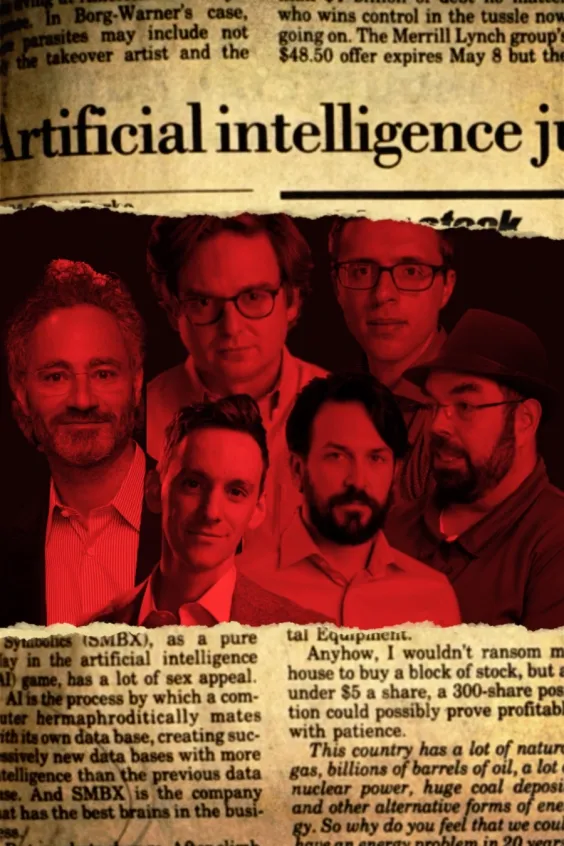
Abundance by Ezra Klein and Derek Thompson, The Technological Republic: Hard Power, Soft Belief, and the Future of the West by Alex C. Karp and Nicholas W. Zamiska, If Anyone Builds It, Everyone Dies: Why Superhuman AI Would Kill Us All by Eliezer Yudkowsky and Nate Soares; these are the works of our enemies. In examining them, we gain a sense of the particular neuroses and hangups of some of the most powerful and destructive forces in the United States today, ones that are oppositional to any true efforts to prevent environmental and political collapse.
While these works all seem of a different political orientation, they converge on similar conclusions and policies. The tonalities of these books are annoying at best and grating most of the time, representing the worst of an intellectualese style prominent among the American middle-class intelligentsia and media today. Abundance is the tinny upbeat sound bite of the podcast genre that is Klein's main expertise, the benevolent know-it-all. The Technological Republic is stentorious, chock full of references to classical philosophy and neoconservative intellectuals, overstuffed with asides and supposed lessons from history, the prose equivalent of the pomposity of the over-serious college student who wears a bow tie and brings a briefcase to class. If Anyone Builds It, Everyone Dies (IABIED) is that of the forum poster and online debater, the Discord philosopher using childish science-fiction parallels to overexplain complex concepts in simple terms, not to actually be useful, but to flaunt their own self-perceived high intelligence. Here we have the three strands of the most common worst kinds of thinking and people currently prominent in American society: the NYC/DC policy wonk, the young conservative politico, and the tech world pseudo-philosopher that can be grouped under the larger umbrella of effective altruism. For all of these works, the Bay Area is the center of the world, with San Francisco the dark heart of the American continent. Here we have a fine example of how, with the concentration of wealth and power in Silicon Valley, the municipal concerns of the tech overlords living there have been spun by them into seemingly pressing national and even global existential issues. Rather than a display of cosmopolitan erudition, these works betray a fundamental provincialism.
One stylistic commonality between these works is that their emphasis on science fiction and parables betrays a metaphorical, as opposed to analytical, worldview, despite their claims to rationality. Abundance opens with a short description of a future world in which the policies of the book have been implemented, reminding one of the animated “Dear Alice” Chobani yogurt commercial that came out in 2021, as well as the moment of peak Biden economism. IABIED starts almost every chapter with a mangled parable or mini story, all of which seem to come directly ripped from Reddit. Scientific anecdote is the main stylistic crutch throughout all three, evidence of the deep rot of Gladwellianism in popular prose, synthesizing and popularizing a massive range of data in furtherance of political banalities.
Project for a New American Technocracy
Abundance is a book that was already outdated when it began to come off the printing presses, representing a nominally left-of-center pop economistic manifesto of how to revamp the American political economy, a last gasp of the Biden-era alignment of left and progressive economic proposals; the Green New Deal pared down to zoning reform. While some of the points that Klein and Thompson make are accurate enough, they represent proverbial band-aids slapped upon a gaping wound, too little too late. Attempts to weave the Abundance agenda into the Democratic Party platform merely indicate the inadequacy of the party to address the current moment. This is less a work of policy than of vibes, with the real agenda more of the same basic neoliberalism it admonishes - cut regulations, empower private developers, and bring Big Tech into the governmental fold. While they claim that a “liberalism that builds” will be able to reassert American power and regain legitimacy for the Democratic Party, it is difficult to see how such a liberalism can come into being without facing the difficult choices of resource allocation and climate that Klein and Thompson sideline. Of course, we do need mass electrification, government investment in technological development, zoning reform, a housing construction boom, the buildout of renewable energy, and a sense of purpose and optimism, if the country is to perhaps survive the coming century. But Klein and Thompson elide the question to the point of obtuseness of how such things can be done without major political conflict. Alex Karp, co-founder and CEO of Palantir, and Nicholas Zamiska, head of corporate affairs and Palantir’s leading lawyer, offer an option of political conflict.
The Technological Republic is a polemic directed by Karp and Zamiska against their peers in Silicon Valley. They claim that the Silicon Valley world writ large, consisting of the startups, Big Five, engineers, software gurus, and coders, has, over the past few decades, directed the best of American technological ingenuity towards trifles and meaningless pursuits. They put much stock in showing how few members of the Silicon Valley business elite have served in the military, and how uninvolved Silicon Valley has been in public service, i.e., government work. The Technological Republic of the title is one in which Silicon Valley dedicates itself to the task of American greatness, pooling its engineering culture towards building new infrastructure and weapons, which will shake up the centers of corrupt and ossified power in the government, improve efficiency, and create new purpose. Silicon Valley must be at the forefront of a resurgent American nationalism, while the US government must move to embrace Silicon Valley companies and bring them directly into the fold of government infrastructure.
Resembling nothing so much as a reheated version of the culture-war campus politics tracts of the late 80s and early 90s, The Technological Republic mirrors the form of these arguments in terms of calling for a return to past glory but with more corporate marketing material and a baser orientation towards the weapons industry. Karp and Zamiska trot out the old standby complaints that were already clichés when Allan Bloom published The Closing of the American Mind in 1988: students at elite universities today have no purpose, only care about making money, have lost ethical values, are uncultured, DEI and multiculturalism are destroying the basis of Western Civilization, etc… These complaints could also have come ripped out of the pages of the 1995 book The Diversity Myth, co-written by another Palantir co-founder, Peter Thiel. If you’ve read one of these conservative screeds, you’ve read them all. What distinguishes The Technological Republic from its earlier forebears is its argument that recentering the American economy around weapons manufacturing, with Palantir at the heart of this effort (all implied as preparation for a war with China), is what will restore the malaise of our society and put America back on a proper civilizational mission. This is all so bluntly put that it would make the most vulgar Marxist, trotting out the line regarding the reactionary interests of capital as the root of fascism, blush.
Both Abundance and The Technological Republic recognize a common structural problem in the modern United States; the bifurcation between the ability of the government to actually govern and the indispensability of private technology companies, despite their massive government subsidies, to the infrastructure of our daily lives. The irony of American life today is that we are simultaneously over-monopolized but under-centralized; a small handful of companies control the main levers of the functionality of our lives but cannot craft policy, while the federal government is weakened and hollowed and cannot follow through on infrastructure projects, all the while still holding the power of legality and policy codification. Both books propose, in varying ways, the fusion of the government and Silicon Valley to solve this problem in order to re-establish American manufacturing power and quality of life. Central to both of their visions is the potential power of AI. The implication is that the US must win a de facto civilizational arms race against China regarding AI, as whoever develops the technology to the fullest will be the reigning global superpower for decades, if not centuries to come. The irony to this is that both works also entail a vision of revamping America that would make it look similar to contemporary China.
Abundance and The Technological Republic advocate for a world in which a technocratic cadre, focused on either basic infrastructure such as housing/transportation, as well as weapons production and software, is allowed to gain power to reassert American hegemony and avert what both books accurately diagnose as decline. This group of technocrats, explicitly called engineers by Karp and Zamiska, and more generally development-oriented public policy experts in cities and towns by Klein and Thompson, would work collaboratively to ensure the greatest good and perform an end run around stifling federal red tape. This group would be embraced by the Democrats and Republicans alike in order to advance policies that would assuage both of their constituencies, renewing faith in the state and the purpose of America. This sounds familiar. In broad terms, our quartet of authors is expressing a longing for the United States to have an organization similar to that of the Chinese Communist Party, a technocratic elite that manages an intertwining of public interests and capital, aka state capitalism, to build out infrastructure at warp speed, solve the housing crisis, and maintain American weapons production supremacy. However, I doubt that the authors would accept this proposition. They want what they perceive as the benefits of the Chinese system, but without the political commitments of the party-form that come with it.
The central irony of these books, then, is that they want all of the benefits of Chinese Communist Party rule but don’t want any of the actual political work necessary for them. Both books present China as the shadow figure to which America must both respond, but also mirror, if it hopes to survive. Yet one cannot get the benefits of the Chinese system without the experience that China underwent in the 20th century. Perhaps we could in the US get high-speed cross-continental rail, but we would need to have our own equivalent of land reform and class war to get it, which none of these works endorse. Instead, we see a merging at the top levels of both the Democrats and Republicans on a consensus for continuing the American defense state in a new, updated form, and these books offer vulgar or popular expressions of this impulse and dual-party trend. In essence, both books argue for an American Dengism, complete with Special Economic Zones. They want a state capitalism, but without a Communist Party. However, this seems impossible to achieve. The ability of Deng to reform China and implement a kind of state capitalism was due to the CCP already having a massive political infrastructure built into everyday life, making political and economic coordination possible in a way that it is not in the US. In this sense, the ambient anxiety hanging over the perceived political/intellectual crisis in the US, and attempts to bolster Silicon Valley, reflect American fears over the rise of China and what appears to be the beginning of the Chinese Century.
The fusion of Silicon Valley and the US government, absent a strict organizing cross-institutional force along the lines of something like the CCP, would entail the creation of a true fascist force. Capitalist interests would join with nationalist ideology, infused with the new eugenics that dominates the intellectual atmosphere of the tech elite, aiming to preserve American global dominance and promote a renewed mobilization of the domestic population. Elon Musk's DOGE may look farcical in immediate retrospect, but in the future, it may look like a botched test run for what is to come. There is an eeriness then to these works, as they grope towards the explication of a form of politics whose implications they do not fully understand, blind men sculpting something monstrous out of the clay they feel by hand.
Abundance and The Technological Republic purport to represent two different strands of political visions for the future of America, but in their basic ideas, they seem to be more or less the same - a focus on investing in technology and empowering Silicon Valley, American nationalism, and an explicit anti-China New Cold War framework. Both invoke the American Cold War security/defense state, Klein and Thompson under the guise of arguing this would lead to growth and prosperity, the titular abundance as aping an idealized military Keynesianism of WWII and the postwar period, and Karp and Zamiska hawking their company as a way to bring back American power as they believe it existed during that period: a return to strong traditional values, civilizational mission and American innovative greatness.
Both Abundance and The Technological Republic seek to find a way out of the impasse of modern American capitalism’s lackluster performance by empowering Silicon Valley as a model or substitute for the US government. They claim to be able to address the deterioration of productive industries critical to national security by outsourcing ever more government functions (and importantly, government money) to tech firms and the financial entities they supply investment opportunities to. It is unclear and perhaps doubtful that these companies could perform these functions. In this sense, the two works are seeking the same result but appealing to different constituencies and using slightly different arguments/appeals.
More broadly, there is a movement away from democracy that all of these books highlight. Democracy is dangerous for the political solutions they advocate, and for the political blocs they represent. The solution given for perceived American decline, and the actual trend in the economy, is essentially for Silicon Valley and its leaders to form an explicit governing oligarchy, or rule by CEO. However, as emphasized earlier, rule by CEO cannot be achieved without a party-form, or a kind of HR structure, to continue the analogy. What we also see at play here is Silicon Valley’s response to its own crisis of profitability and innovation – the need for Silicon Valley to merge into and take over the state itself in order to keep government contract money flowing. The origins of Silicon Valley fascism go something like this: Cold War state investment in the California weapons manufacturing industry resulted in a tech industry that ultimately needs to take over the state itself in order to keep its profits going in the face of international competition.
Building God - AI Dreams
The one true immediate crisis of our time, climate change and environmental destruction, is almost entirely ignored outside of Abundance, which merely promotes the most milquetoast proposals, such as expanding carbon credits. Klein and Thompson have a basic nonsensical utopianism that further development will somehow solve the climate crisis due to the invention of new technologies. They muse on the possibilities of renewable energy and solar, wind, and hydro power, but merely as accompanying the expansion of development at large. All of these works, with their emphasis on AI, ignore the hard reality of its materiality, the environmental pressures of data centers and GPUs, and how these are constructed with rare earth minerals whose extraction is costly, dirty, and the global supply of which is dominated by China.
AI functions as a cop out mechanism to get around these thorny political dilemmas of the distribution of wealth and power. If a superintelligence is going to automate us all to utopia, why worry? This is where If Anyone Builds It, Everyone Dies (IABIED) comes in, claiming that AI superintelligence will destroy us all in our quest for technological advancement. IABIED shows the gnostic doomsday scenarios preached by those feted as intellectuals within Silicon Valley and effective altruism circles, who believe that AI will result in a demiurgic, godlike entity. This eschatological idea floats in the background of Silicon Valley and can be found in both Abundance and The Technological Republic. As a claim, IABIED advances nothing truly new outside of what Harlan Ellison wrote in his 1967 short story, “I Have No Mouth, and I Must Scream,” which explored a world in which a godlike AI tortures a handful of remaining humans for eternity.
Yudkowsky and Soares operate under the principle that true intelligence will somehow spontaneously develop within an LLM system the larger and more complex it gets, with a tipping point measured in potential GPUs. But if complexity is seen as a marker of the formation of intelligence, not to wade into the troubled waters of delineating their use of intelligence from consciousness as such, why isn't any given complex system intelligent, such as, say, a forest, or a city, or the earth itself? I doubt the duo wishes to align themselves with panpsychism. (Though as for myself, that is a different matter). The mechanistic fallacy they engage in is breathtaking; a computer and a mind are seen as one and the same.
Yudkowsky's claim to fame is that he is an autodidact, with no degree, but works on the heady philosophical and mathematical implications of AI. If by autodidact we mean that Yudkowsky has read a lot of posts on the internet, then I buy the use of the term. Yudkowsky and Soares engage in bizarre asides and stories, including a long tangent on the details of the Chernobyl disaster, ostensibly to explain how engineering mistakes compound in a comparison to the creeping threat of AI, but the true overall sense is that they want to show off the fact that they can explain technical details about Chernobyl, and that they think that this act is a supreme marker of intelligence.
Yet, every claim of AI apocalypse is a reverse form of the claim of AI utopianism, that AI is a world-changing technology. When we talk about AI, we must be careful to parse and distinguish it as mostly being a marketing term. Almost all of the discourse we see around AI is de facto advertising, meant to increase financial investment and speculation in the AI and chip industries to keep Silicon Valley growing and growing. Contra Yudkowsky and Soares, it is much more likely that we destroy the environmental basis of our civilization before the creation of a superintelligent AI, and that in seeking the creation of the latter, we will only accelerate the former apocalypse. AI may also end humanity as we know it, but in the reverse of what Yudkowsky and Soares think. AI feeds on current data to develop its systems. The more AI content is produced, the more the data overall is composed of AI. What happens when AI systems are feeding on data that is majority or only AI-produced, in turn fed on earlier AI-produced data? Will then, with people more and more dependent on using AI as our sole source of intellectual and cultural production, eventually only AI content exist? Society will be caught in a feedback loop of AI production, with AI breaking down into potentially frightening iterations as it produces only earlier versions of itself. We would end up in a world where all culture is dead, where nothing new is being created. AI then becomes a system for feeding on the dead. Rather than the Angel of History in Benjamin’s famous description, which faces the past and is blown into the future, here the Angel will face the future and be blown into the past, the bright and shining utopia promised to its efforts retreating ever further but continually in sight, while the possibility of the forward progress of time will be broken forever. History itself will cease, and only that which has already existed will ever exist again, until the system has fed upon itself to the last possible marrow, and then stall, an engine without oil, and the creative capacities of humanity obliterated. It is not AI’s supposed capacity to achieve AGI, but rather the very impossibility that AI can achieve true intelligence, that will doom us.
The immediate future looks grim. The US is barreling towards the formation of an iteration of fascism, based on the rise of the fusion of the tech industry with the government: Silicon Valley mutating into an all-pervasive system, ruled by CEOs and managed by corporate-allied technocrats, justified in moving into power by claims to develop the country and improve a widely perceived decline in quality of life. AI functions as a marketing mechanism to bring more money into the apparatus, the bubble stretching beyond belief. Fears of AI merely reinforce the pervasive sense that AI is world historical, paranoia as the perfect advertisement. AI is already having harmful effects, and may potentially destroy culture itself, but not for the reasons that the doomsayers prophesize. The 21st century appears to be shaping into a struggle between the technocracies, both loosely state-capitalist: one nominally socialist in orientation (China), the other our home-grown tech fascism.
Liked it? Take a second to support Cosmonaut on Patreon! At Cosmonaut Magazine we strive to create a culture of open debate and discussion. Please write to us at submissions@cosmonautmag.com if you have any criticism or commentary you would like to have published in our letters section.