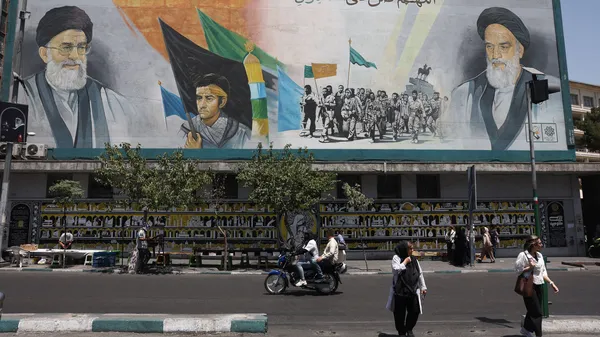
From July 4th to July 9th, millions attended Ayatollah Ali Khamenei’s multi-day funeral, culminating on July 9th with the deceased Supreme Leader’s burial in his hometown of Mashhad. Against convention within the Islamic Republic, which has a strong distaste for hereditary monarchy stemming from the revolution against the Shah in 1978-1979, Khamenei was succeeded by his son, Mojtaba Khamenei, following the elder Khamenei’s death in the U.S.-Israeli airstrikes launched in February of this year. Mojtaba Khamenei, however, has yet to make a public appearance since his father’s death and his assumption of the role of Supreme Leader, not even to attend his father’s funeral. He is reportedly severely injured, but details remain uncertain.
Uncertainty has been the defining feature of this war, with the Memorandum of Understanding (MoU) bringing about a “ceasefire” threatened nearly from the moment of its signature by Israeli strikes that have killed dozens in southern Lebanon. Real concessions were made and temporarily implemented, including a temporary oil sanctions waiver, but those have since fallen by the wayside. The US has since struck Iran, which has once again closed the Strait of Hormuz, and oil sanctions were reimposed on July 7th. Trust remains low, for understandable reasons on Iran’s part– the U.S. has repeatedly shown itself to not be negotiating in good faith, as well as to be unable or unwilling to restrain Israel from attacking Lebanon throughout the entire process of negotiation. Iranian negotiators feared that the U.S./Trump was using the negotiations as a temporary “break” during which it could either produce more weapons (Iran’s greatest advantage aside of course from its control of the Strait of Hormuz has been its ability to produce cheaply-made missiles more quickly than the U.S. and Israel can replenish interceptor systems), find reprieve the inevitable economic consequences of extended closure of the Strait in the months leading up to the midterm elections, or both. As of now, the MoU has effectively fallen apart.
The past, despite its depth of horrors, offers us the comfort of having already happened. We can imagine people huddled around their TVs in October 1962 watching the Cuban Missile Crisis unfold, yet it doesn’t quite shake us to the core as much as it should that the world nearly ended, because in the end it didn’t. Back then people were watching a fight between two superpowers that could not be consummated due to the humanity-destroying potential of thousands of nuclear weapons; today we are watching the victor of that extended Cold War’s decline, and we do not in truth know how fast or how slow that decline will be, nor what imperial decline looks like with not only nuclear weapons but the rising use of AI for military purposes in the picture. Add into the mix the wild card of the U.S.’s rogue ally, the state of Israel, which is consumed with blind genocidal ambition, and the possibilities ahead are more than uncomfortable to contemplate.
At the present juncture, Israel continues to attack Lebanon, and appears determined to undermine any attempt at negotiation. The aims of the war on the U.S. side began as regime change, but are now far more amorphous, while Israel sees not only Iran but also the existence of any significant regional power other than itself as a threat to its expansion. In pursuing this expansionism, Israel knows few if any limits, a prospect that is terrifying not only because of the genocide and destruction it has already inflicted on the people of Palestine and Lebanon, but also because of their possession of nuclear weapons and reported nuclear strategy.
Why did the U.S. attack Iran?
Two of the main lines of reasoning in explaining the Trump administration’s decision to attack Iran in February amount to the following: on the one hand, there is Trump’s erratic decision-making and desire to make a name for himself in history by doing what every president since Carter has wanted to do but has had to steer clear of doing, regime change in Iran. On the other hand is the idea that the Trump administration was compelled to act by Israel. While it is difficult to know exactly what goes on in classified conversations, it is clear enough that, despite Trump’s supposedly anti-war rhetoric (that anyone should have been able to see through from a mile away), he has at times been sympathetic to a neo-conservative perspective, and outright war-loving neocons in the administration such as Pete Hegseth and Marco Rubio have a significant influence on the president. It has also become clear Israel was going to attack with or without the U.S., or at least gave the impression to the U.S. that it was going to in order to secure U.S. participation.
When I say that Israel may have made it look like it would attack Iran in order to secure U.S. participation, I mean that it is possible that Israel would not have actually attacked Iran on its own were it not assured U.S. support, but that they threatened to do so to members of the Trump administration behind closed doors. That Trump went along with Israel’s push to attack Iran is new; Israel wanting to attack Iran has been the case since the Shah left. However, previous presidents from Reagan to George W. Bush, as hawkish as many of those presidents were, refused to do so, knowing that Iran would close the Strait of Hormuz, and that that would severely disrupt the global and U.S. domestic economy. While it is true that the U.S. was more dependent on Middle Eastern oil under Reagan than it is now, the economy will not remain unscathed from the aftereffects of the closure of the Strait, even after unprecedented use of oil reserves, even if it were to remain open from this point forward, which does not seem to be in the cards.
The U.S. ruling class itself is not united on a strategy around Iran; Obama sought to negotiate a deal with Iran without military action, which AIPAC was of course strongly opposed to. Trump would receive a significant boost from AIPAC in 2016, declaring at the lobbying group’s annual policy conference that year that his number-one priority was to “dismantle the disastrous deal with Iran,” despite all indications that Iran was abiding by the enrichment limits set by the JCPOA. Trump’s willingness to grant long-held requests of the Israel lobby, such as military aggression toward Iran and moving the U.S. embassy to Jerusalem, won him not only lobbying efforts but also hundreds of millions in campaign donations from the Adelsons. While the vast majority of U.S. politicians enable Israeli expansionist and murderous policies of ethnic cleansing, stoking regional tensions, and genocide, Trump was willing to go even further, disregarding the few norms that limited Israel from getting quite everything it wants from the U.S.
Trump was also likely in an optimistic mood about the prospects of subsequent regime change after the ouster and kidnapping of Maduro in January. Combine that with faulty intelligence from Mossad indicating that the Islamic Republic would easily fall once the Supreme Leader was gone, and one obtains a clue into the president’s mindset in February. However, it is remarkable how little insight Washington had into the workings of the Iranian government. As many have stated, the Iranian government is not a top-down dictatorship along the lines of the government of Saddam Hussein, but a complicated arrangement in which various factions both work together and clash on key issues, with the Supreme Leader as the mediator among them. Massive protests did occur late last year and in January, yet the Islamic Republic was not imminently on the eve of collapse. And just as the size and significance of the protests in Iran cannot be reasonably denied, the crowds at Khamenei’s funeral show that Iranian public opinion is not as homogeneously pro-regime change (let alone pro-Shah) as it is often portrayed, with the war having the effect of rallying those that were on the fence toward nationalism. In any case, the strategy of assassinating figureheads such as Hassan Nasrallah and Khamenei has not even managed to eliminate Hezbollah, let alone the Islamic Republic.
There are also reports that the US had a replacement from within in mind, along the lines of an Iranian Delcy Rodriguez– and that it may even have been Mahmoud Ahmadinejad, strangely enough– but that this operation was botched during the initial attacks. It is likely that Israel knew that regime change would be far from a simple operation, but that their aim is not regime change but a severely crippled and war-torn Iranian failed state, as well as a return to civil war in Lebanon. Now, in the midst of the deterioration of the already compromised ceasefire achieved by the MoU, Israel once again claims a new attack from Iran is imminent– a direct threat to Trump’s life.
In addition to faulty/misleading intelligence from Israel, there was also the question of what would happen if Israel attacked Iran on its own. Hillary Clinton spoke recently about how often Israel stated they were ready to attack Iran immediately, and threatened to do so with or without U.S. approval. “According to Clinton, Israel repeatedly tried to pressure the Obama Administration into backing a similar action in Iran, but she didn’t take the bait. ‘They would say things like “Our planes are on the tarmac,” Clinton recalled. ‘And I’d say, “Well, good luck. Great. Why are you doing this?”’” Part of the increasing uncertainty of events under the Trump administration comes from how being an insider to secret negotiations gives high-ranking career politicians like Clinton an understanding of precedents that can lead to more predictable, yet still horrific, outcomes.
The US under Trump may even have feared the use of a nuclear weapon in the event that Israel attacked alone, although the Trump administration itself has repeatedly behaved in ways that are utterly reckless to the possibility of nuclear annihilation. Finally, one must return to the influence of the Israel lobby on American politics, composed of both Christian and Jewish Zionists. Christian Zionists like Pete Hegseth see themselves as playing a role in fulfilling a biblical prophecy, as do religious Jewish Zionists in Israel, while more secular Israeli politicians are simply ethnic nationalists and expansionists. Israel aims to be the only significant military power in the region (hence their potential hesitance to successfully enact regime change as opposed to crippling Iran, rendering it a failed state, reigniting civil war in Lebanon, and even their aggressive comments toward Turkey) overlap with the aims of evangelical Zionism in a deadly alliance that surpasses the routine enabling of Israel’s atrocities by both Republicans and Democrats. However, this expanded acquiescence to the demands of Israel and Zionism is complicated at times by Trump’s intense desire not to be humiliated nor to seem like he ever lacks complete control. Hence, at the end of the day, despite the push and pull between them, it is Trump calling the shots; one would be wrong to reduce his power to that of a shadow president solely representing Netanyahu’s interests.
Trump cares greatly about his image, and said in January that he was hesitant to attack Venezuela because he “was worried it could end up being a ‘Jimmy Carter disaster that destroyed his entire administration.’ He was referring to the failed operation on April 24, 1980, to rescue 52 American hostages held in Iran.” When I read this statement six months ago, it seemed to reveal that Trump was not talking only about Venezuela there, but that he let slip an evaluation of the prospects of an attack on Iran.
The Importance of U.S.-Israeli Defeat
I do not remotely defend the social policy of the Islamic Republic as a theocratic and reactionary form of government that has stifled socialist and even simply labor organization, basic civil rights such as freedom of speech and the press, maintained unequal legal status for women, and committed mass executions of communists in its founding years. In addition, as Yassamine Mather has written about extensively, insiders within and associated with the Iranian government have economically benefited immensely from corruption intertwined with U.S.-imposed sanctions, while tens of millions of Iranians live in poverty.
Yet I will say unequivocally that a U.S.-Israeli defeat is the only outcome that one can hope for if one wants to live in a world in which there are consequences for unbridled aggression. In Iran alone, the U.S. and Israel have killed thousands of civilians, including over 100 children at a girls’ elementary school in southeastern Iran at the start of the war. That is not to speak of the depth of wanton murder and displacement committed by the IDF in Gaza and southern Lebanon.
If Iran is able to ward off further U.S.-Israeli attacks and obtain a favorable peace deal, it will at least stave off the worst ambitions of the global hegemon and its rogue junior partner. In addition, it would deal a significant blow to U.S. imperialism, especially considering that one of the main supposed security guarantees offered by the U.S. to the world is free maritime passage, a claim that has proven hollow in the face of Iranian control of the Strait of Hormuz. The U.S.’s standing with the Gulf states will also likely wane as a result of its failure to protect its allies from Iran’s retaliation against states with U.S. bases– and even outside of the region, this casts doubt on the safety of countries with U.S. bases in general.
On the other hand, if the U.S. and Israel feel empowered by the war in Iran, meaning that the terms agreed upon result not necessarily in regime change but are at least favorable to U.S.-Israeli interests, or result in significant weakening of Iran’s position within the region, it seems unlikely that the destruction would stop with Iran, Lebanon, Gaza, and fishing boats in the Caribbean. Although at this point, definitive victory of this kind in Iran seems unlikely, the terrifying prospect that the U.S. or Israel would use a nuclear weapon in response to, for example, a failed ground invasion of Kharg Island has been brought up more than once.
Nuclear Proliferation
Earlier in this article, I brought up the Cuban Missile Crisis. The era of the U.S. and the Soviet Union rapidly expanding their nuclear stockpiles and threatening each other with them may seem long gone, and in fact, the number of nuclear weapons in functional condition today is much lower than it was in 1962. Yet a larger number of countries possess nuclear weapons, including Israel, which despite its position of “nuclear ambiguity” has been widely documented not only to possess nuclear weapons, but to have a particularly aggressive nuclear strategy, including potential preemptive strikes to prevent other regional powers from obtaining nuclear weapons.[1]
A nuclear exchange most likely would not occur between the countries with the largest number of nuclear weapons (Russia and the U.S.), but either by a nuclear-armed state against a non-nuclear state, or between two countries with a smaller number of nuclear weapons. Furthermore, the U.S. pulling out of key anti-nuclear proliferation treaties such as the New Start Treaty, as well as the implications of the AI arms race, including autonomous AI involvement potentially in not only day-to-day drone warfare but also high-level military decision-making within the coming decades, do not bode well for the future. For example, recall the story of the malfunction of Soviet missile detection systems in 1983. The world could have ended then, but it was stopped by the judgment of a human being who decided not to report what he saw to his superior, thinking not only, “It is unlikely that this would be happening,” but also, “What we would be risking in making a hasty judgment would be everything, not just in the abstract, but to me as an interested party, as a person with a life and loved ones that I care about preserving.”
Nuclear weapons are the worst invention of humanity. In a world in which socialism wins, all nuclear weapons should be destroyed for good. But looking at the way countries that do not have nuclear weapons, or give them up, are subject to attack at any moment, not only Iran but also many other countries would be foolish not to develop nuclear weapons as quickly as possible. While the JCPOA was working, any goodwill that was established has been destroyed by repeated U.S. attacks during the process of negotiation. It is likely that an era of renewed nuclear proliferation and potentially their eventual use is on the horizon.
Conclusion
Ali Khamenei is buried in Mashhad, and the Memorandum of Understanding is hanging on by a string as key concrete actions in the direction of peace, such as the Strait of Hormuz remaining mostly open and the U.S. halting oil sanctions, have been undone. The situation changes constantly. Killings in Gaza and south Lebanon have been constant throughout the “ceasefire,” and Israel changes the terms of the agreements it makes in order to allow itself to continue to attack while claiming self-defense. Hamas stated that it is ready to abandon the administration of Gaza to the “Palestinian technocratic committee” that was agreed upon in the negotiation of the October ceasefire, and Israel insists on the blanket disarming of Palestinians. Israel seeks to eliminate all resistance from Palestinians and to bring ruin to any state that challenges its attempt at regional hegemony, the strongest of these being Iran. Whether the present situation leads to a fracture between the U.S. and Israel, a peace deal granting significant Iranian concessions that Israel is either forced to submit to or that the U.S. is able to grant without promising to be able to control Israeli actions, or a widening of the war has yet to be seen.
Liked it? Take a second to support Cosmonaut on Patreon! At Cosmonaut Magazine we strive to create a culture of open debate and discussion. Please write to us at submissions@cosmonautmag.com if you have any criticism or commentary you would like to have published in our letters section.
-
Shahak, Israel. Open Secrets: Israeli Nuclear and Foreign Policies. London and Chicago: Pluto Press, 1997
↩